
A retailer wants faster test coverage for a returns agent whose approved policy is already written. How should the suite be built?
Select an answer to reveal the explanation.
Short Explanation
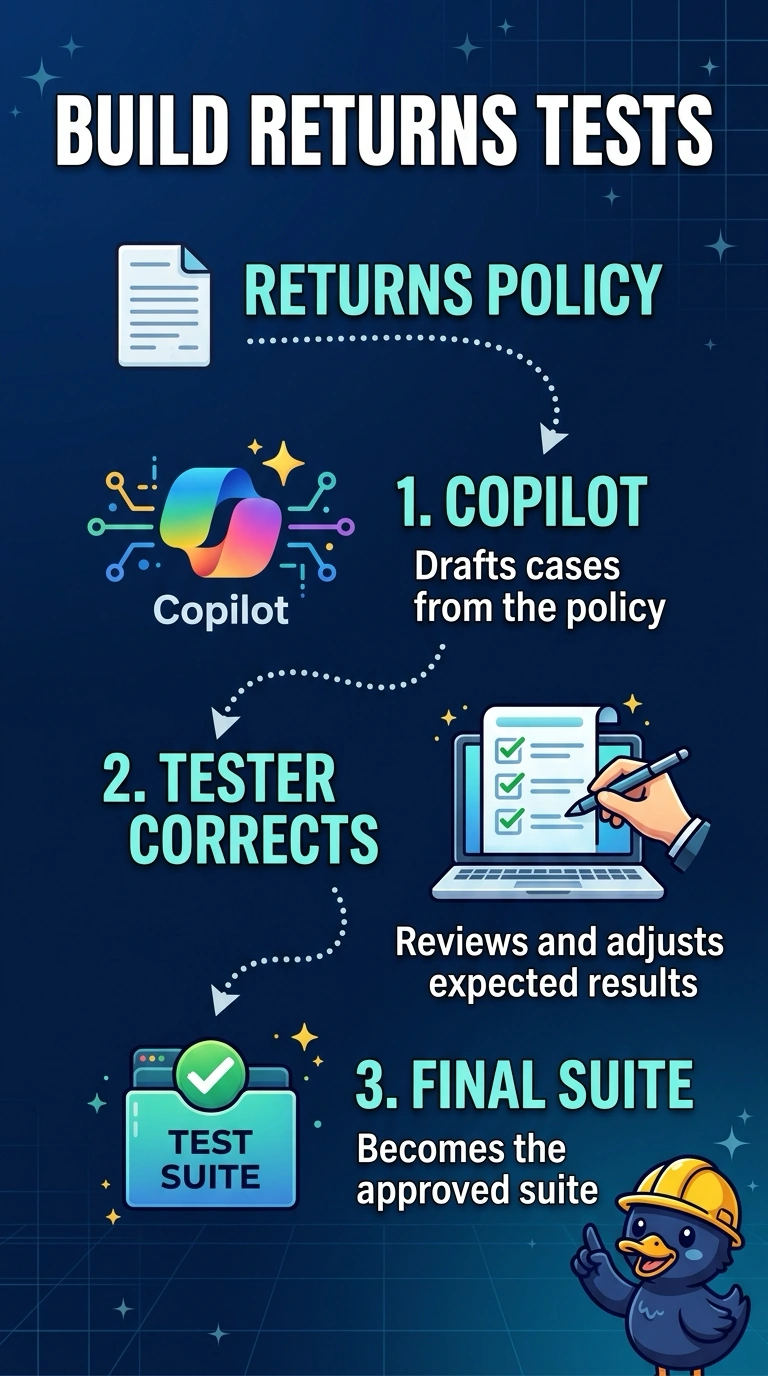
A draft answer key still needs a teacher to check it against the textbook. You can let Copilot draft cases from the returns policy, and you still have a tester correct the expected results before those cases become the suite. An unreviewed draft can assert a refund the policy does not grant.
Full Explanation
Copilot is a way to draft test cases from an approved policy, and the expected result is still a human judgment against that policy. The retailer should let Copilot draft from the returns policy and have a tester correct the expected results before the cases join the suite. Publishing the drafts unchanged keeps any refund the model invented, so the suite would grade the agent against a rule the policy does not state. Forbidding Copilot and starting from a blank page throws away the speed the team asked for, and it is not required in order to keep a tester in the loop. Letting Copilot rewrite the policy so the policy matches the draft inverts the relationship: the policy is the source, and the expected result has to be corrected to it. Exam caveat: a tester's correction is about the expected result and the case steps, not a request to loosen the policy when a draft looks convenient. Operational check: compare each expected refund in the draft to the current policy page, change the ones that disagree, and only then mark the case as part of the suite.