
A manufacturer's agent is slow at only one plant, and only on the turns that call the parts service. Turns that do not call that service return quickly. What should the architect inspect before any model change?
Select an answer to reveal the explanation.
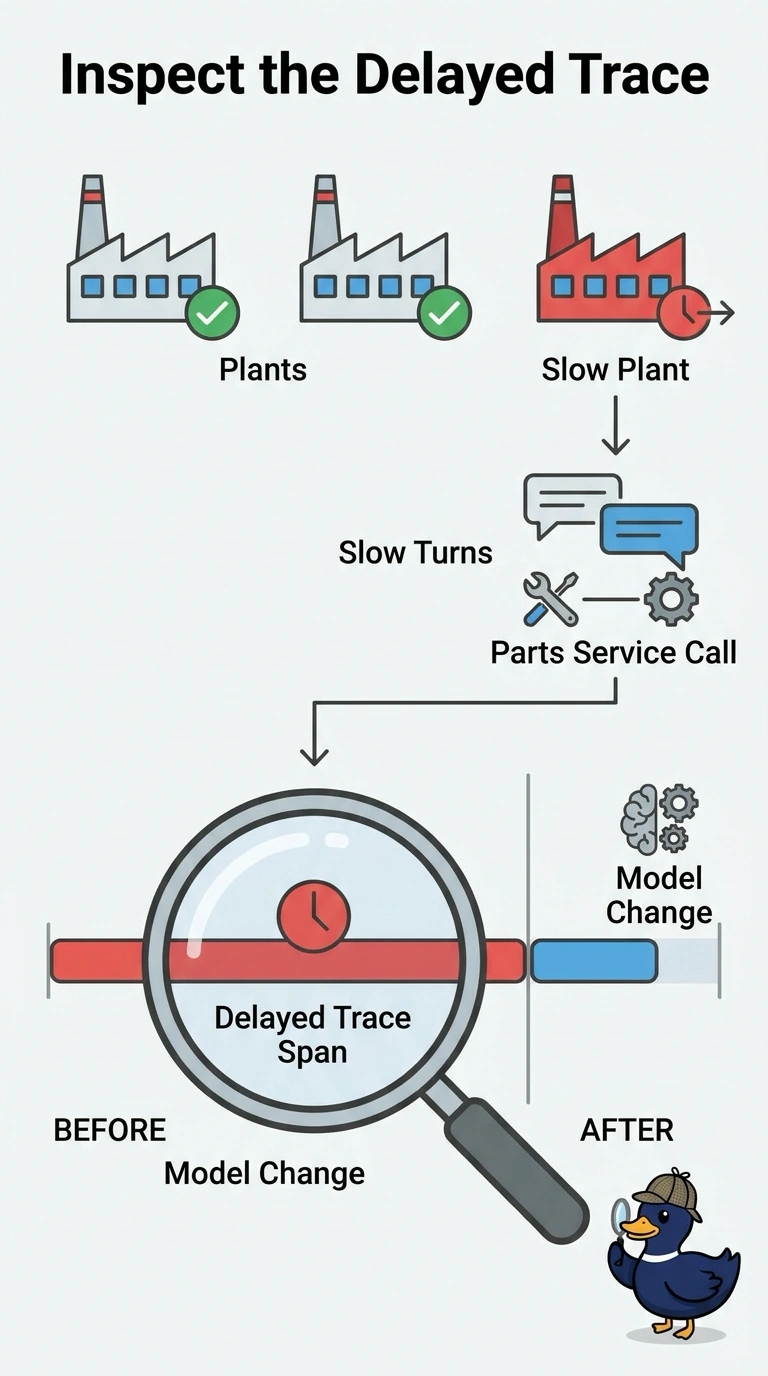
Short Explanation
The slow part of the trip is the parts window, and the trace already points at that call. You read the parts-service span at that plant before anyone changes the model. A model swap at every plant would leave the slow call in place.
Full Explanation
Telemetry is there to separate a slow tool from a slow model. This agent is slow at one plant and only on turns that call the parts service, while other turns at that plant return quickly, so the span for that call is the inspection that comes before any model change. Retuning the model at every plant, including plants that are already fast, spends the change where the symptom does not exist and leaves the parts call alone. Lengthening the system prompt so the agent is told to answer faster does not shorten a service call, and an instruction cannot compress a span the trace has already isolated. Replacing the traces with a satisfaction survey discards the evidence that names the parts service, and a survey can drop for reasons other than that call. The model can still be reviewed later if the span shows the model time, not the service time, is the delay. Exam caveat: a single slow plant is a clue to compare spans across plants, not a reason to treat the model as the common cause. Operational check: open a slow turn and a fast turn from that plant and confirm the parts-service span accounts for the difference before anyone queues a model change.