
A vendor building an MCP host application wants to let users browse and install servers. According to the registry documentation, where should the host get that server list?
Select an answer to reveal the explanation.
Short Explanation
The official registry is the wholesale warehouse, and you, as a host, shop at the retail stores built on top of it. The trap is wiring your app straight to the warehouse on every launch.
Full Explanation
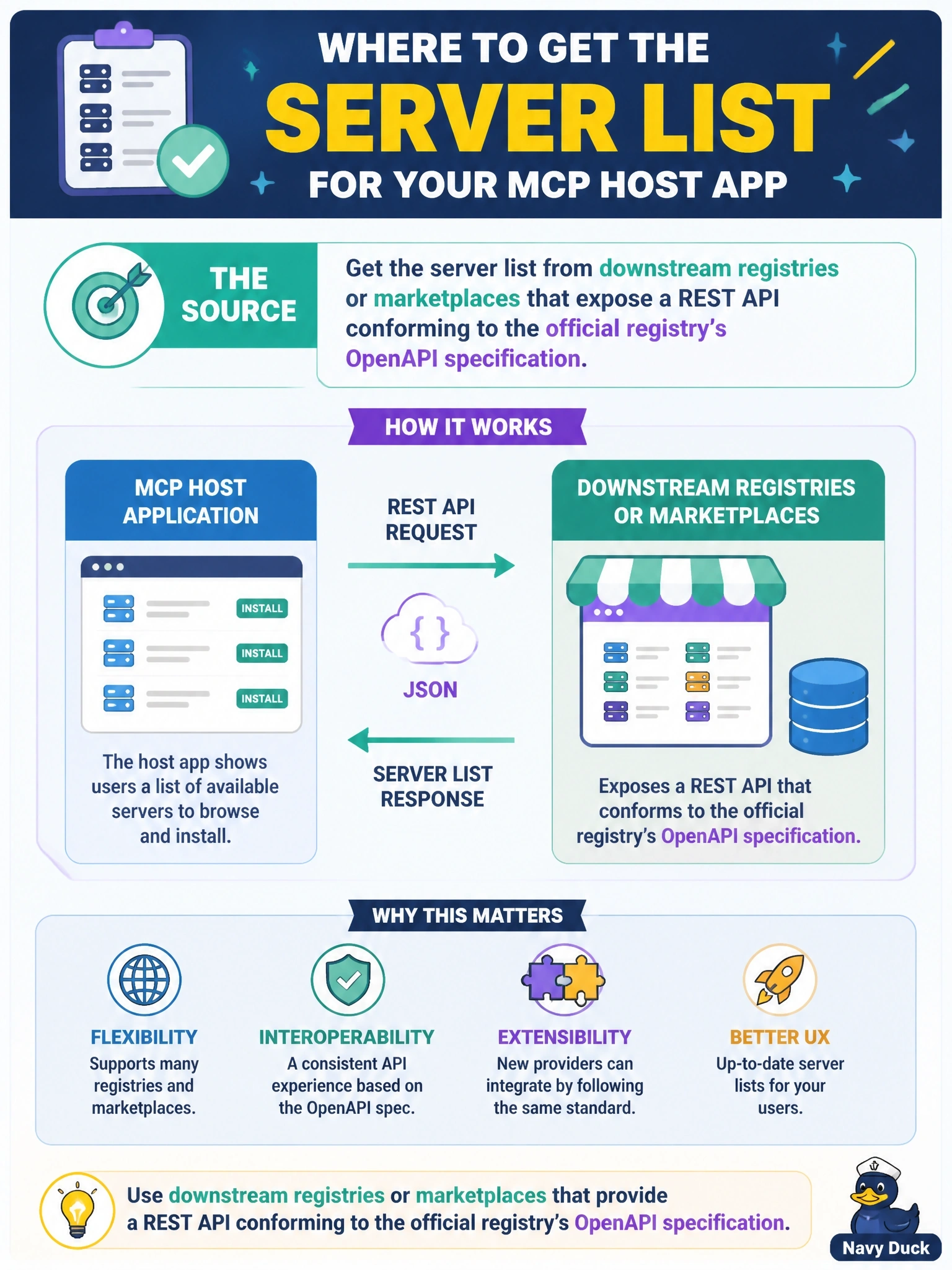
The registry documentation describes an ecosystem in which the official MCP Registry is intended to be consumed primarily by downstream aggregators, such as server marketplaces. Its metadata is deliberately unopinionated, and aggregators add curation, ratings or security checks, typically pulling from the registry on a regular but infrequent schedule. The documentation states plainly that the registry is not intended to be consumed directly by host applications; hosts should instead consume other registries, such as downstream marketplaces, through a REST API that conforms to the official registry's OpenAPI specification. Polling the official registry on every launch inverts that design and bypasses the curation layer. server/discover is the MCP method a server implements to report its supported versions and capabilities; it is not a catalogue feed, and calling it across every listed server would be impractical and would still lack registry metadata. The registry does not forbid reading its data, and package-registry search APIs know nothing about MCP namespaces, transports or execution instructions. Exam caveat: private registries can implement the same OpenAPI interface, so a host that speaks it can serve both public and internal catalogues. Operational check: point the host at a conforming aggregator endpoint and confirm the list, search and detail calls follow the OpenAPI specification.