
A rural ISP wants traffic destined for a retired subscriber block to be dropped immediately at the aggregation router without sending any notification back to the sender, to avoid generating extra traffic toward customers who are still probing that old range. Which static route next-hop option produces this silent-drop behavior?
Select an answer to reveal the explanation.
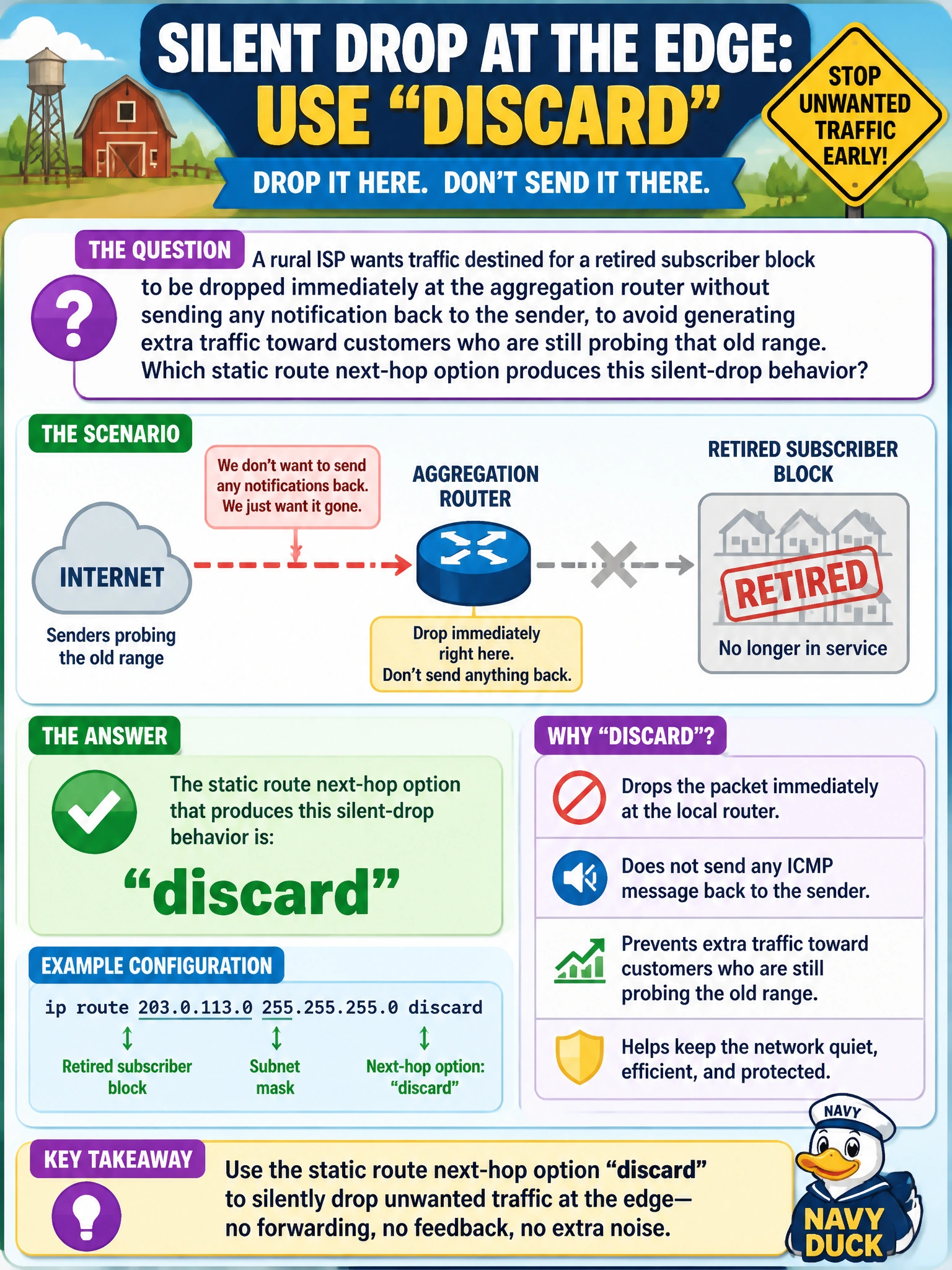
Short Explanation
Discard is the strong, silent type: packets headed toward that route just vanish, no reply, no explanation sent back. It's the option you reach for when you want traffic to stop cold without telling the sender anything at all.
Full Explanation
The discard next-hop option on a static route causes Junos to silently drop any packet matched to that route, with no ICMP message generated back to the source. This is the right tool when the goal is to stop traffic cleanly without giving any feedback to whoever sent it — useful for retired address space, route summarization black holes, or simply not wanting to reveal information to unwanted probes. reject, by contrast, also drops the packet but actively generates an ICMP destination-unreachable message back to the sender, which is the opposite of the 'no notification' requirement here. A routing-instance next-hop redirects the lookup into a different routing table entirely rather than dropping anything, so it doesn't achieve a drop at all. A qualified next-hop with a higher preference is a mechanism for building a backup (floating) route, not a drop action — it still forwards traffic somewhere if it becomes active. The key exam distinction is discard=silent, reject=notified; picking the wrong one changes whether the far end learns anything about the drop. A concrete check is capturing traffic on the sender's side: with discard configured, no ICMP unreachable ever arrives, while with reject, it will.