
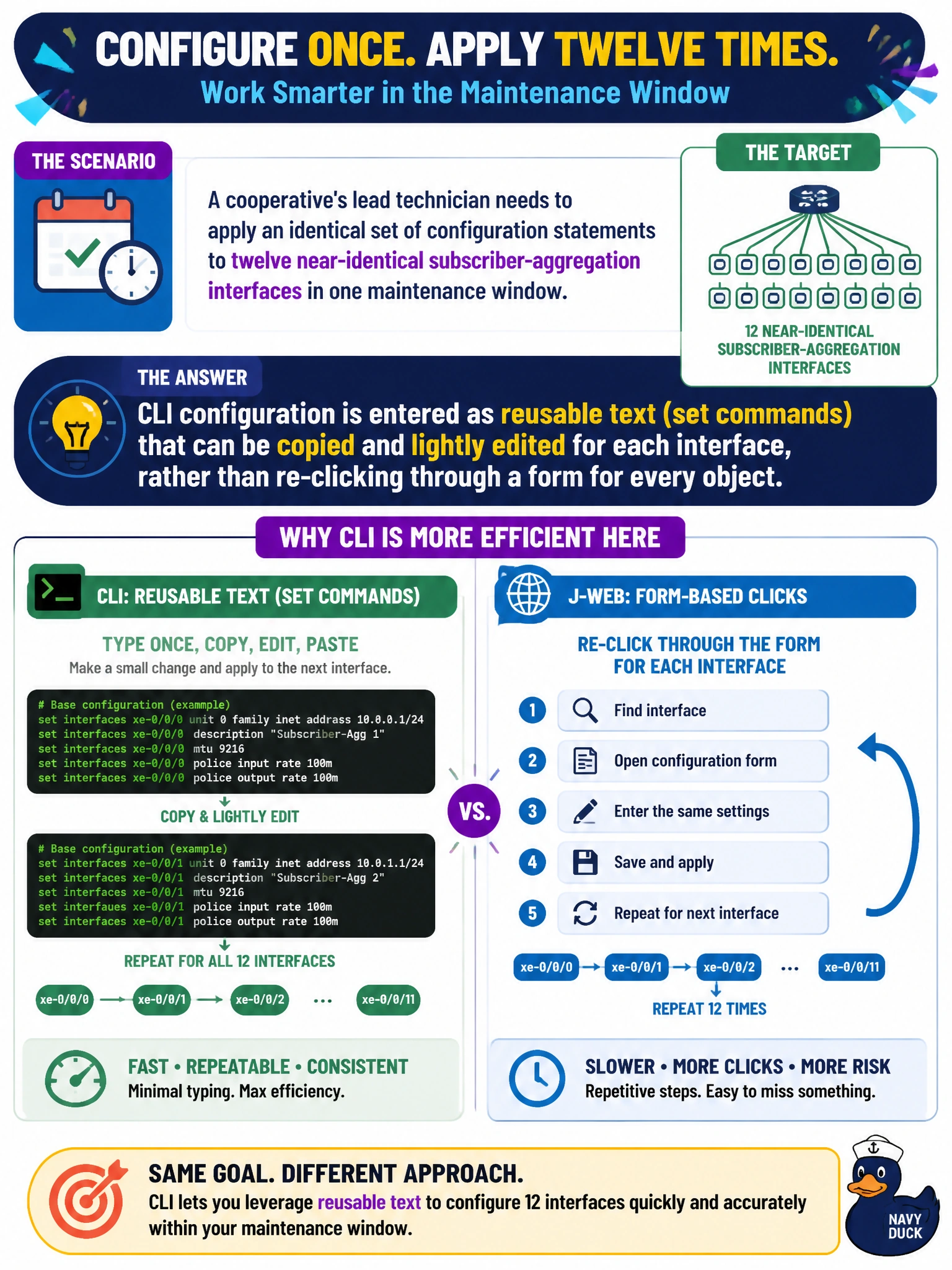
A cooperative's lead technician needs to apply an identical set of configuration statements to twelve near-identical subscriber-aggregation interfaces in one maintenance window. Which capability makes typing the change at the CLI more efficient here than using J-Web?
Select an answer to reveal the explanation.
Short Explanation
Repeating the same change twelve times is exactly where typed commands shine: copy one set line, tweak the interface name, paste, repeat — no clicking through a form each time. That's a CLI strength, not something J-Web's point-and-click layout is built for.
Full Explanation
CLI configuration statements are plain, reusable text, so a technician can draft one statement, copy it, and change only the interface identifier for each of the twelve targets before committing the whole batch at once, which scales far better than a graphical interface built around selecting one object and filling in fields per screen. Claiming J-Web supports the same set-command text workflow erases a genuine functional difference between the two interfaces; J-Web is a point-and-click graphical layer and doesn't expose an editable command-text field for this kind of bulk, repeatable entry. SNMP is a monitoring and limited value-setting protocol used by management stations to poll or adjust individual parameters remotely, not an interactive mechanism a technician sits down and uses to push a batch of interface configuration during a maintenance window. Telnet is only a remote-access transport carrying the same CLI session that SSH would carry; transport speed isn't the reason typed commands are efficient for this task, and recommending Telnet also introduces an unrelated downside since it lacks SSH's encryption. A caveat is that this batch-text advantage assumes the twelve interfaces really are configured identically; a discrepancy hidden among them makes copy-paste editing risky rather than safe. An operational check after committing is reviewing the configuration on a couple of the twelve interfaces to confirm every intended edit landed exactly as typed.