
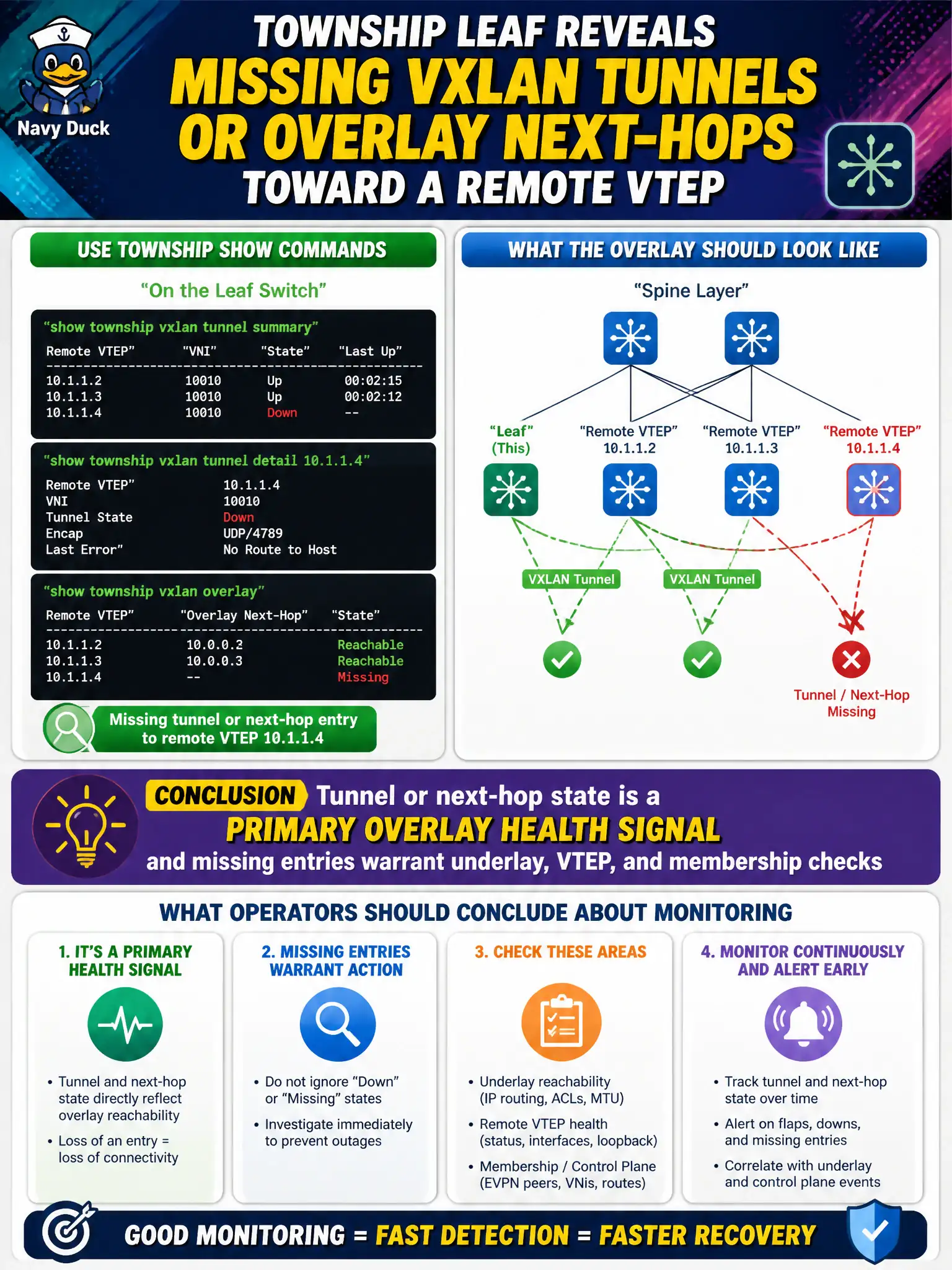
Show commands on a township leaf reveal missing VXLAN tunnels or overlay next-hops toward a remote VTEP. What should operators conclude about monitoring?
Select an answer to reveal the explanation.
Short Explanation
Empty tunnel/next-hop tables are the ‘closed’ sign on the shop door—pay attention. Use them as a health signal, then chase underlay reachability, VTEP addressing, and VNI membership. Don’t call it cosmetic and walk away.
Full Explanation
Show commands on a township leaf that reveal missing VXLAN tunnels or overlay next-hops toward a remote VTEP mean tunnel or next-hop state is a primary overlay health signal and missing entries warrant underlay, VTEP, and membership checks. Operational state for VXLAN tunnels or EVPN/VXLAN next-hops reflects whether the leaf can encapsulate toward remote VTEPs.
Missing tunnels are not cosmetic because servers somehow always flood successfully without next-hops. Overlay next-hops are not stored only on DHCP servers and never on leaves. VXLAN health is not proven solely by a management VRF ping to the Internet.
Exam caveat: monitor overlay tunnel/next-hop state as routinely as BGP session state on township leaves.
Operational check: display VXLAN tunnel or EVPN next-hop state, correlate missing entries with underlay routes to the remote VTEP and VNI membership, remediate, and confirm next-hops reappear before tenant testing. Trend missing-next-hop alarms so cabling mistakes after maintenance are caught quickly. Compare next-hop presence on two leaves to see whether the fault is local or fabric-wide. Record the validated outcome in the municipal fabric runbook for the next change window.