
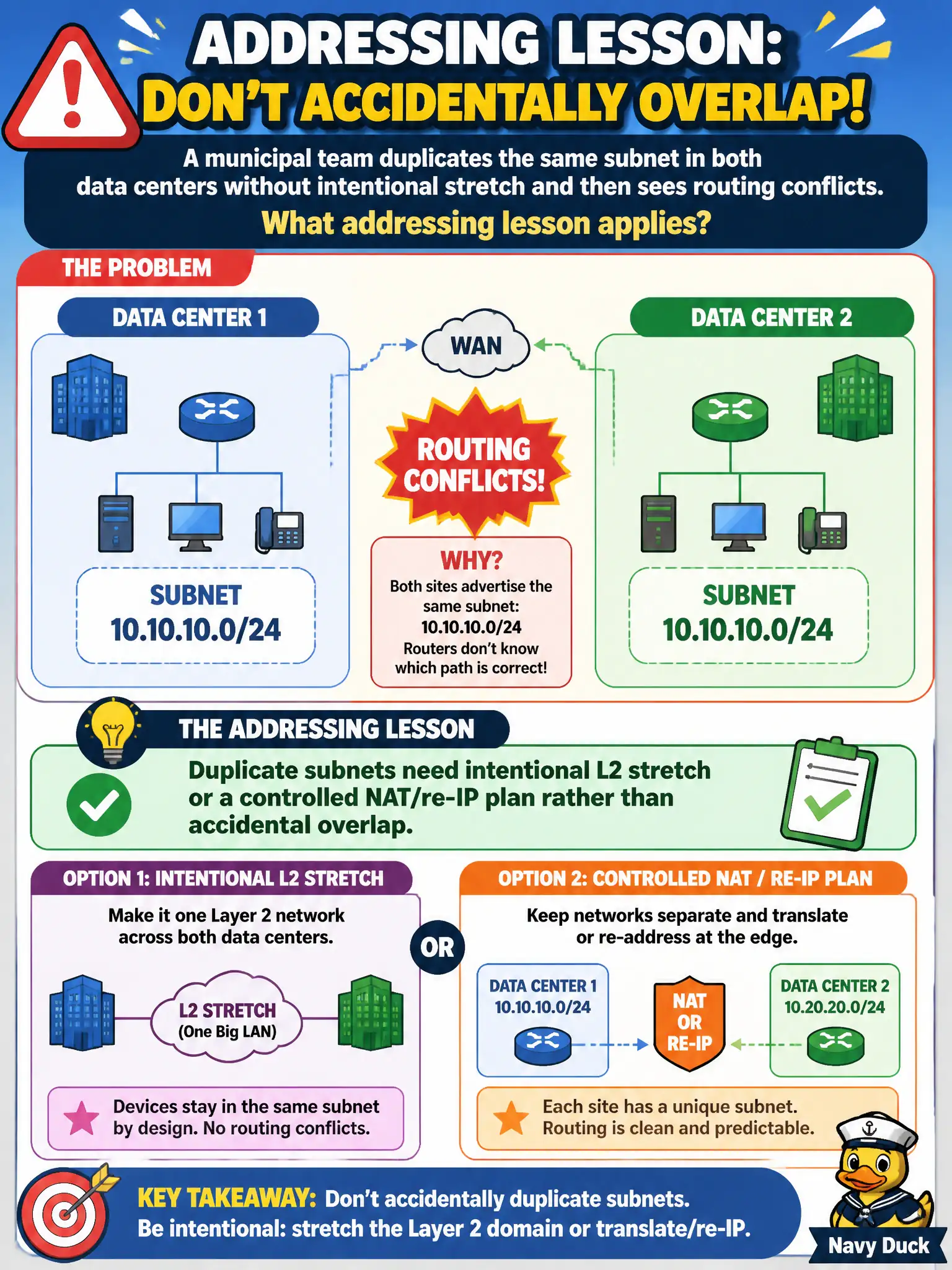
A municipal team duplicates the same subnet in both data centers without intentional stretch and then sees routing conflicts. What addressing lesson applies?
Select an answer to reveal the explanation.
Short Explanation
Copy-pasting the same subnet into both DCs without stretch or NAT is how routing fights start. Overlap needs an intentional stretch or re-IP/NAT plan.
Full Explanation
Duplicating the same subnet in both municipal data centers without intentional stretch produces overlapping routes and conflicts. Duplicate subnets need intentional L2 stretch or a controlled NAT/re-IP plan—not accidental overlap. They are not harmless if both sites advertise defaults. Overlapping subnets do not automatically stitch through EVPN Type-2 without design. Duplicate subnets are not required for every L3 DCI deployment; unique addressing with Type-5 is the usual L3 pattern. Exam caveat: identical subnet for DR cold servers is a deliberate L2 stretch use case—document it; silent duplication in active/active routing is an outage pattern. Operational check: audit prefixes advertised from each city DC, flag overlaps, either re-IP/NAT or intentionally stretch with EVPN L2 controls, and retest routing without conflicts. Run prefix-overlap reports across municipal DCs continuously so accidental duplicate subnets never become silent outages. Run prefix-overlap reports across municipal DCs continuously so accidental duplicate subnets never become silent outages. Run prefix-overlap reports across municipal DCs continuously so accidental duplicate subnets never become silent outages.