
At a provider's data center, visitors and contractors have been observed following employees through the badge-controlled door into the server hall without presenting their own credentials. Which control most directly prevents this?
Select an answer to reveal the explanation.
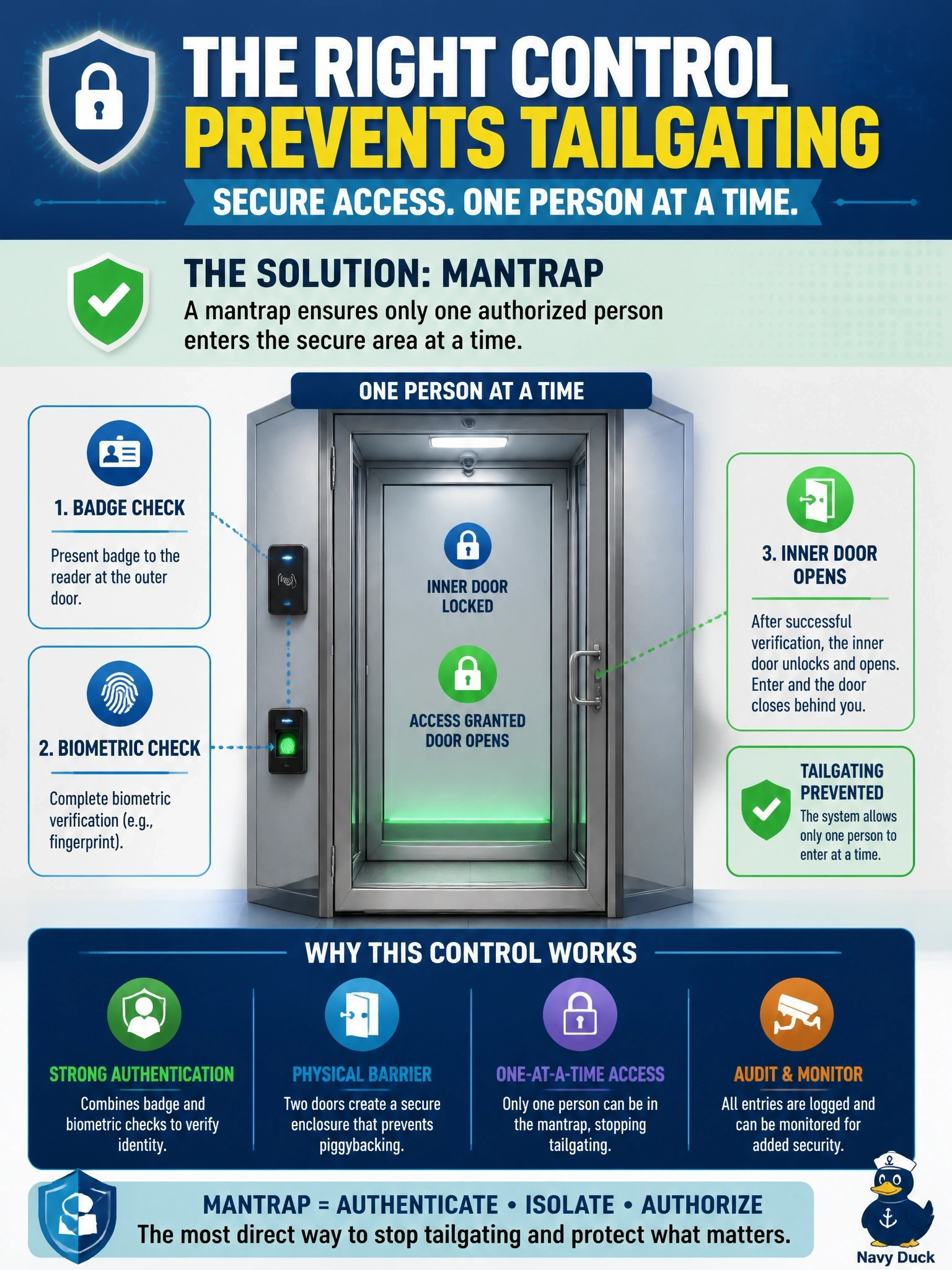
Short Explanation
Tailgating works because a door doesn't count heads. A mantrap does: it lets one person in, checks their badge and biometrics, and only then opens the inner door. Signs, cameras and logbooks are nice, but none of them physically stops you from strolling in behind somebody.
Full Explanation
Tailgating, or piggybacking, exploits a door that authenticates one person but cannot ensure only that person passes through. A mantrap, also called an access control vestibule, has two interlocked doors; the inner door opens only after the outer door has closed and the person inside has authenticated, often with a badge plus a biometric factor, and many designs use weight or sensors to detect a second occupant. That physically enforces one authenticated person per entry and is a preventive control layered with the building perimeter and the cage locks inside. Signs reminding employees are administrative awareness controls that depend on goodwill and confidence; they do not stop a determined tailgater or a polite employee. Additional CCTV is a detective and deterrent control; it records the event for later review but allows the unauthorized person into the hall. A reception logbook records visitor identity at the front desk, yet signing a book does not prevent anyone from following an employee through the server hall door. Exam caveat: physical access should be layered, and the innermost zones, where tenant equipment sits, warrant the strongest preventive controls. Operational check: review mantrap event logs for multiple-occupancy alarms and run a supervised tailgating test after installation.