
A provider's data center loses utility power. The standby generators start automatically but take several seconds to reach stable output, and some servers reboot during that gap. Which design element was missing or inadequate?
Select an answer to reveal the explanation.
Short Explanation
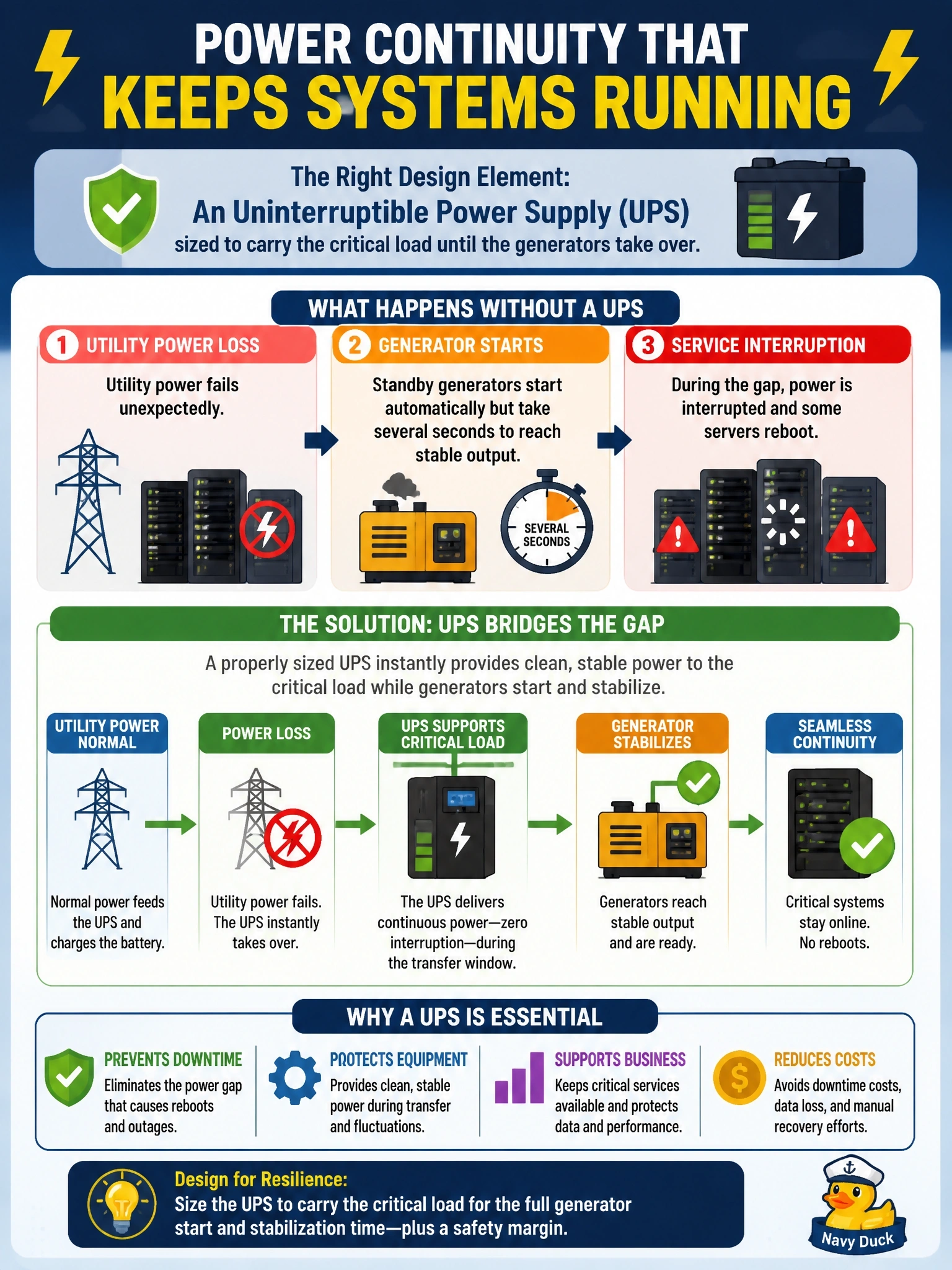
Generators are the marathon runners of backup power, but they need a few seconds to get off the starting line. The UPS is the sprinter that carries your load through that gap. If servers rebooted in those seconds, the bridge was missing or too small; bigger generators won't change the startup delay.
Full Explanation
Design resilience for power uses layers. Utility power is the primary source; standby generators provide long-duration backup but need time to start, synchronize and stabilize voltage and frequency. Uninterruptible power supplies, using batteries or flywheels, carry the critical load instantly during that interval, so equipment sees no interruption. If servers rebooted while generators came online, the UPS layer was absent, undersized or faulty, which is what must be fixed. A second utility feed from the same substation adds little resilience because a substation fault takes out both feeds, and it still would not cover the switching gap if the utility failed broadly. Larger generators with more fuel extend runtime during long outages, but they do not start any faster, so the seconds-long gap remains. An automatic transfer switch is part of a standard design and switches the load to the generator once its output is acceptable; it does not supply power during the gap itself, so it cannot substitute for a UPS. Exam caveat: UPS runtime is sized to bridge to generators and allow graceful shutdown if they fail, not to run the facility for hours. Operational check: review UPS capacity and battery health reports, and confirm a load transfer test shows no interruption at the server power supplies.