
Counsel requires that data under legal hold in cloud object storage cannot be altered or deleted, even by administrators, and that only named members of the legal team can access it. Which combination of controls meets this requirement?
Select an answer to reveal the explanation.
Short Explanation
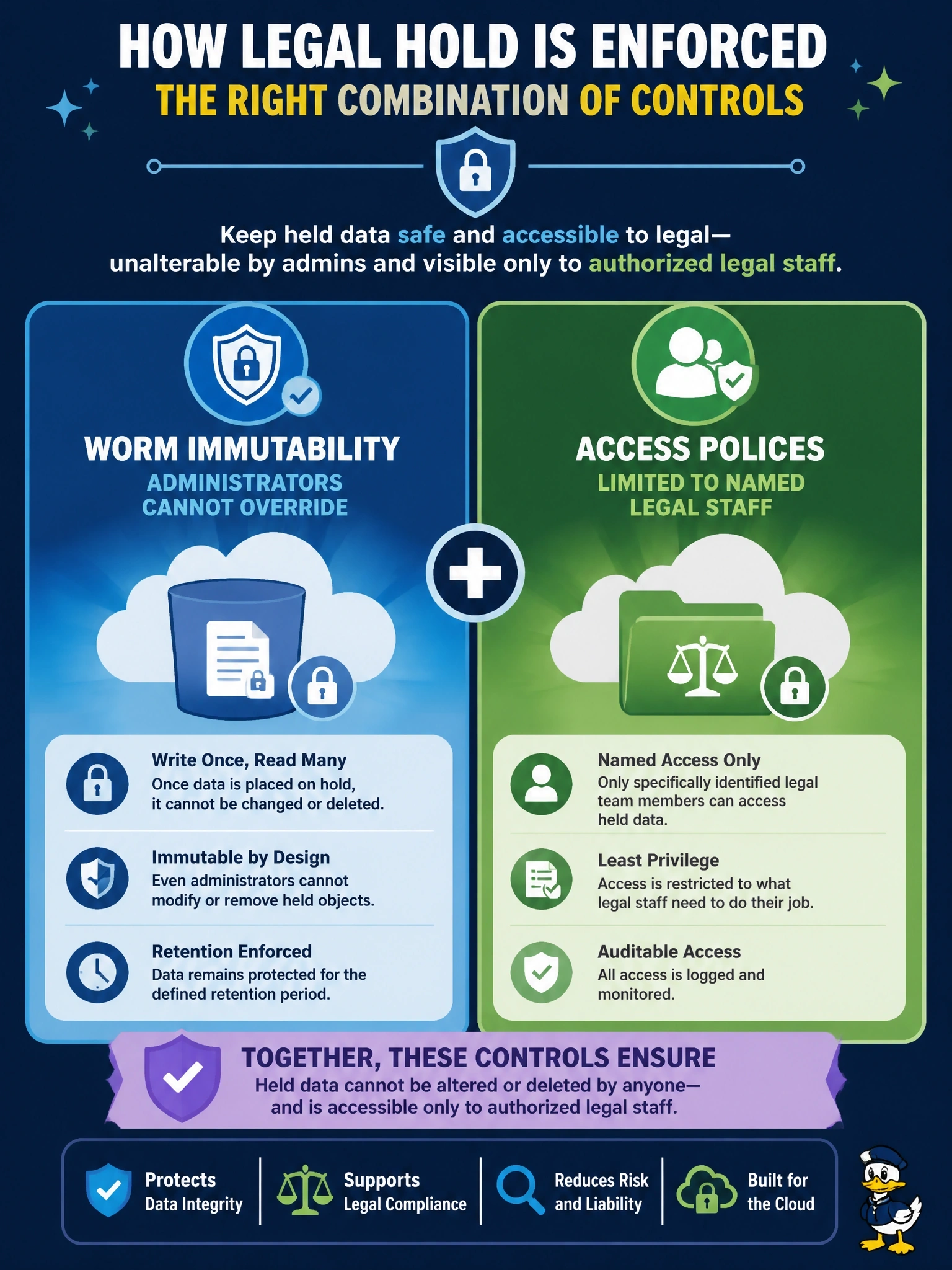
You've got two requirements, so you need two locks: nobody can change or delete it, and only the right people can see it. WORM immutability handles the first, even against admins, and tight access policies handle the second. Versioning and encryption sound protective, but neither stops a determined admin from deleting.
Full Explanation
The legal hold requirements in the outline include deletion prevention and authorized access. Write once, read many immutability applied to the held objects prevents modification and deletion for the hold's duration, and when configured in a mode that privileged users cannot shorten or remove, it protects against administrator error and insider tampering. Access policies restricted to named legal staff satisfy the authorized access requirement and support chain of custody, with logging to show who accessed what. Versioning preserves earlier versions when objects are overwritten, but versions can still be deleted by sufficiently privileged users, and granting read access to all employees violates the restricted access requirement. Encryption with a customer-managed key protects confidentiality, and a nightly backup adds a copy, but neither prevents alteration or deletion of the held objects, and a corrupted object may simply be backed up. Moving data to an archival tier changes cost and retrieval characteristics, not mutability, and a written reminder is an administrative control that cannot prevent privileged actions. Exam caveat: immutability with no administrative override must be applied carefully, since it cannot be undone before expiry. Operational check: attempt to delete a held object with an administrator account and confirm the request is denied and logged.