
A partner contract has ended. Design documents previously shared with the partner were protected with IRM, and copies remain on the partner's laptops and file servers. What should the company do to stop further access to those copies?
Select an answer to reveal the explanation.
Short Explanation
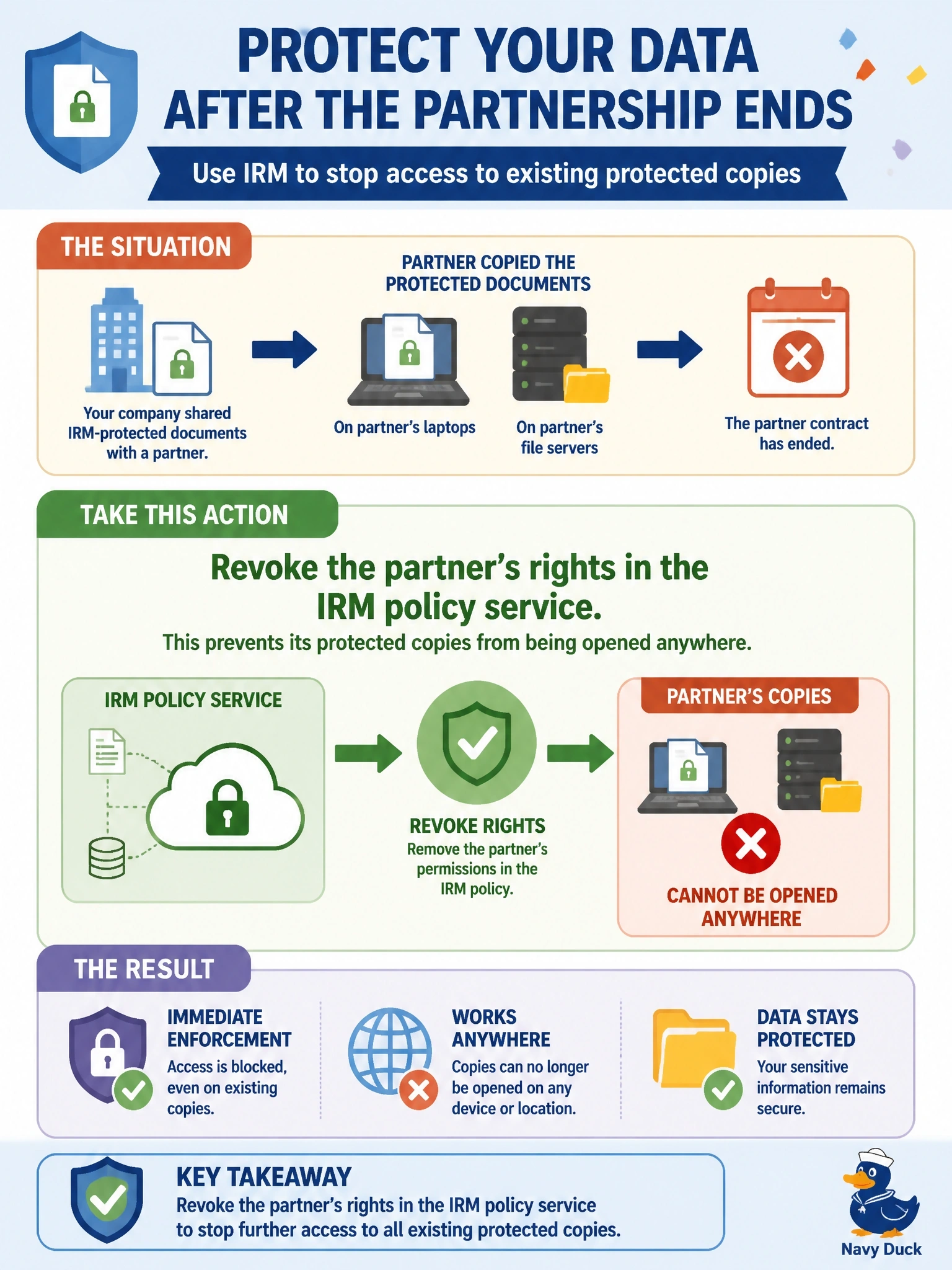
Here's where IRM earns its keep: you can pull the plug on files that already left the building. Revoke the partner's rights, and the next time they try to open a copy, the policy server says no. TLS certificates and deleting your own copy don't touch files sitting on their laptops.
Full Explanation
Remote revocation is one of the defining capabilities of information rights management. Protected files remain encrypted, and opening them requires the client to obtain a license or key from the IRM policy service based on the user's identity and current rights. When the company removes the partner's rights or revokes the documents, subsequent attempts to open the copies fail because no new license is issued, even though the files themselves remain on the partner's systems. Deleting the documents from the company's repository has no effect on copies already stored elsewhere; IRM-protected copies are independent files, and synchronization does not delete them. Rotating the TLS certificate used during transfer affects only future encrypted sessions; the documents were protected by IRM, not by the transport certificate, and copies at rest are unaffected. A certificate of destruction is a reasonable contractual measure, but the claim that IRM has no effect on downloaded copies is false; persistent control after distribution is IRM's purpose. Exam caveat: cached offline licenses can allow access until they expire, so revocation may take effect only after the lease ends. Operational check: after revocation, attempt to open a protected copy with the former partner's account and confirm access is denied and logged.