
An engineering firm emails CAD drawings to a supplier and needs the drawings to remain protected after they arrive, with the firm still controlling who can open them and what recipients can do. Which technology fits this requirement?
Select an answer to reveal the explanation.
Short Explanation
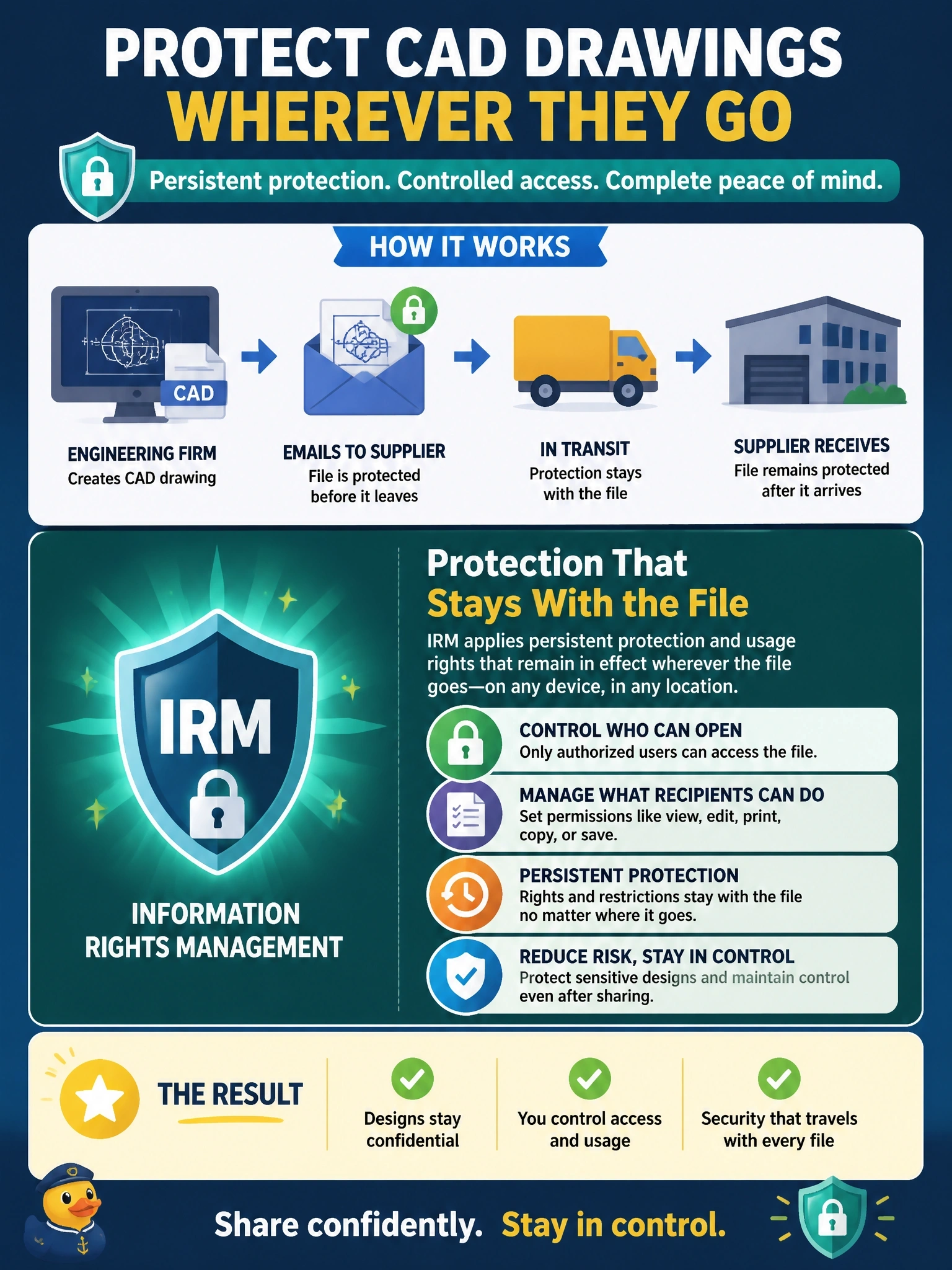
DLP is a border guard: once the file's across the border, it's out of the guard's hands. IRM is more like a leash that stays on the file, so you decide who opens it and what they can do with it, even on the supplier's systems. TLS only protects the trip, not the destination.
Full Explanation
Information rights management protects content by encrypting the file and binding it to a policy that specifies which identities may open it and what actions they may perform, such as view, edit, print or forward. Each time the file is opened, the IRM client checks with the policy service, so the protection persists after the file leaves the organization and the owner can change or revoke rights later. That is exactly the requirement for drawings that must stay controlled on the supplier's systems. Network DLP inspects data leaving the organization and can block or allow transfers, but once an approved transfer occurs, DLP has no control over the file at its destination. TLS protects the confidentiality and integrity of the message while it is in transit between mail servers; after delivery, the attachment is stored and opened in cleartext. A CASB in proxy mode monitors and controls access to sanctioned cloud services, but emailed attachments stored on the supplier's own systems are outside that path. Exam caveat: IRM requires recipients to use compatible clients and authenticate, which creates provisioning work for external parties. Operational check: send a protected test drawing to a supplier account and confirm unauthorized actions are blocked and access is logged.