
A customer portal went offline because a TLS certificate expired without anyone noticing. Certificates across the company are requested and installed manually by different teams. What is the most effective control to prevent a repeat?
Select an answer to reveal the explanation.
Short Explanation
Certificates are like passports: they expire whether you're watching or not. You need a list of every one you've got, alerts before expiry, and automatic renewal so a human doesn't have to remember. Longer validity just means you forget about them for longer.
Full Explanation
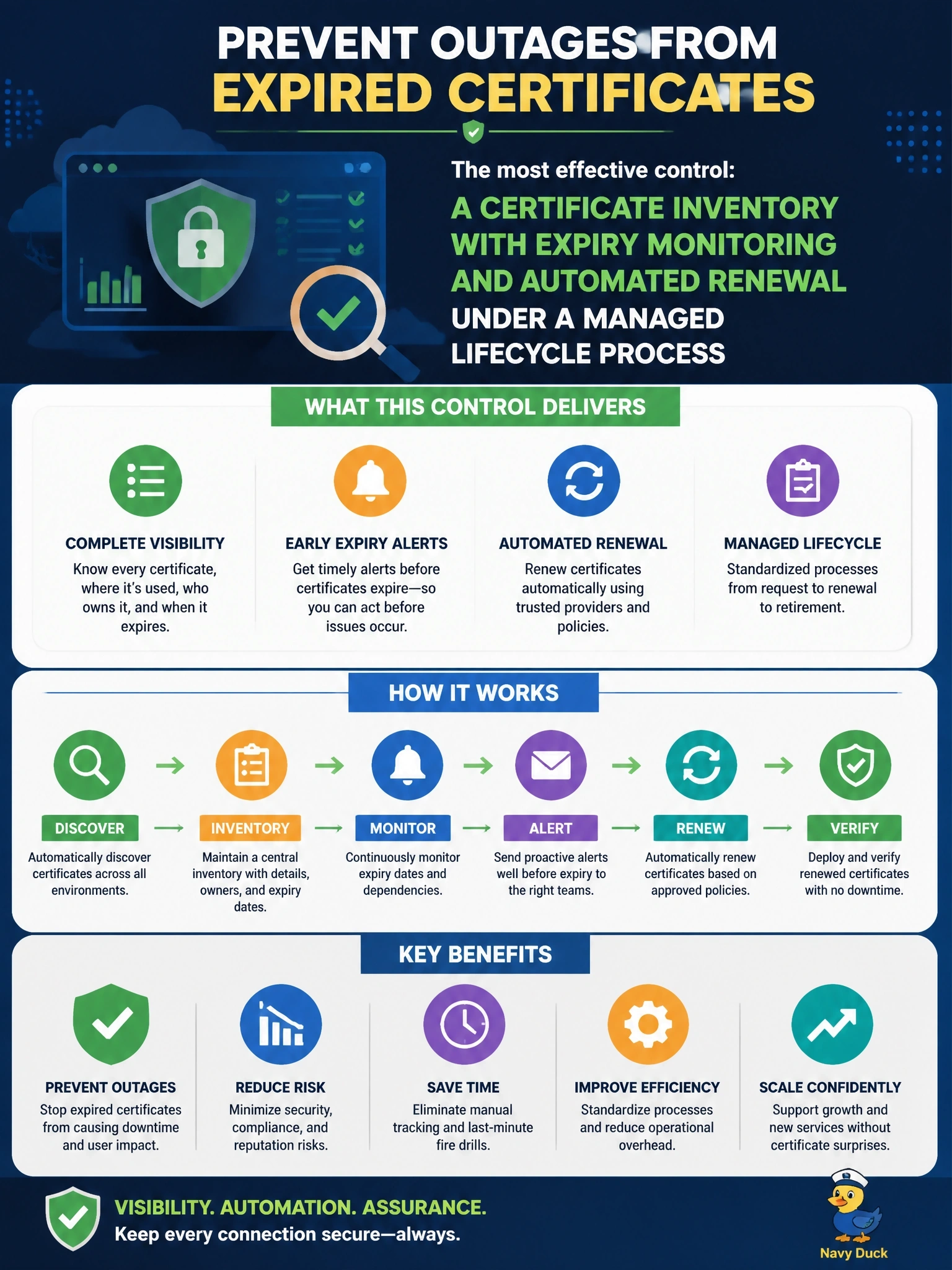
Certificate outages are a lifecycle management failure rather than a cryptographic one. When certificates are requested and installed manually by scattered teams, nobody has a complete view of what exists, where it is deployed and when it expires. The effective control is centralized certificate lifecycle management: discover and inventory every certificate, assign owners, monitor expiry with alerts well ahead of time and automate issuance and renewal through managed certificate services or automated enrollment protocols. Seeking the longest validity period makes renewals rarer, which increases the chance that knowledge of the certificate and its renewal process is lost, and public CAs restrict maximum validity anyway, with the trend toward shorter lifetimes. Self-signed certificates are not trusted by browsers and customer clients, so a public portal would present warnings or fail, and they bypass the organization's trust model. Disabling expiry checks on the load balancer does not change what clients validate; browsers and API clients will still reject an expired certificate, and suppressing checks hides problems. Exam caveat: the outline groups secrets, keys and certificates because all three need inventory, rotation and access control. Operational check: compare the certificate inventory with discovered endpoints and confirm alerts fire at least thirty days before expiry.