
An audit finds that twelve cloud administrators hold standing full administrative rights on the management console at all times, although most of their daily work needs only read access. Which change best reduces this privileged access risk?
Select an answer to reveal the explanation.
Short Explanation
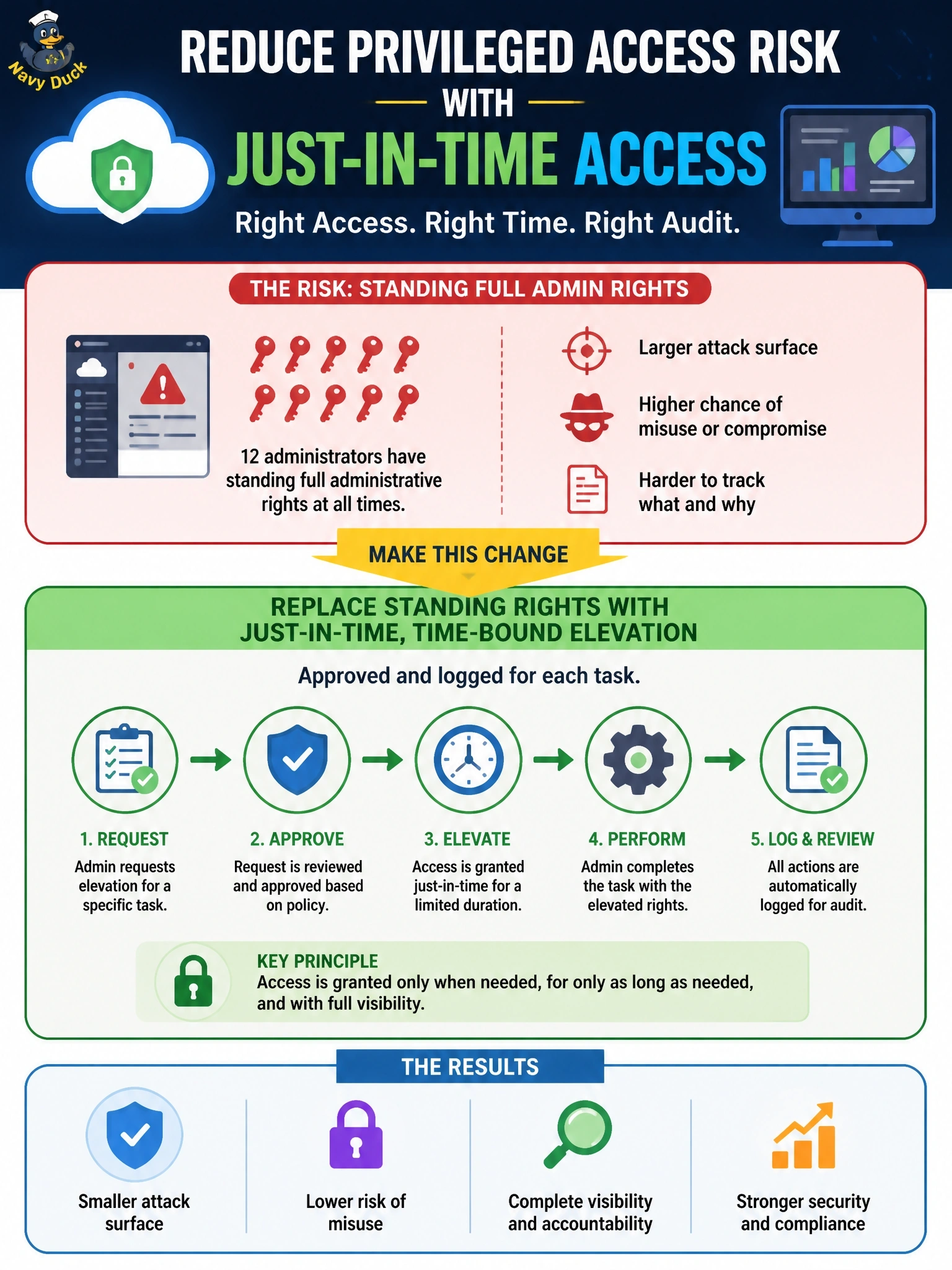
You don't hand every staff member the master key just in case; you check it out from the front desk when a job needs it and return it after. Just-in-time access works the same way. The trap is password rotation, which changes the lock combination but leaves twelve master keys in circulation.
Full Explanation
Standing privilege means powerful rights exist all the time, so any compromised administrator account, phishing success or insider mistake has full impact at any moment. Just-in-time privileged access grants elevated rights only when a specific task requires them, for a limited duration, usually with approval and full logging, and then removes them automatically. Day-to-day work runs on least-privilege read access. This shrinks the window in which privileges can be abused and creates an auditable record linking each elevation to a reason. Periodic password changes leave the standing rights untouched; a stolen session token or a phished password within the period still carries full administrative power, and frequent forced changes add little against modern attacks. Consolidating into one shared account destroys individual accountability, because actions can no longer be attributed to a person, and break-glass accounts are meant for emergencies, not routine work. Placing administrators on a separate network segment adds a minor access restriction but does nothing to the scope of their rights in a console reachable through identity rather than network location. Exam caveat: break-glass accounts remain appropriate for emergencies if tightly monitored. Operational check: confirm that no human identity holds permanent administrative roles and that every elevation has a ticket reference.