
During a contract renewal review, the information security manager finds that the agreement with a payroll vendor that processes employee personal data contains no clause requiring the vendor to report security incidents. What is the BEST way to address this gap?
Select an answer to reveal the explanation.
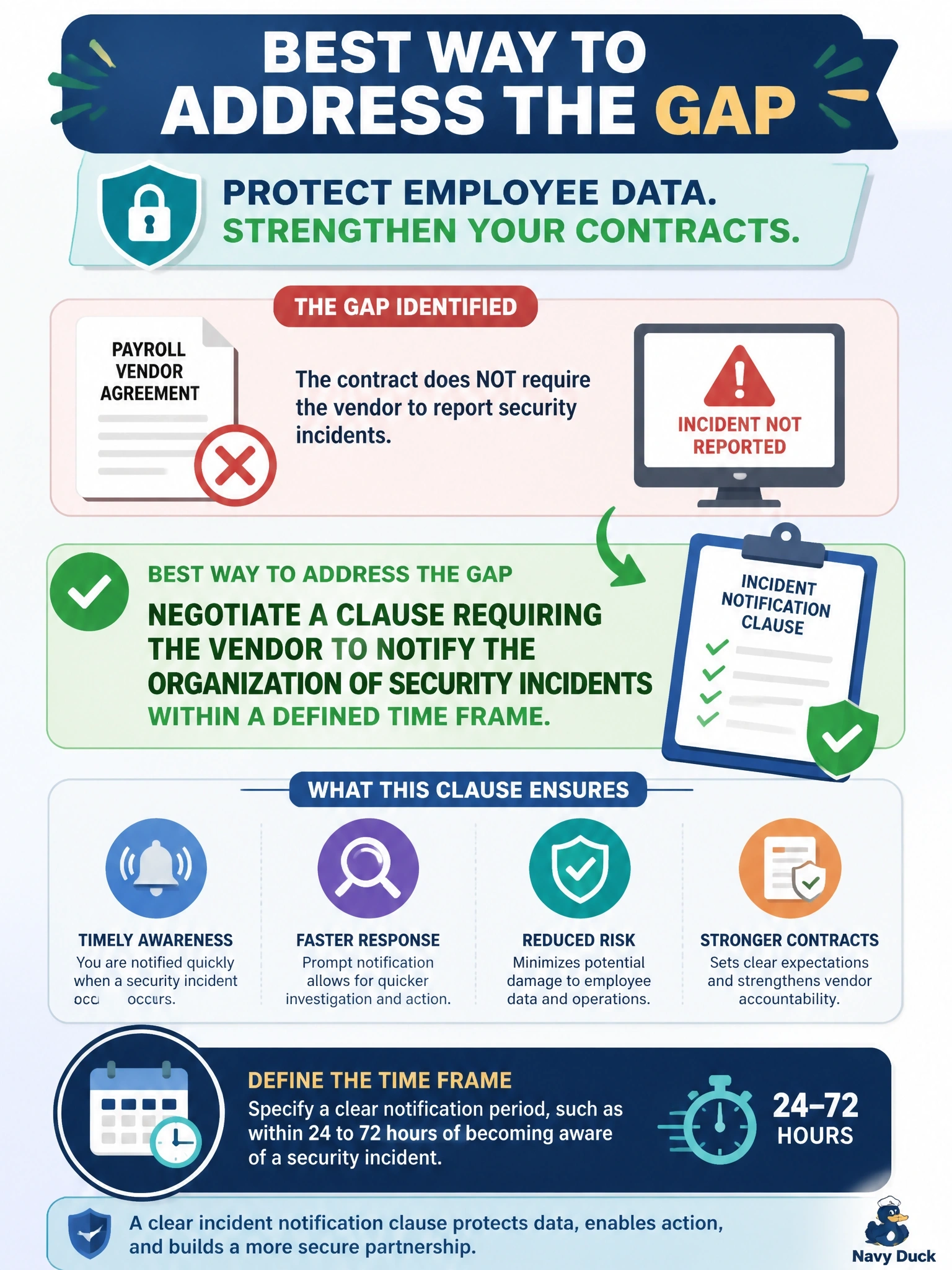
Short Explanation
Think of the contract as the only leash you have on a vendor: if it doesn't say "tell us when you get breached," you may hear about it on the news. The fix is a notification clause with a clock on it. Don't get pulled toward insurance or annual reports; neither tells you about an incident while it's happening.
Full Explanation
When personal data is processed by an external party, the organization remains accountable for it, yet it cannot see inside the vendor's environment. A contractual obligation to report security incidents within a defined time frame is the mechanism that brings the vendor's incidents into the organization's own incident response and regulatory notification process. Renewal is the natural point of leverage to add it. Expanding internal log monitoring fails by concept: the organization's logs do not cover the vendor's infrastructure, so most vendor-side compromises would never appear in them. Cyber insurance transfers part of the financial consequence but does nothing to make the organization aware of an incident, and it does not transfer accountability for the employees' data. An annual independent assessment gives periodic assurance about control design and operation, which is valuable, but it is a point-in-time view and says nothing about a breach occurring between reports. Exam caveat: notification terms work best alongside cooperation duties, such as preserving evidence and supporting the investigation. Operational check: confirm the clause defines what counts as an incident, the maximum time to notify, the contact points on both sides and the information the vendor must supply.