
An information security manager is reviewing a service provider's independent assurance report on its controls before relying on it. Which review step is MOST important?
Select an answer to reveal the explanation.
Short Explanation
An inspection certificate for the wrong building doesn't tell you much about yours. You need to check the report covers your services, read what went wrong, and do your part of the deal. The trap is filing it just because an independent firm signed it.
Full Explanation
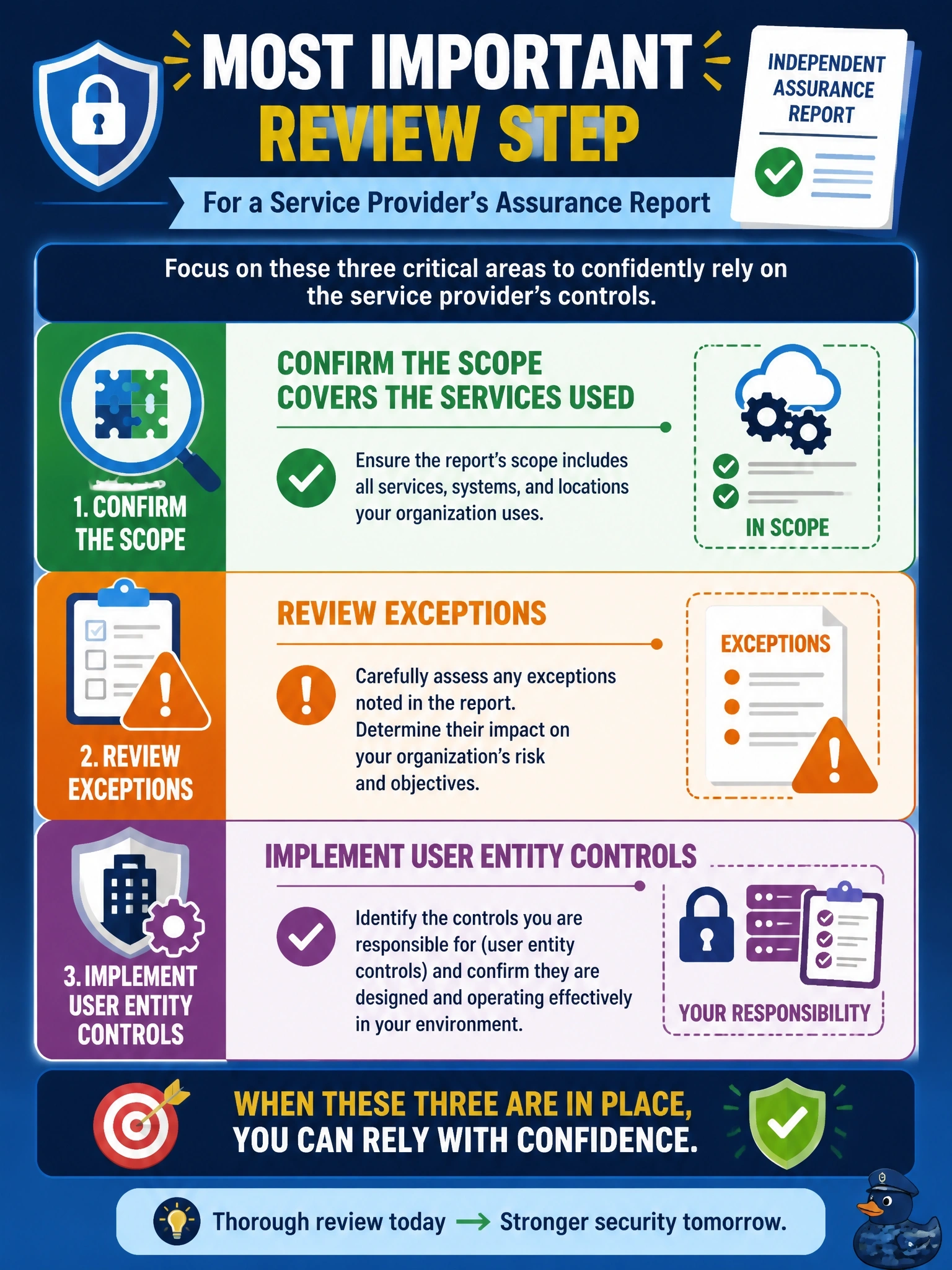
An independent assurance report provides evidence about a provider's controls, but its value depends on how it relates to the services the organization actually uses. The manager should confirm that the report's scope, period and systems cover those services, review any exceptions and qualified opinions and assess their impact, check whether significant subservice organizations are carved out, and identify the complementary user entity controls the provider assumes customers will operate. Those customer-side controls must be implemented, or the provider's controls may not achieve their objectives. Confirming the letterhead verifies presentation and gives no insight into whether the controls described meet the organization's needs. Filing the report as sufficient simply because an independent firm issued it ignores scope gaps, exceptions and customer responsibilities; independence of the auditor does not mean the report covers what matters or that the results are clean. Comparing report length across providers is meaningless, since length reflects scope and writing style rather than control quality. Exam caveat: a report that tests operating effectiveness over a period provides stronger evidence than one describing design at a point in time, so the report type should be noted. Operational check: maintain a review record for each report listing scope match, exceptions and their impact, and the internal owner of each complementary user entity control.