
A contract with a new cloud payroll provider that will process employee personal data is about to be signed. What should the information security manager ensure FIRST?
Select an answer to reveal the explanation.
Short Explanation
Once the ink is dry, your leverage walks out the door with it. Anything you'll need later, like audit rights and breach notice, has to be in the contract now. The trap is planning to assess the vendor after signing, when you can no longer make anything a condition.
Full Explanation
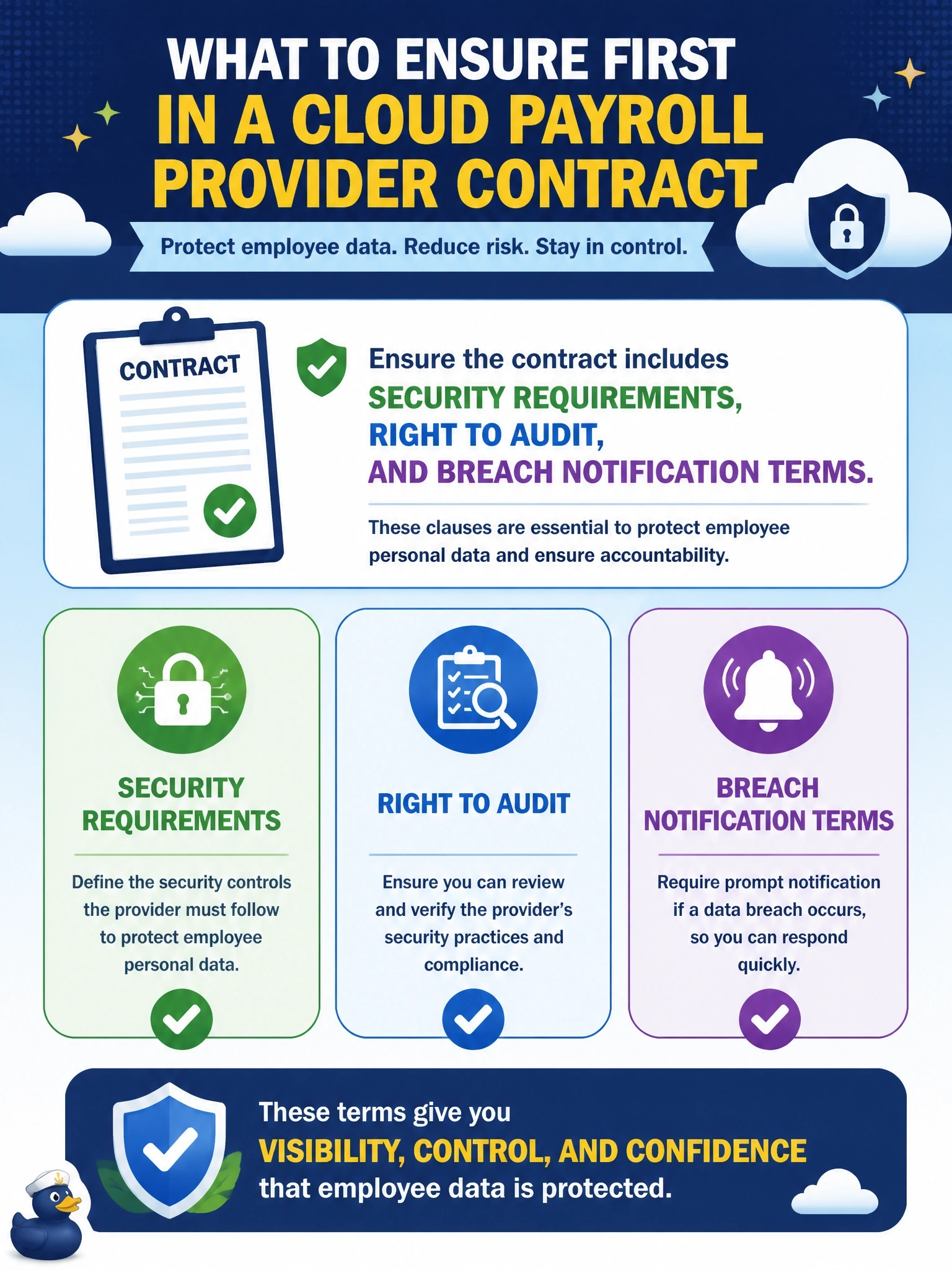
The contract is the organization's main lever for managing a provider's security, and its leverage is greatest before signing. The manager should ensure the contract includes the agreed security requirements, a right to audit or obtain independent assurance, obligations to notify the organization of breaches within a defined timeframe, data handling and location terms, subcontracting conditions and requirements at termination. Without these clauses, the organization may be unable to verify controls or learn of incidents affecting its employees' data. Marketing descriptions of certifications are not contractual commitments and may not cover the services being bought; they cannot substitute for enforceable terms. The timing of the business owner's signature is a commercial matter and has no bearing on whether security risk is addressed; pressure to sign quickly is often when terms are missed. Scheduling an assessment a year after signing comes too late to influence the agreement and leaves the organization without contractual means to require remediation if problems are found. Exam caveat: due diligence on the provider, such as a risk assessment and review of assurance reports, should precede contracting, and the contract then embeds the requirements that come out of it. Operational check: use a standard security schedule for supplier contracts and require security sign-off on the final agreement before execution.