
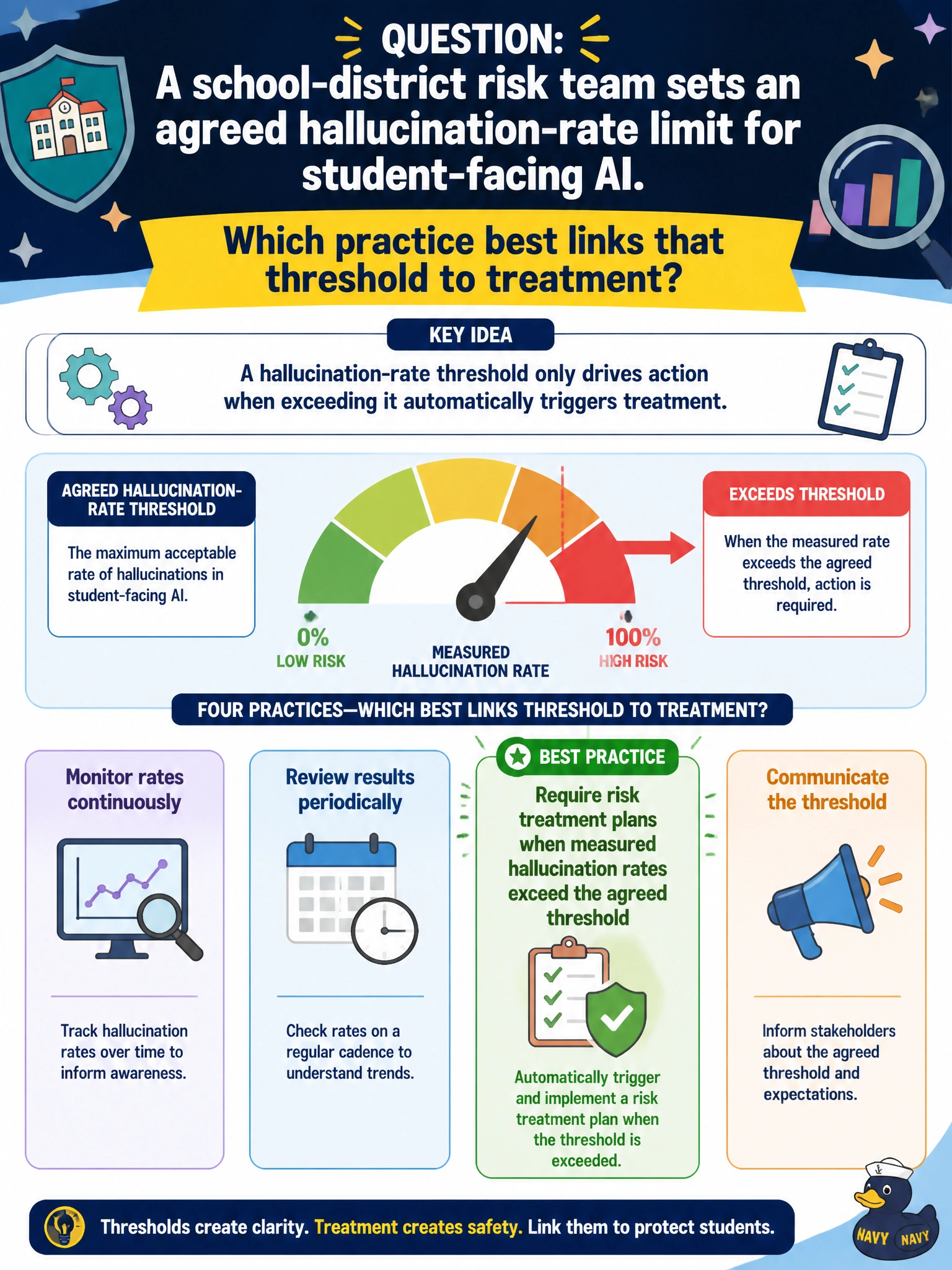
A school-district risk team sets an agreed hallucination-rate limit for student-facing AI. Which practice best links that threshold to treatment?
Select an answer to reveal the explanation.
Short Explanation
A hallucination cap only matters if crossing it forces a treatment plan. Watch the rate and act when it blows past the line. Updating the risk register, publishing updated transparency reports, or scheduling satisfaction surveys when you've crossed it doesn't treat the risk.
Full Explanation
An agreed hallucination-rate limit for student-facing AI is meaningful only when breaches trigger risk treatment. Requiring treatment plans when measured rates exceed the threshold connects monitoring to action—prompt changes, retrieval grounding, human review expansion, scope reduction, or temporary withdrawal—so the school district does not merely observe declining quality without remediation ownership.
Updating risk register entries when measured rates exceed the threshold only documents the breach and leaves students exposed without remediation, because the threshold isn’t linked to treatment action. Publishing updated transparency reports when measured rates exceed the threshold only communicates the breach and defers accountability without requiring treatment, letting the threshold become a hollow promise. Scheduling student satisfaction surveys when measured rates exceed the threshold only gathers perception feedback and doesn’t treat the underlying hallucination risk, so the threshold isn’t linked to remediation.
Exam caveat: treatment plans should be proportional; a slight breach may warrant tuning, while large or safety-relevant spikes may require suspension of student-facing use. Operational check: configure alerting when the hallucination metric crosses the agreed limit and verify a ticket or risk-treatment workflow opens to a named owner within the district's defined response time.
Prefer to study offline? Printable PDF study book + test engine ($7.50, unofficial). These questions stay free here.