
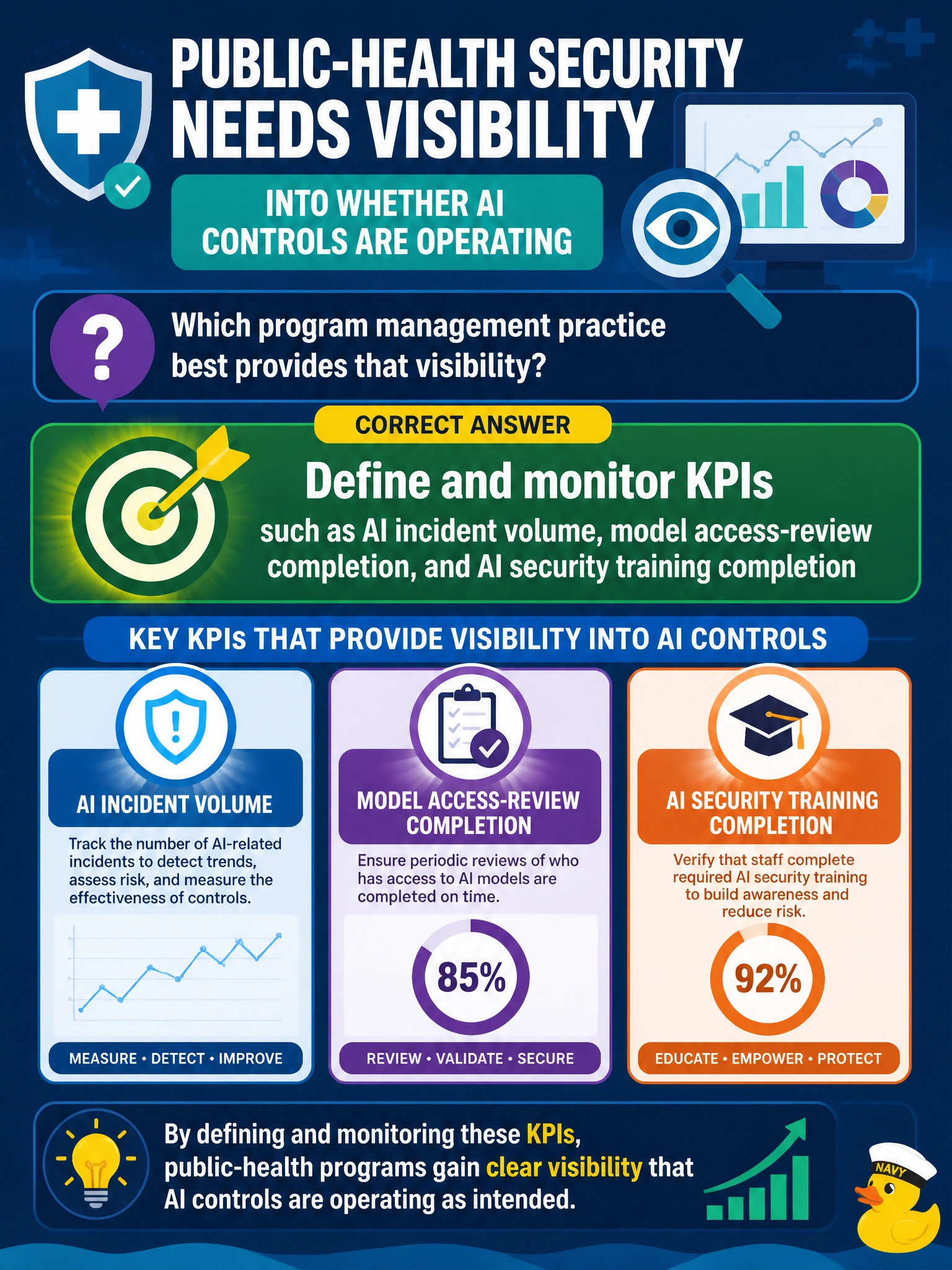
Public-health security needs visibility into whether AI controls are operating. Which program management practice best provides that visibility?
Select an answer to reveal the explanation.
Short Explanation
If you cannot see the scoreboard, you are not managing the game. Pick KPIs like AI incidents, access reviews, and training completion — then watch them. Metrics turn AI security from hope into a managed municipal program.
Full Explanation
Public-health security gains visibility into whether AI controls operate by defining and monitoring KPIs such as AI incident volume, model access-review completion, and AI security training completion. Those indicators reveal control health, residual risk, and capacity gaps in language clinic and municipal leadership can manage over time. Tracking only generative demos at community health fairs measures outreach theater, not whether access reviews finished or incidents were handled. Replacing metrics with annual verbal assurances from clinic managers substitutes anecdote for evidence, prevents trend analysis, and hides weak sites until a failure is public. Measuring success solely by how many models are deployed regardless of incidents incentivizes sprawl and ignores resident harm and control debt. Exam caveat: KPIs should include leading indicators (reviews completed, training completion, inventory freshness) and lagging indicators (incidents, policy exceptions), not vanity deployment counts alone. Operational check: stand up a small AI security dashboard with agreed thresholds and data owners for each KPI, review exceptions in the same forum that handles other public-health cyber metrics, and escalate repeated misses on access-review or training completion to the AI system owner’s management chain.
Prefer to study offline? Printable PDF study book + test engine ($7.50, unofficial). These questions stay free here.