
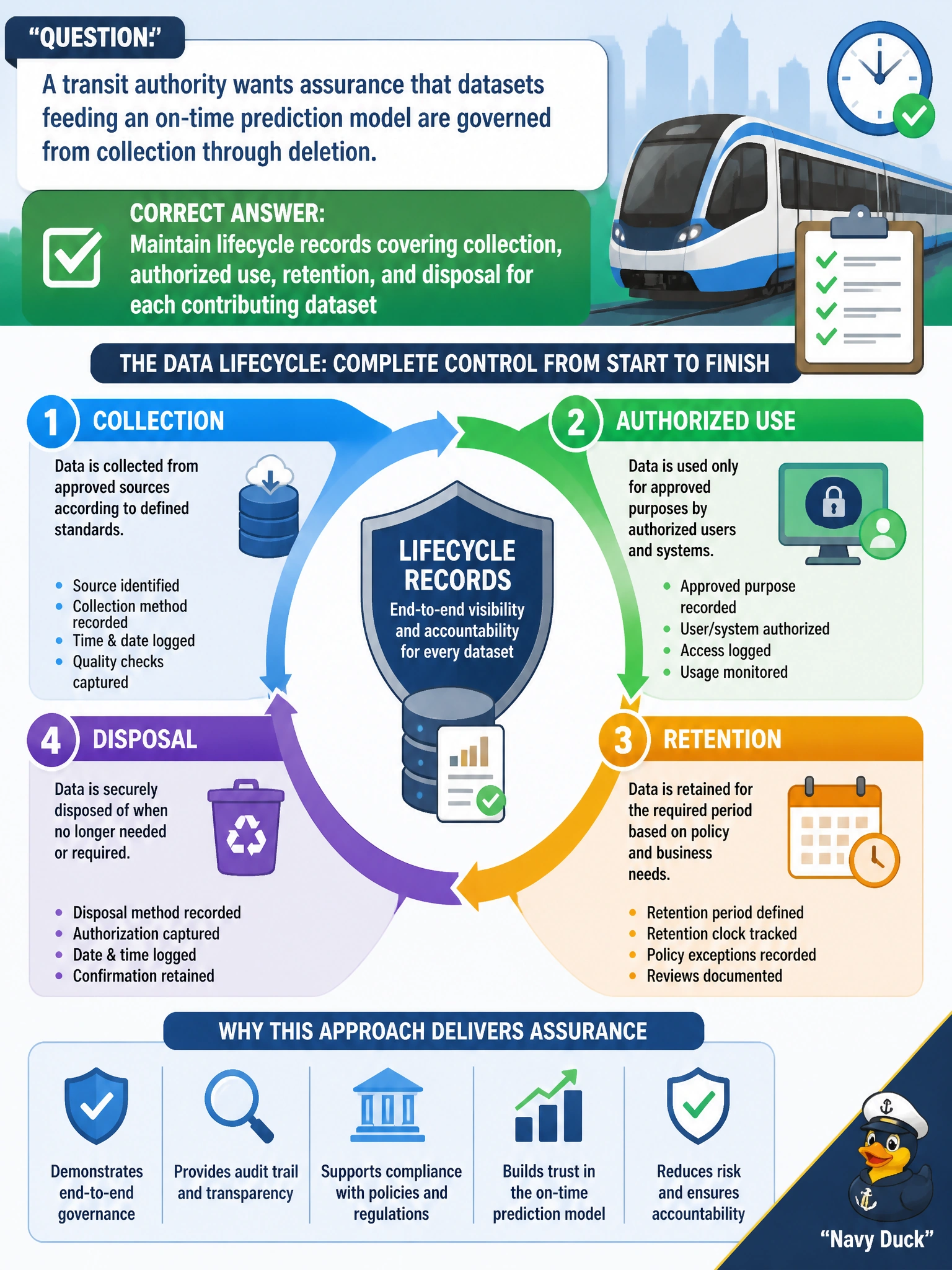
A transit authority wants assurance that datasets feeding an on-time prediction model are governed from collection through deletion. Which management approach best demonstrates that control?
Select an answer to reveal the explanation.
Short Explanation
Think of each dataset as a bus route with a start, stops, and a last stop — you need the whole map. Record how data is collected, used, kept, and finally deleted. That end-to-end trail is what lifecycle management looks like for AI training feeds.
Full Explanation
A transit authority demonstrates end-to-end governance of datasets feeding an on-time prediction model by maintaining lifecycle records covering collection, authorized use, retention, and disposal for each contributing dataset. Those records show who collected the data, for which prediction purposes it may be used, how long it remains, and how it is deleted—exactly the chain from ingest to deletion leadership asked for. Dashboard screenshots shared with the board capture a presentation artifact, not dataset lineage or retention evidence, so they cannot demonstrate lifecycle control. Vendor SLA uptime percentages measure service availability, not municipal data-lifecycle compliance; uptime does not prove authorized use or lawful disposal. Deleting source datasets immediately on ingest to avoid a retention schedule destroys auditability, impairs model quality investigation, and often conflicts with records and operational needs; absence of a schedule is not governance. Exam caveat: lifecycle records must cover feature stores, derived aggregates, and vendor copies, not only the original CSV the city first received. Operational check: for each contributing dataset, verify a current record listing source, purpose limitation, retention trigger, disposal method, and owner, and sample one disposal event to confirm evidence matches the schedule.
Prefer to study offline? Printable PDF study book + test engine ($7.50, unofficial). These questions stay free here.