
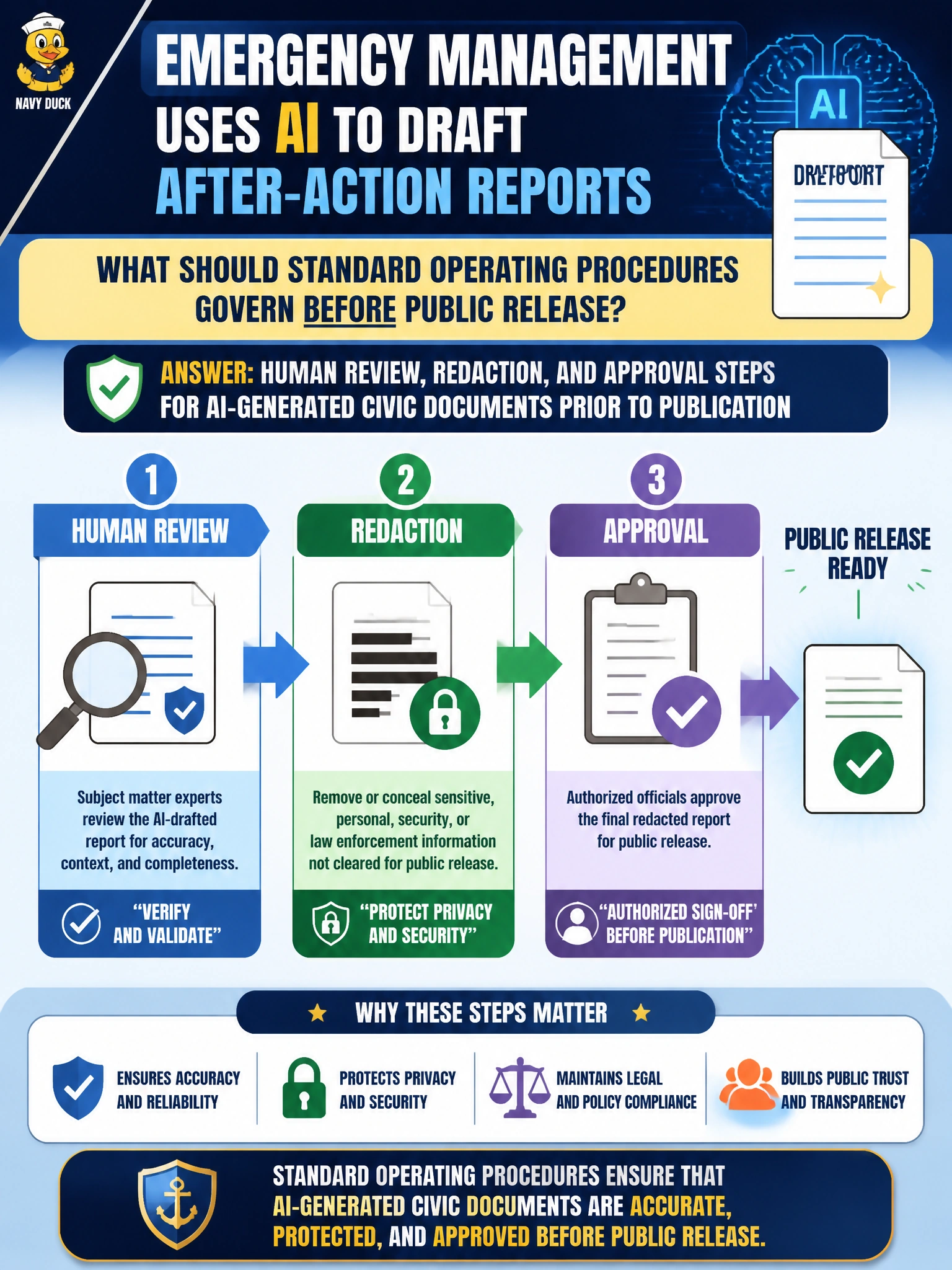
Emergency management will use AI to draft after-action reports. What should standard operating procedures govern before public release?
Select an answer to reveal the explanation.
Short Explanation
After-action reports can contain personal details, operational vulnerabilities, and criticisms of staff. Review them, redact what needs to stay private, then share what's appropriate.
Full Explanation
Establishing human review, redaction, and approval steps for AI-generated civic documents ensures sensitive information is removed before release and appropriate parties approve content before publication. After-action reports from emergency response may mention resident medical conditions, staff performance issues, security vulnerabilities, or locations of sensitive facilities. AI-drafted versions often retain this detail without recognizing sensitivity; humans must review and redact before publication. An approval step (emergency manager or records officer) ensures the report is accurate and ready for external sharing.
Preapproved model allowlists and version pinning requirements for drafting tools are a tool-control task, not a publication control: they do not provide review, redaction, or approval before civic documents go public, and they cannot prevent the leak of sensitive operational details: emergency response procedures, facility locations, staff names in negative contexts, or personal resident information. Using an allowlisted, pinned model version does not ensure privacy and operational security before release. Systematic logging of prompts, model versions, and latency metrics is useful documentation, but it is not an approval step: logs do not confer accountability for publication decisions, and the city remains liable for accuracy regardless of what was logged. Automated readability scoring and formatting checks for AI-generated civic documents are editorial polish, not publication controls: they do not remove sensitive details or substitute for human review before public release, though they support clarity and consistency. However, passing readability and formatting checks does not mean publishing unreviewed AI drafts; polished records still require appropriate redaction and human approval before release.
Operational check: audit the last three emergency after-action reports for: (1) evidence of human review (notes, redactions), (2) removal of sensitive operational or personal details, (3) records office sign-off on retention and releasability, and (4) consistency with open-records statutes and emergency management protocols.
Prefer to study offline? Printable PDF study book + test engine ($7.50, unofficial). These questions stay free here.