
A parks department proposes AI for turf irrigation scheduling. What should security require before capability rollout?
Select an answer to reveal the explanation.
Short Explanation
Before the sprinklers get a brain, write down how wrong you’re willing to be—and what “good” looks like. Risk appetite and objectives are the fence line; discounts and blind automation are how you flood the ballfield.
Full Explanation
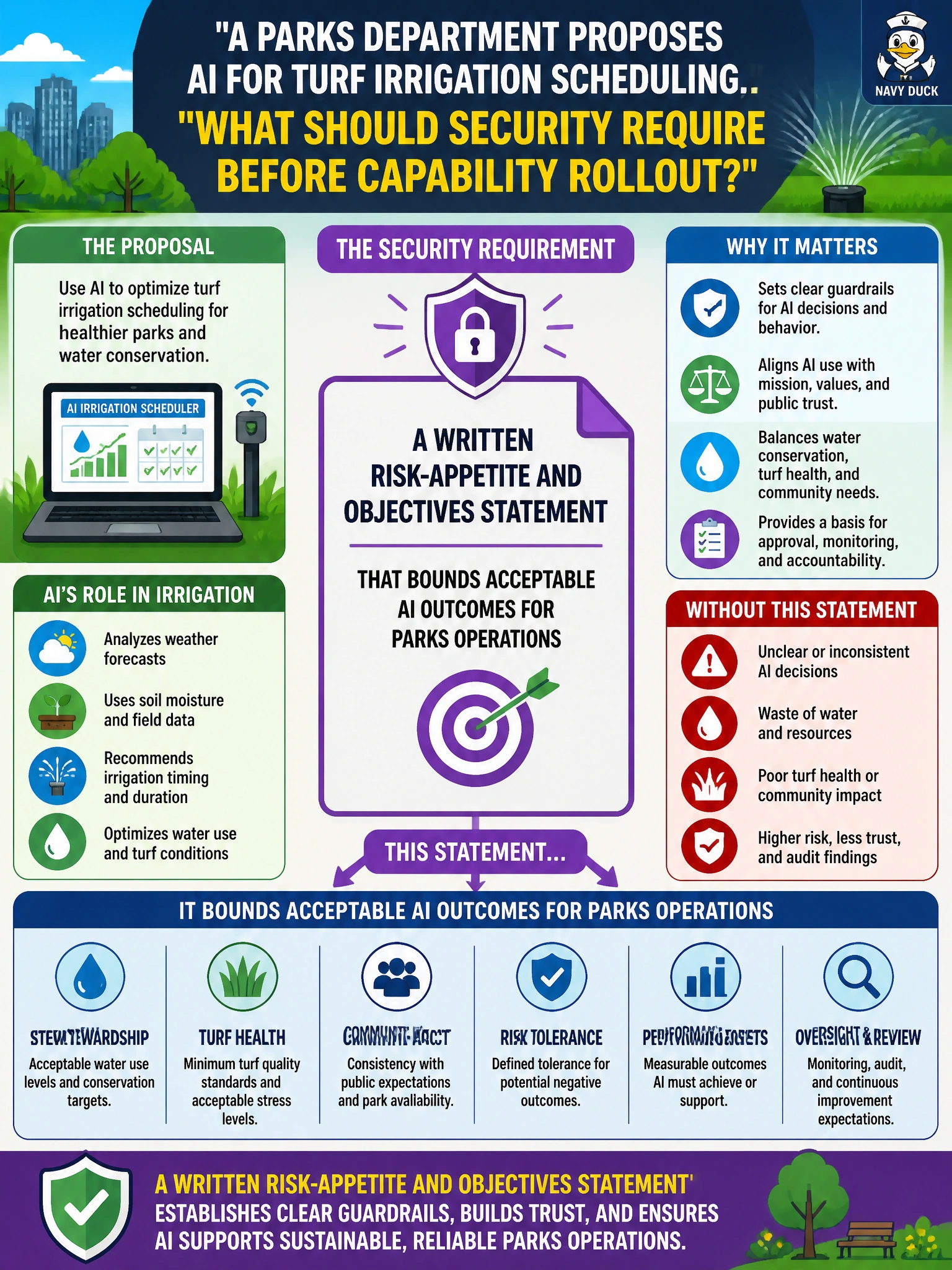
A written risk-appetite and objectives statement that bounds acceptable AI outcomes for parks operations is what security should require before irrigation-scheduling capability rollout. Appetite and objectives clarify how much watering error, drought-restriction conflict, or sensor failure the department will accept; which decisions remain human; and what success means for conservation and turf health. Without that fence line, autonomous expansion proceeds on vendor timelines instead of municipal risk judgment.
Immediate citywide autonomous irrigation control with no documented appetite fails because scale without bounds converts unknown model error into citywide resource and reputational impact. Deletion of all water-usage metrics so risk cannot be discussed fails conceptually: suppressing telemetry removes the evidence base for risk decisions and oversight. Vendor go-live based solely on a marketing discount deadline fails because procurement calendars are not risk acceptance and incentivize premature production use.
Exam caveat: risk appetite statements must be specific enough to constrain design (e.g., human approval thresholds, geographic pilot limits), not vague aspirations that every vendor can claim to meet.
Operational check: obtain a signed parks AI risk-appetite/objectives artifact, limit initial rollout to bounded pilots with metrics intact, and reject discount-driven go-lives that skip those artifacts.
Prefer to study offline? Printable PDF study book + test engine ($7.50, unofficial). These questions stay free here.