
A 311 manager needs a path when the chatbot gives unsafe answers about hazardous waste drop-off. What should procedures define?
Select an answer to reveal the explanation.
Short Explanation
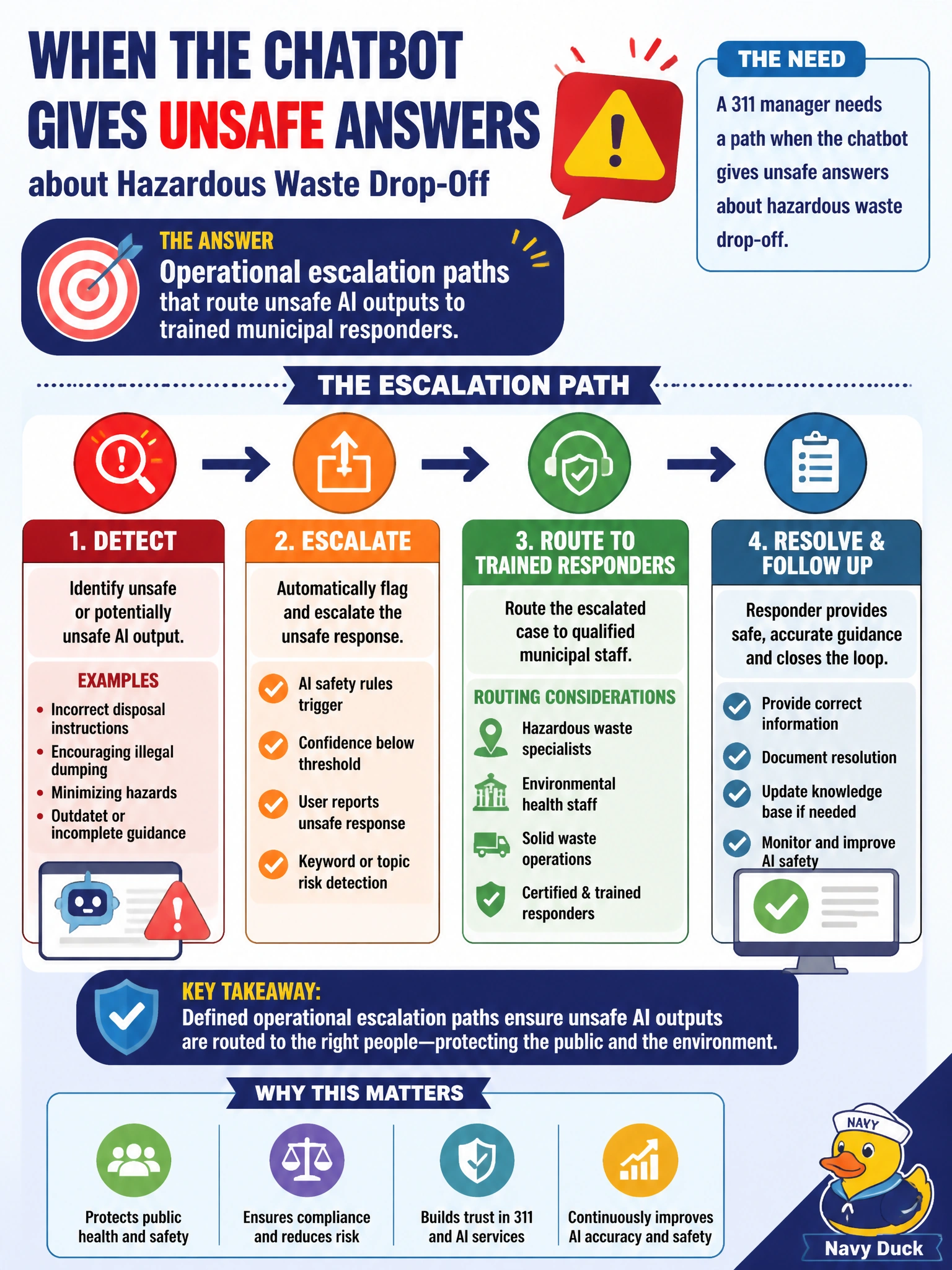
When the bot bungles hazardous-waste advice, you need a hotline to humans—not a log shredder or a Twitter poll. Procedures should shove unsafe outputs to trained municipal responders who can fix the guidance fast.
Full Explanation
Operational escalation paths that route unsafe AI outputs to trained municipal responders are what 311 procedures must define when a chatbot gives dangerous hazardous-waste guidance. Unsafe answers about chemicals, disposal, or illegal dumping can create environmental and resident harm; procedures should detect, quarantine, and hand off to humans who can correct the resident interaction and fix knowledge-base or model issues. Escalation plus retention of investigative context supports both immediate safety and learning.
Automatic deletion of all chatbot logs so unsafe answers cannot be investigated fails because it destroys evidence needed for root-cause analysis, public-records obligations where applicable, and pattern detection. A social-media reply contest to crowd-source corrections fails conceptually: unvetted public crowdsourcing is not a controlled municipal safety process and can spread further misinformation. Leaving unsafe answers for residents to interpret alone fails duty-of-care expectations for city services that residents reasonably trust.
Exam caveat: escalation paths need defined severity triggers, on-call roles, and SLAs; a vague “contact someone” note is not an operable procedure.
Operational check: confirm SOPs name trained responders for hazardous-advice failures, preserve sufficient logs for investigation, prohibit crowd-sourced correction as the primary control, and test the escalation drill.
Prefer to study offline? Printable PDF study book + test engine ($7.50, unofficial). These questions stay free here.