
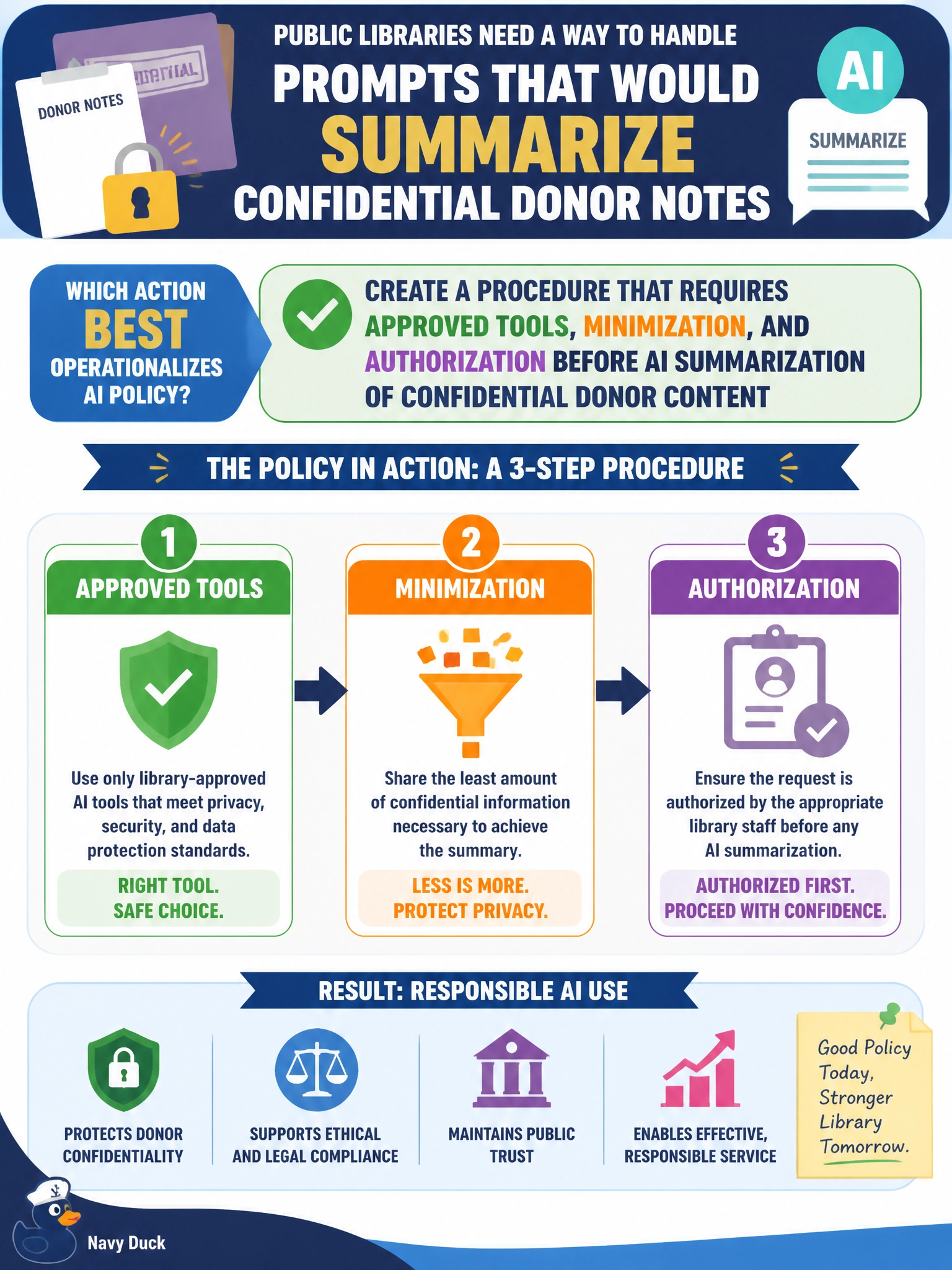
Public libraries need a way to handle prompts that would summarize confidential donor notes. Which action best operationalizes AI policy?
Select an answer to reveal the explanation.
Short Explanation
Donors trust you with their notes. You'll protect them with approved tools, minimization, and sign-off before you run anything, so general reference tools won't cut it and aggregate reports aren't what you're asked to protect. If you wait until after you've summarized to get authorization, you've already exposed confidential details.
Full Explanation
Creating a procedure that requires approved tools, minimization, and authorization before AI summarization is the action that protects donor confidentiality while enabling legitimate summarization. Approved tools must be vetted for data handling and retention practices; minimization means the library summarizes only what is necessary for collection development and redacts names and personal details; and requiring authorization before any AI summarization begins means a supervisor or designated reviewer signs off before confidential donor content ever reaches the tool. This procedure keeps donor confidentiality intact and lets the library comply with audits. Creating a procedure that requires approved tools, minimization, and authorization after AI summarization of confidential donor content comes too late to protect confidentiality: the confidential notes are already in the tool before a supervisor signs off, so retention or exposure cannot be undone. Creating a procedure that requires approved tools, minimization, and authorization before AI summarization of aggregate donor reports addresses the wrong content; aggregate reports do not present the same confidentiality risk as identifiable donor notes, so confidential notes would remain without required protection. Creating a procedure that requires general reference tools, minimization, and authorization before AI summarization of confidential donor content still exposes donor data to unvetted systems: general reference tools have not been vetted for data handling and retention practices for confidential content. Operational check: audit three instances of donor-note summarization to verify: (1) only approved tools were used, (2) a supervisor or designated reviewer authorized the request before processing, (3) PII/sensitive details were redacted from input, and (4) original notes are disposed of per the donor-retention schedule.
Prefer to study offline? Printable PDF study book + test engine ($7.50, unofficial). These questions stay free here.