
Municipal open-data stewards will publish model cards for city datasets used with public AI tools. Which constraint best reflects responsible-use principles?
Select an answer to reveal the explanation.
Short Explanation
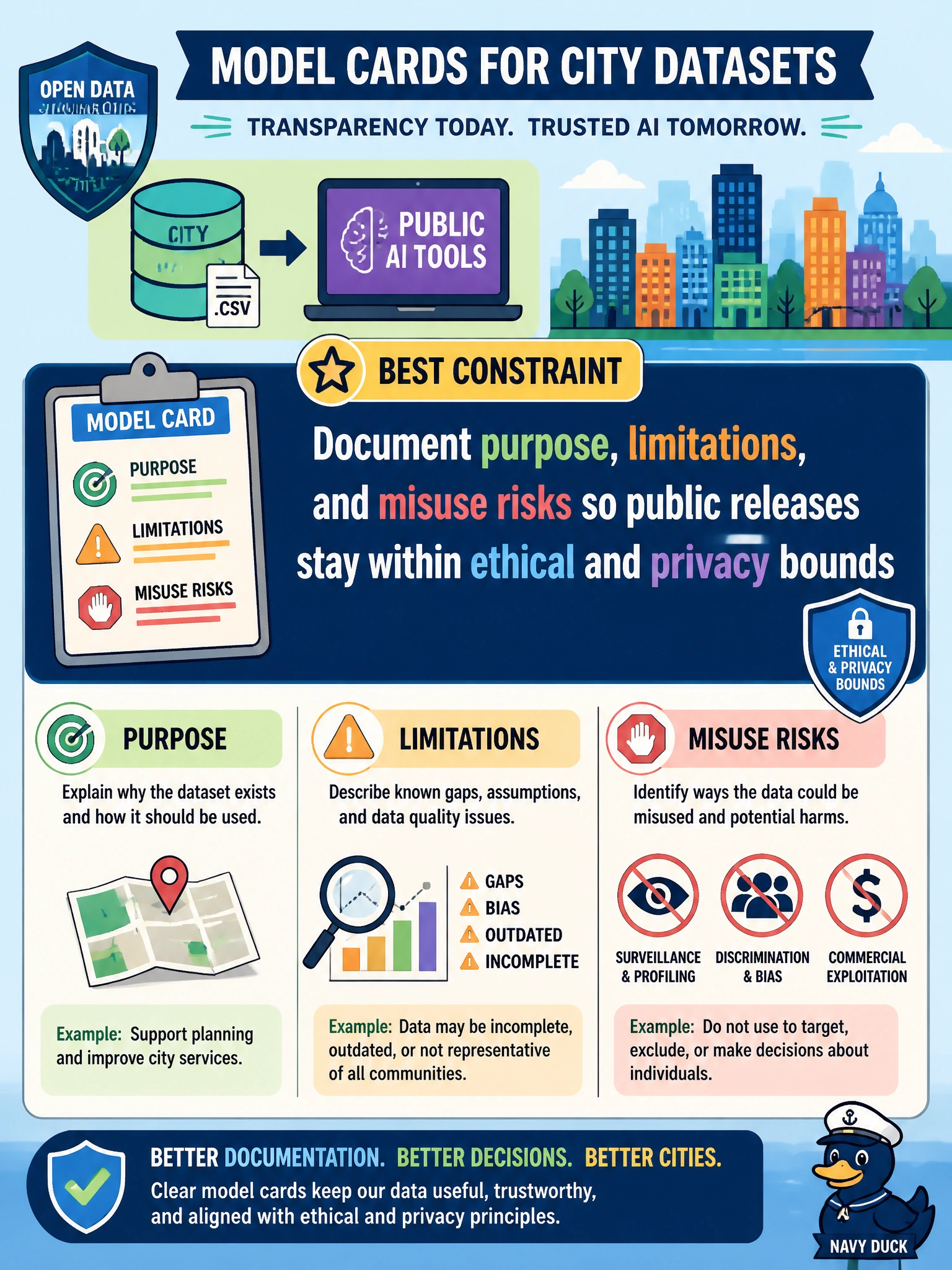
Open data isn’t a dumpster dive. Good model cards spell out purpose, limits, and misuse risks—like warning labels on power tools—so the city stays open without handing out confidential case files or a free pass to re-identify residents.
Full Explanation
Documenting purpose, limitations, and misuse risks so public model-card releases stay within ethical and privacy bounds is the correct transparency practice for civic AI. Model cards help residents, auditors, and partner agencies understand what a municipal system is intended to do, where it fails, and how it must not be used—without dumping raw confidential case content into the public domain. Bounded transparency builds trust while preserving duty of care for sensitive resident data that may underlie training, evaluation, or operational logs.
Publishing raw confidential case files alongside every model card for “full transparency” fails because transparency is not synonymous with unrestricted disclosure of protected records; it would violate privacy, harm residents, and undermine trust. Omitting limitations and intended-use statements to keep cards short fails conceptually: brevity that hides failure modes and scope invites misuse and over-reliance by staff and the public. Allowing any third party to re-identify residents if it improves research speed fails ethical and privacy duties; research convenience does not authorize re-identification of civic data subjects.
Exam caveat: a model card is a communication and governance artifact, not a substitute for access controls, DPIAs, or legal privilege determinations on underlying datasets.
Operational check: before public release, verify cards state purpose, limitations, and misuse risks; strip or aggregate sensitive examples; and confirm legal/privacy sign-off that confidentiality obligations were not traded for performative openness.
Prefer to study offline? Printable PDF study book + test engine ($7.50, unofficial). These questions stay free here.