
An organization's AI ethics policy states that all AI systems must be 'transparent.' A business unit argues their proprietary fraud detection algorithm cannot be disclosed to fraud perpetrators without defeating its purpose. How should this tension be resolved?
Select an answer to reveal the explanation.
Short Explanation
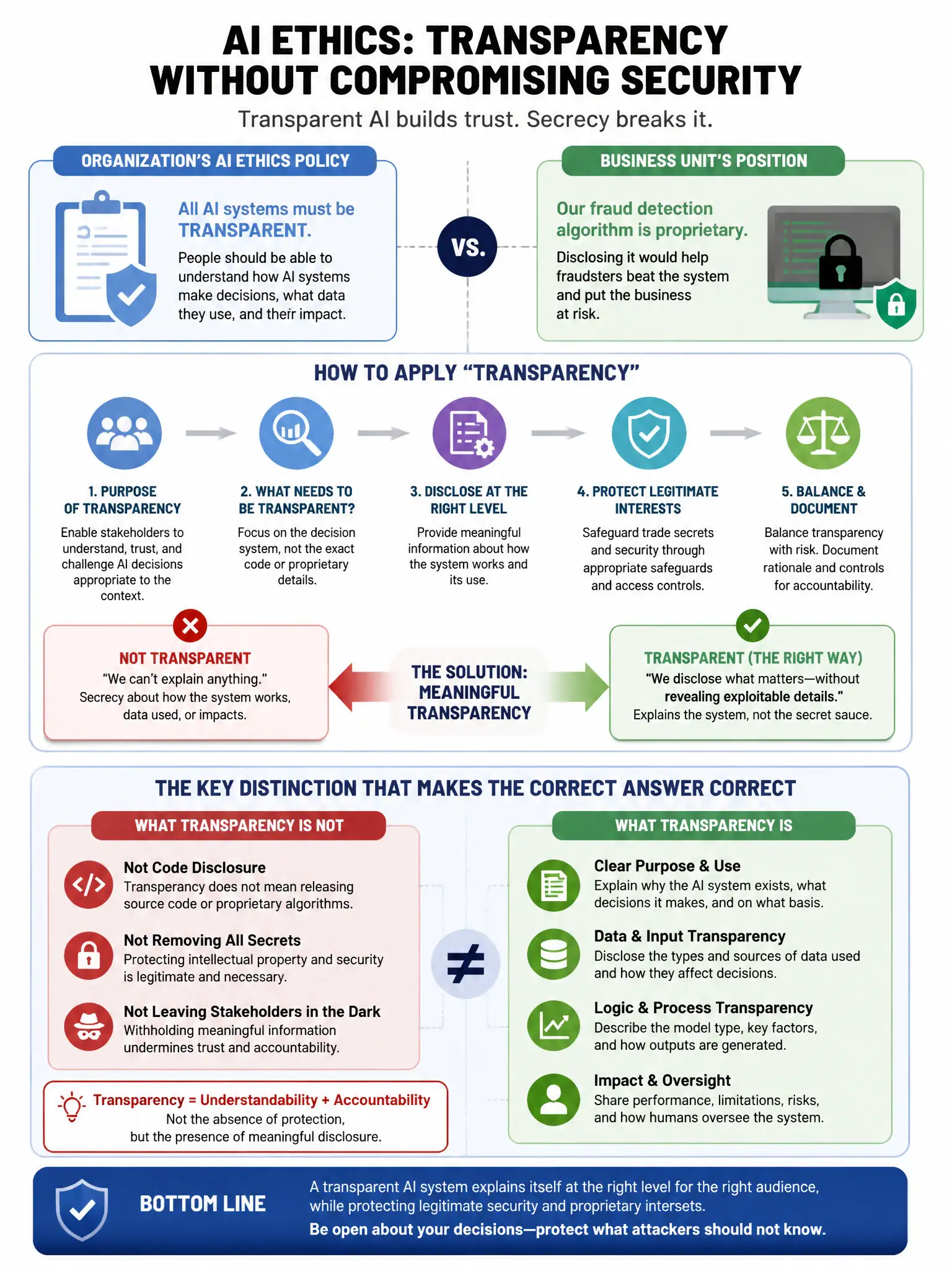
Here's the deal — transparency doesn't mean handing over every secret that would let fraudsters beat the system. You should give affected people enough information to understand decisions about them, with proportionate exceptions for real security concerns.
Full Explanation
The correct resolution is to interpret transparency as providing affected individuals with sufficient information to understand the basis for decisions affecting them, with proportionate exceptions for legitimate security concerns subject to governance oversight. Transparency does not require disclosing all technical details that would undermine the system's purpose. Requiring absolute disclosure of full model details is impractical and counterproductive. Treating fraud detection systems as categorically exempt from all transparency requirements is too broad an exemption. Limiting transparency requirements only to AI systems that use personal data under GDPR limits transparency to one legal framework.