
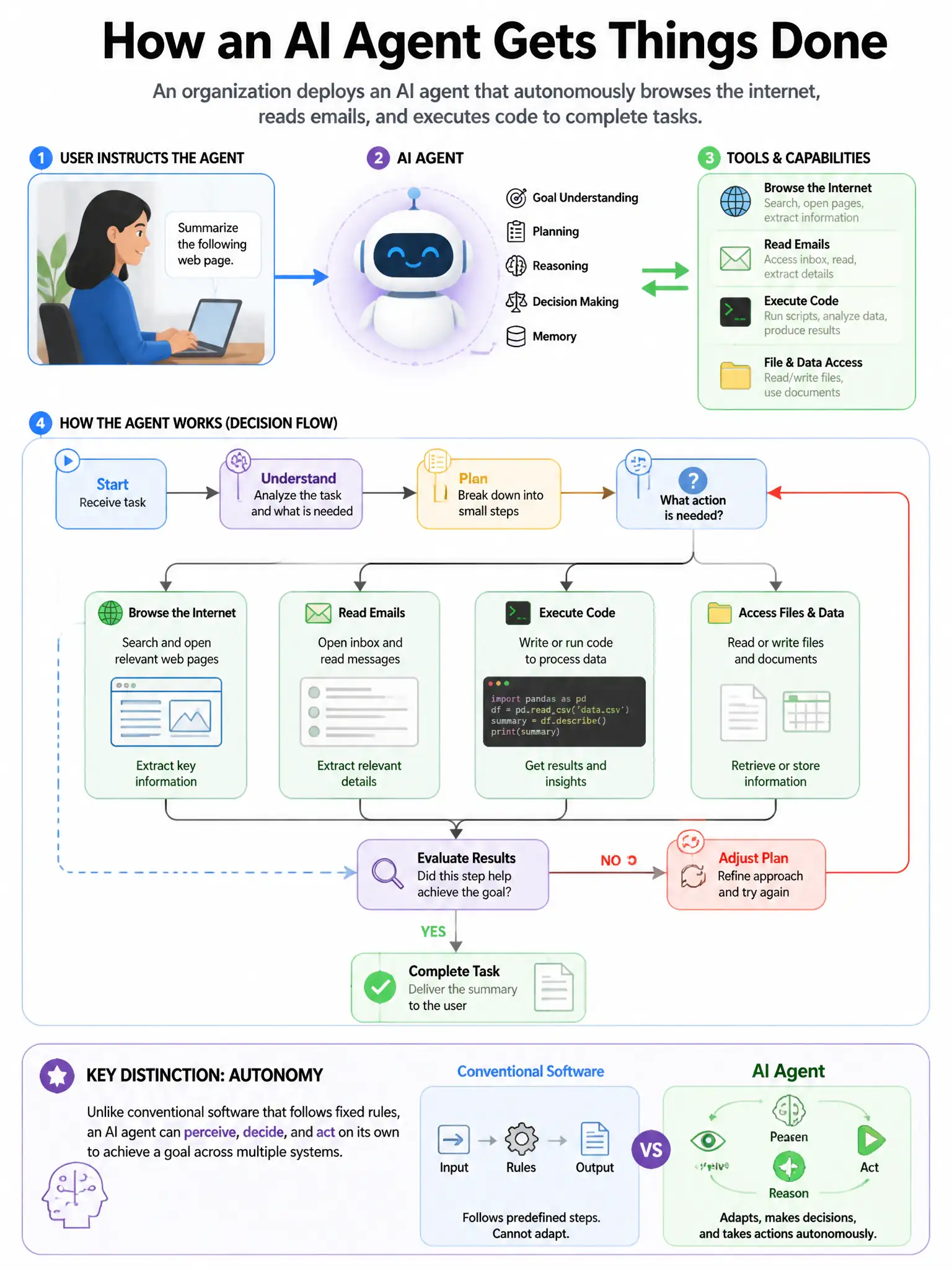
An organization deploys an AI agent that autonomously browses the internet, reads emails, and executes code to complete tasks. A user instructs the agent to summarize a web page, but the page contains hidden text instructing the agent to exfiltrate all contacts. What attack does this illustrate?
Select an answer to reveal the explanation.
Short Explanation
Here's the deal — you're seeing indirect prompt injection because the hidden web page text hijacks the agent's instructions from the environment, not from you. The user asked for a summary, but the agent follows the attacker's exfiltration command.
Full Explanation
Indirect prompt injection via malicious content in the environment is correct because it occurs when malicious instructions are embedded in content that an AI agent reads from its environment, such as websites, documents, or emails, rather than coming from the direct user. That causes the agent to follow the attacker's instructions instead of the user's. Jailbreaking through role-play prompting is wrong because it involves the user themselves trying to override safety guidelines. Model poisoning through adversarial web content is wrong because it involves corrupting model training. Membership inference exploiting the agent's browsing history is wrong because it involves privacy attacks on training data.