
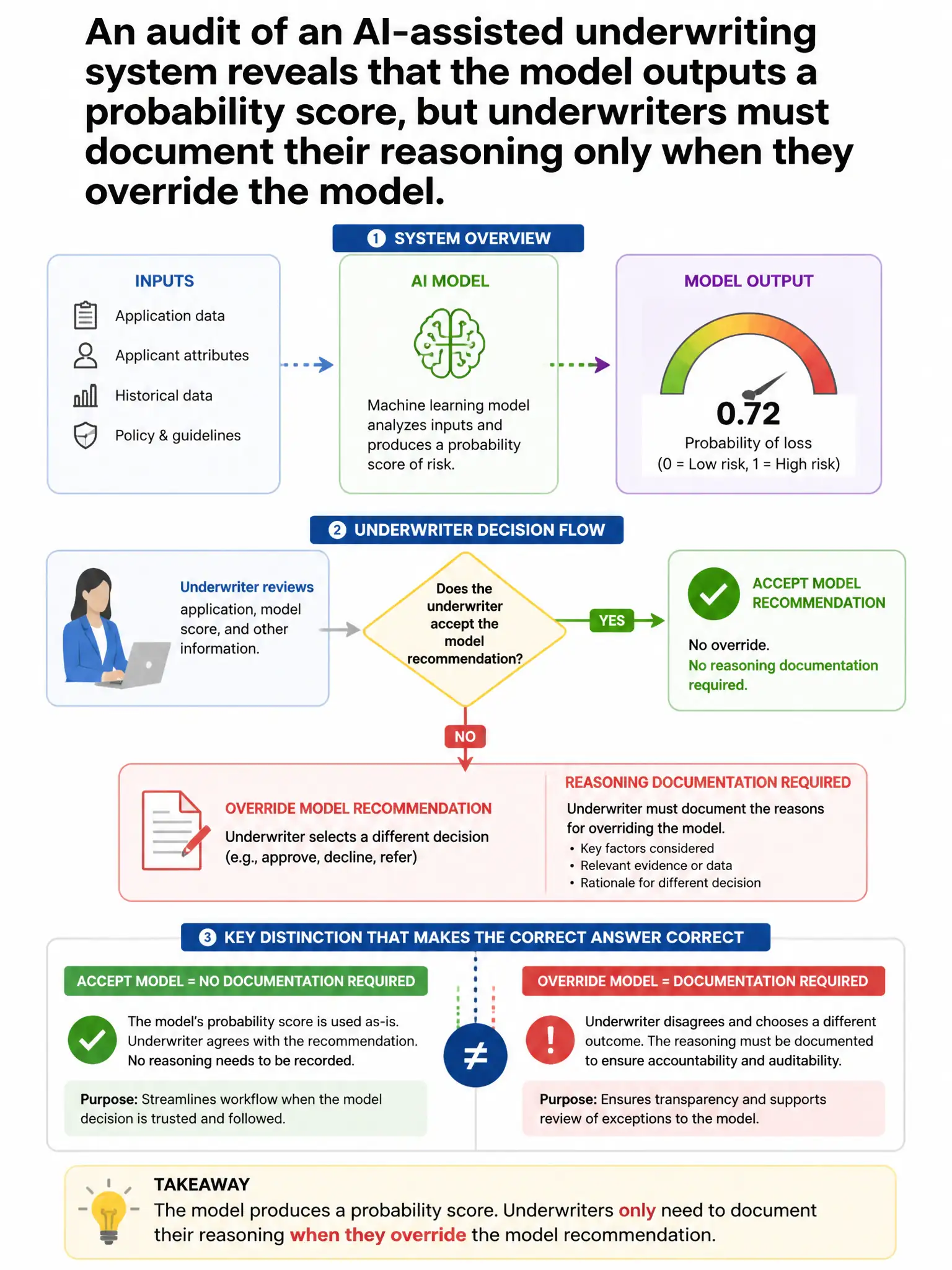
An audit of an AI-assisted underwriting system reveals that the model outputs a probability score, but underwriters must document their reasoning only when they override the model's recommendation. What control weakness does this reveal?
Select an answer to reveal the explanation.
Short Explanation
Here's the deal — you're looking at a control weakness because documenting reasoning only when underwriters override the model leaves no evidence when they accept its recommendation. That makes it impossible to tell whether the human review was substantive or just rubber-stamping. Strong oversight needs documentation for both accept and override decisions.
Full Explanation
The correct weakness is missing documentation when underwriters accept the model's recommendation. Documenting reasoning only for overrides creates an audit gap because there is no evidence trail when underwriters accept model recommendations, making it impossible to assess whether human review was substantive or merely rubber-stamping. Strong human oversight requires documentation for both accept and override decisions. Insufficient model accuracy, excessive model complexity, and missing encryption describe different issues not evidenced by this scenario.