
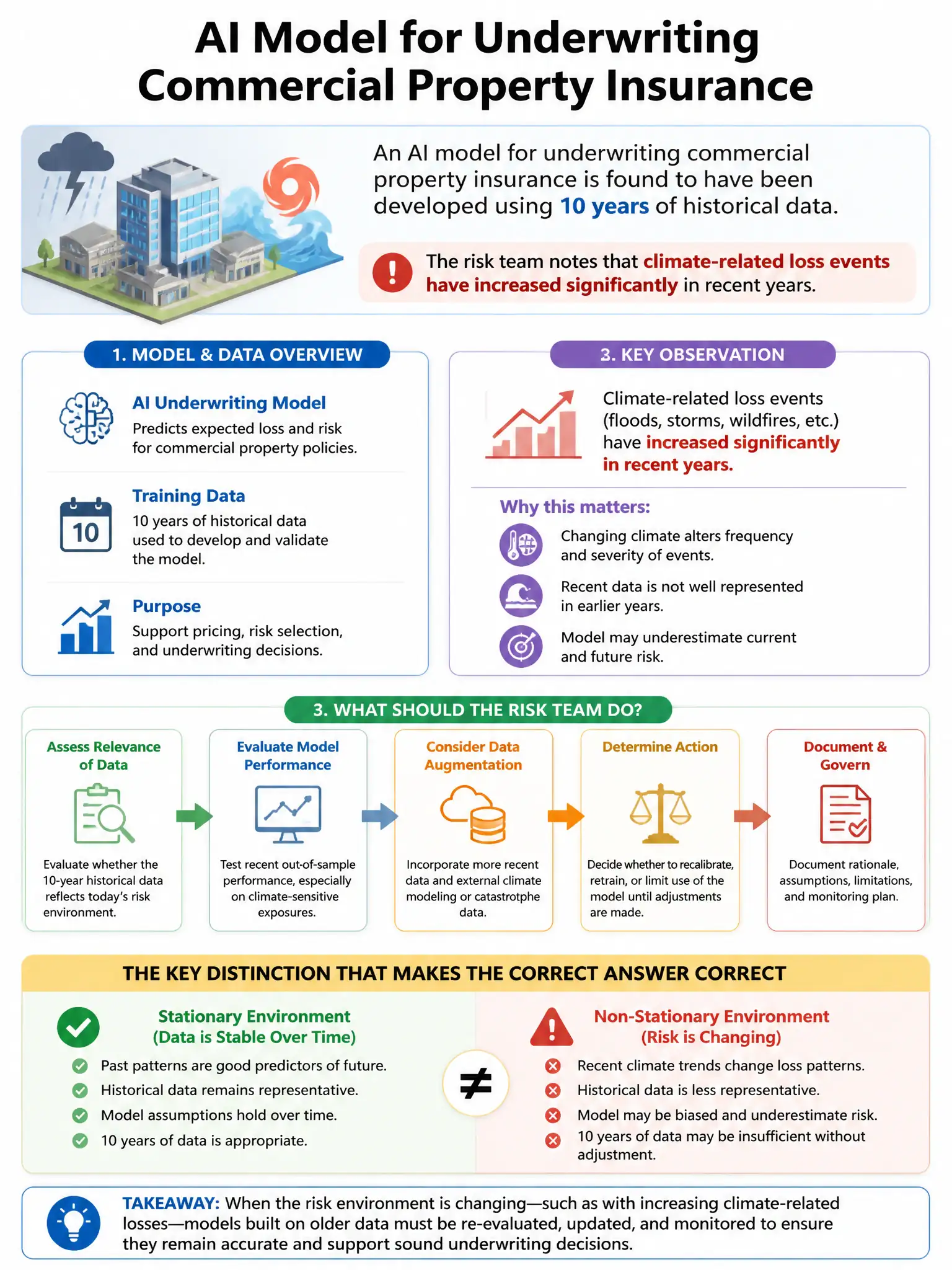
An AI model for underwriting commercial property insurance is found to have been developed using 10 years of historical data. The risk team notes that climate-related loss events have increased significantly in the last three years, accounting for 40% of recent losses. Which risk management action is MOST appropriate?
Select an answer to reveal the explanation.
Short Explanation
Here's the deal — you need to check whether the model's training data actually reflects today's climate loss environment, then recalibrate, add recent data, or layer in climate scenarios. Ten years of history can still be stale when recent losses are shifting fast.
Full Explanation
Assess whether the model's training data adequately represents the current climate loss environment, then consider recalibration, supplementation with recent data, or climate scenario overlays. Rapid climate-loss growth means historical data, 70% from a non-climate period, may significantly underestimate current and future risk. The model should be assessed for climate risk representation and updated or supplemented to reflect the changed environment. Accepting the model as-is because ten years of data provides a robust statistical foundation ignores the material distributional shift. Replacing it with a deterministic actuarial model using only the last three years of data abandons valuable historical context and may overfit to a limited recent period. Excluding climate-related perils and pricing them separately using manual actuarial methods creates an incomplete pricing model that systematically underprices climate-exposed properties.