
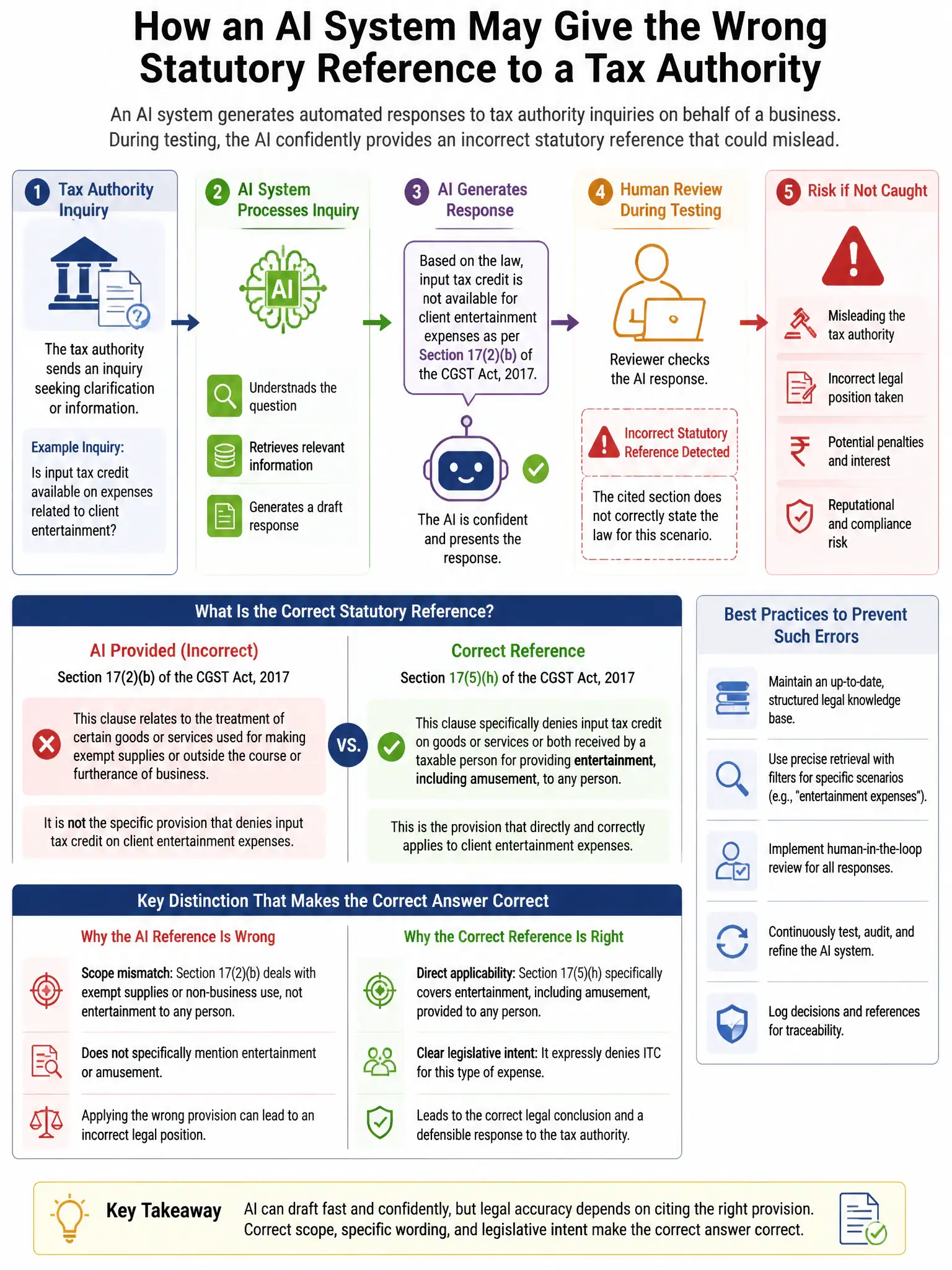
An AI system generates automated responses to tax authority inquiries on behalf of a business. During testing, the AI confidently provides an incorrect statutory reference that could result in an underpayment of taxes. Which risk control framework element should be applied to prevent this from reaching regulators?
Select an answer to reveal the explanation.
Short Explanation
When a mistake to a tax authority can trigger audits, penalties, and legal liability, you need a human expert to review the AI-generated regulatory correspondence before submission. That human-in-the-loop control is the right fit for high-stakes, low-volume, irreversible actions.
Full Explanation
The correct control is mandatory human expert review of all AI-generated regulatory correspondence before submission, given the legal and financial consequence of errors. Legal and regulatory correspondence has irreversible consequences — incorrect statutory references submitted to tax authorities can result in audits, penalties, and legal liability. A human-in-the-loop control requiring expert review before submission is the appropriate risk control for high-stakes, low-volume irreversible actions. A dictionary lookup for all statutory references can catch exact reference errors but not logical reasoning errors in applying statutes. Retraining the AI model with additional tax law training data may reduce errors but cannot eliminate them; a residual error rate is unacceptable for regulatory filings. Adding a disclaimer to all AI-generated responses stating they are for informational purposes only does not reduce the legal consequences of incorrect information submitted to a regulator.