
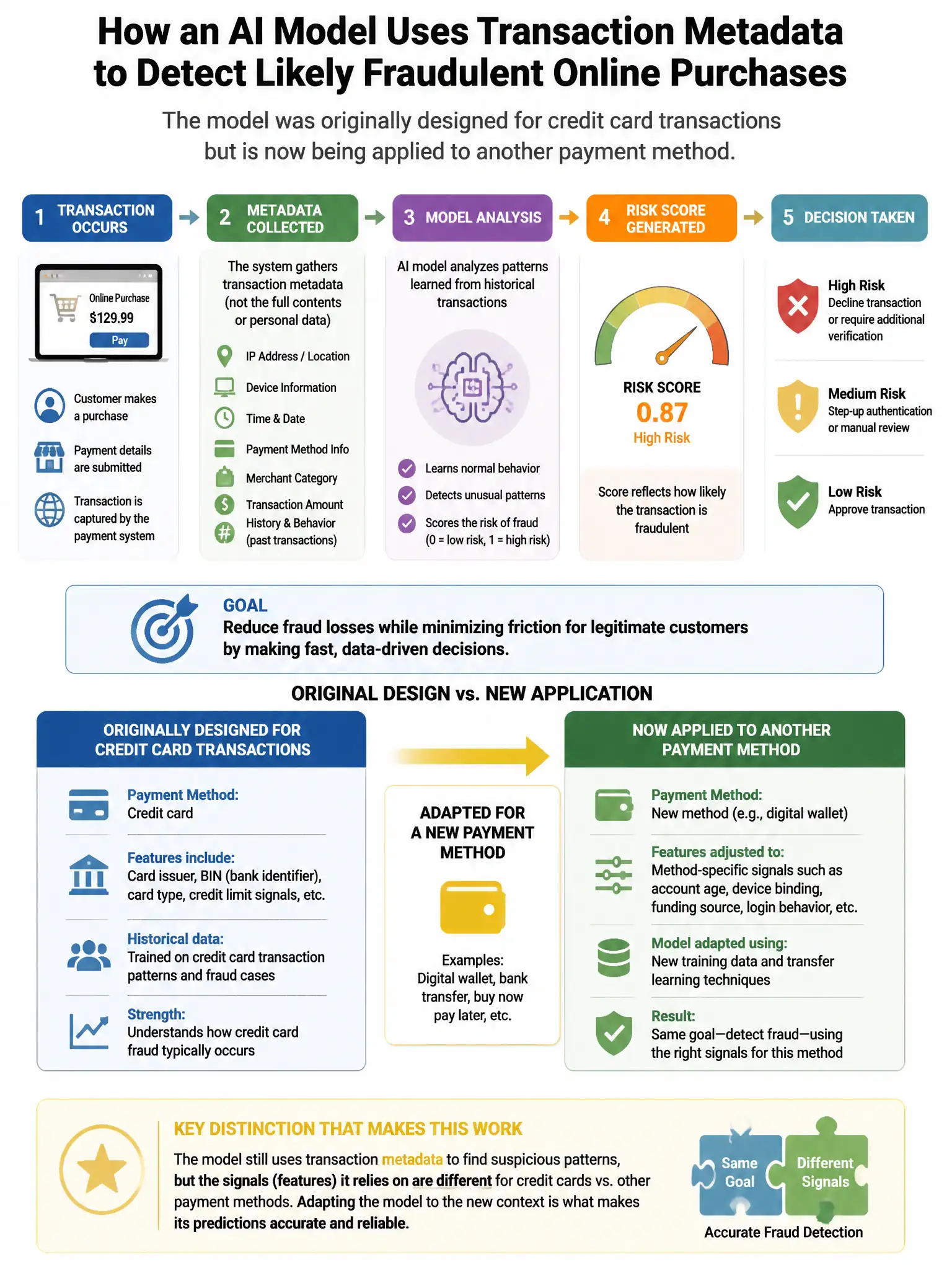
An AI model uses transaction metadata to classify whether an online purchase is likely fraudulent. The model was originally designed for credit card transactions but is now being applied to peer-to-peer digital currency transfers without modification. Which AI risk is MOST prominent?
Select an answer to reveal the explanation.
Short Explanation
Here's the deal — you've got use case expansion risk when you take a model trained for credit card transactions and drop it into peer-to-peer digital currency transfers without revalidation. The validation evidence doesn't carry over because the environment changed.
Full Explanation
The correct answer is the use case expansion risk where the model is deployed in an environment fundamentally different from the one it was designed and validated for, invalidating its validation evidence. Applying a model to a fundamentally different transaction type, credit card versus peer-to-peer digital currency transfers, without revalidation is a form of out-of-scope deployment. Transaction features, fraud patterns, counterparty relationships, and regulatory context differ substantially between these environments, so the model's validation evidence is no longer applicable. The model drift option, which focuses on changes in the credit card fraud landscape since training, relates to temporal changes, not environment changes. The adversarial evasion option, which focuses on fraudsters targeting weaknesses in the digital currency domain, may be a risk but is not the most prominent risk at deployment. The regulatory risk option, which focuses on applying fraud detection AI in the digital currency space without specific licensing, may be relevant but is not the primary model risk.