
An AI risk manager discovers that a deployed sentiment analysis model was updated by the vendor to 'improve performance' without notifying the deploying organization. The model's change manifested as a shift in how it classified certain political language. Which AI supply chain risk does this represent?
Select an answer to reveal the explanation.
Short Explanation
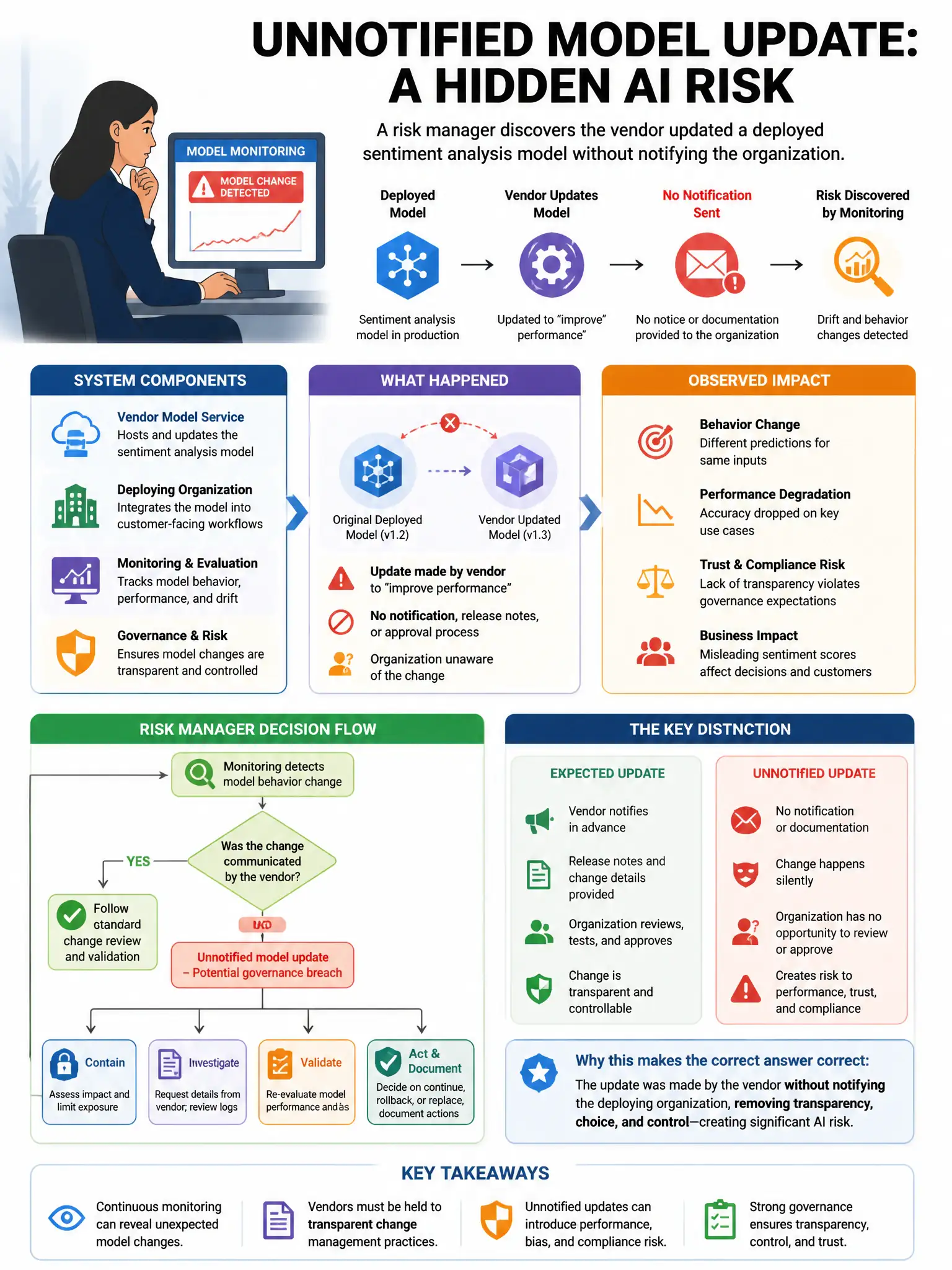
Here's the deal — you're facing unmanaged third-party model change risk because the vendor made a material change without telling you. That breaks your version control and validation process, so you can't assess or approve what went into production.
Full Explanation
The unmanaged third-party model change risk is correct because unannounced material changes to a third-party model violate the governance principle that material model changes must be documented, assessed, and validated before production deployment. The deploying organization has no visibility into what changed, whether the change was validated, or what the implications are for their use case. This undermines the entire model governance framework. The model staleness risk from infrequent updates is the opposite concern. The data poisoning risk from new training data with political bias requires adversarial intent. The regulatory risk from failing to comply with content moderation requirements may be a consequence but is not the primary supply chain risk.