
An organization is implementing its first AI model inventory. Which data element is MOST important to capture for each model to enable effective risk-based prioritization of validation and monitoring resources?
Select an answer to reveal the explanation.
Short Explanation
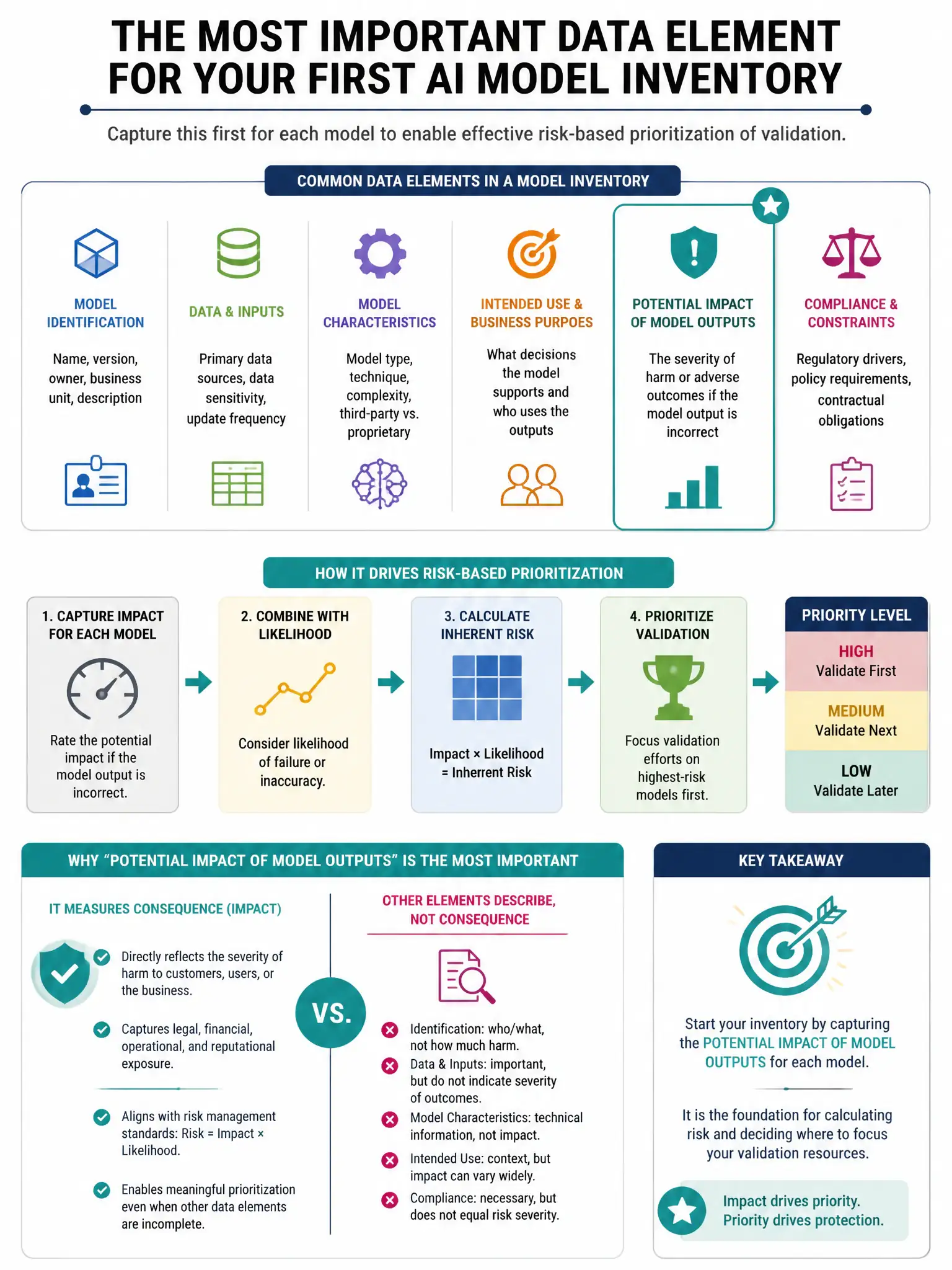
Here's the deal — you need to capture each model's materiality/risk tier, based on the consequences of model error for the business, customers, and regulated parties. That's what lets you prioritize validation and monitoring resources effectively. High-risk models affecting customer credit decisions warrant more frequent validation and monitoring than low-risk internal tools.
Full Explanation
The model's materiality/risk tier, based on the consequences of model error for the business, customers, and regulated parties, is correct because risk-based prioritization of validation and monitoring resources requires knowing each model's risk tier/materiality. High-risk models affecting customer credit decisions warrant more frequent validation and monitoring than low-risk internal tools. Without this information, resources cannot be allocated proportionately. The programming language and framework used to develop the model and the total number of training samples used to develop the model are technical metadata with limited risk management value. The name of the vendor or open-source project that provided the base model architecture supports supply chain tracking but not risk prioritization.