
An AI governance team is designing the oversight structure for the organization's AI systems. They want to apply proportionate oversight based on risk. Which framework characteristic of the EU AI Act's risk-tiered approach BEST guides this design?
Select an answer to reveal the explanation.
Short Explanation
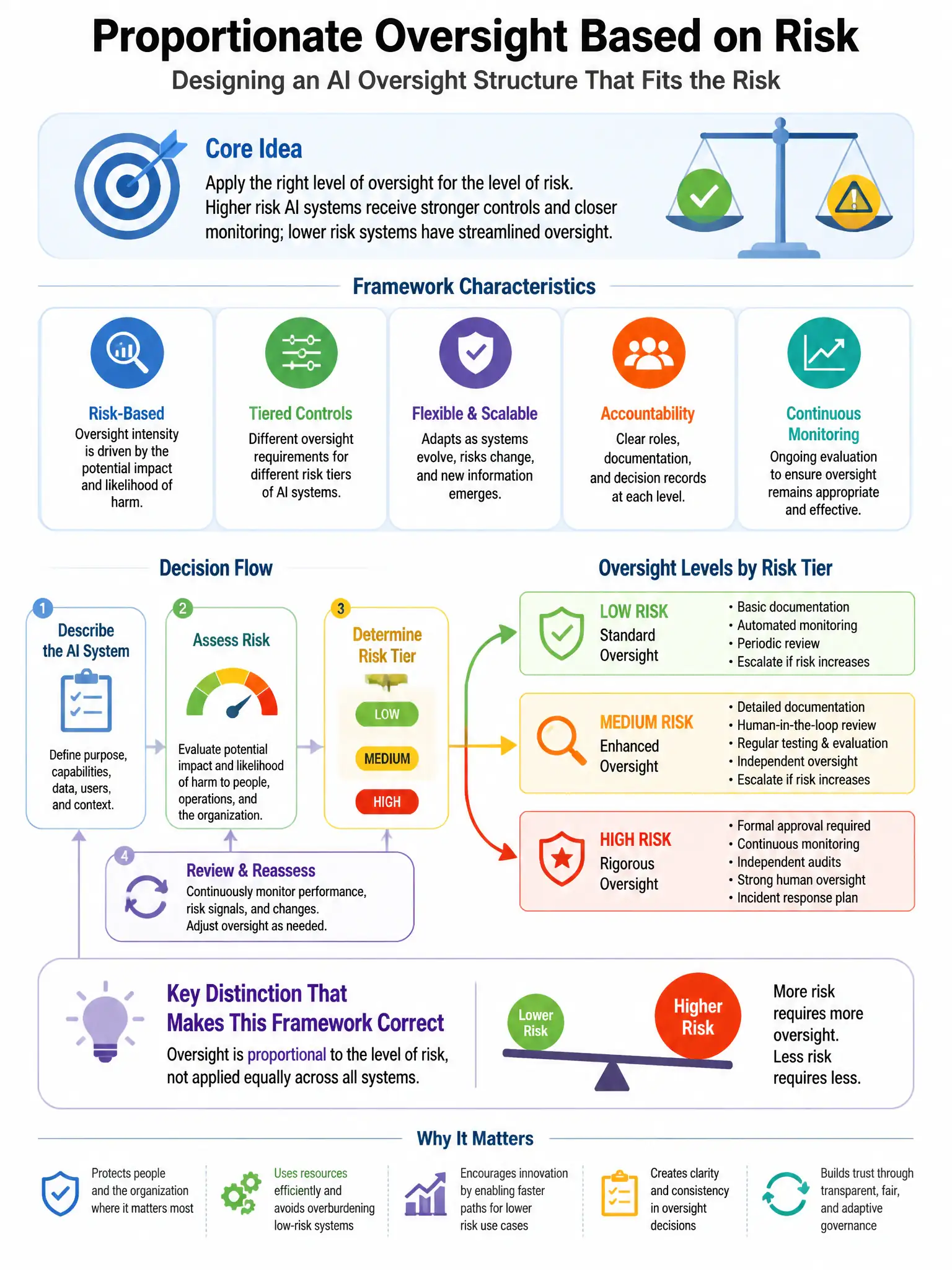
Here's the deal — you follow the risk-tiered model: AI systems are sorted by the severity and breadth of potential harm, and obligations rise as risk rises. That’s how the EU AI Act applies proportionate oversight, from outright bans to lighter transparency duties.
Full Explanation
The correct characteristic is that AI systems are categorized by the severity and breadth of potential harm, with obligations increasing proportionally with risk tier. The EU AI Act uses risk-proportionate regulation: prohibited systems are banned outright, high-risk systems face substantial requirements such as conformity assessment, technical documentation, and human oversight, limited-risk systems face transparency obligations, and minimal-risk systems face no binding obligations. This proportionate approach is the model for AI governance design. Requiring all AI systems to undergo the same level of conformity assessment before deployment is wrong because all systems do not face the same requirements. Letting organizations choose their own risk tier based on risk appetite is wrong because classification is based on objective criteria. Exempting internal systems and classifying only consumer-facing applications is wrong because internal systems may still be high-risk if they meet the Act's high-risk criteria.