
An AI governance team is reviewing whether their organization's AI development practices align with the 'accountability' principle of the OECD AI Principles. Which practice MOST demonstrates accountability alignment?
Select an answer to reveal the explanation.
Short Explanation
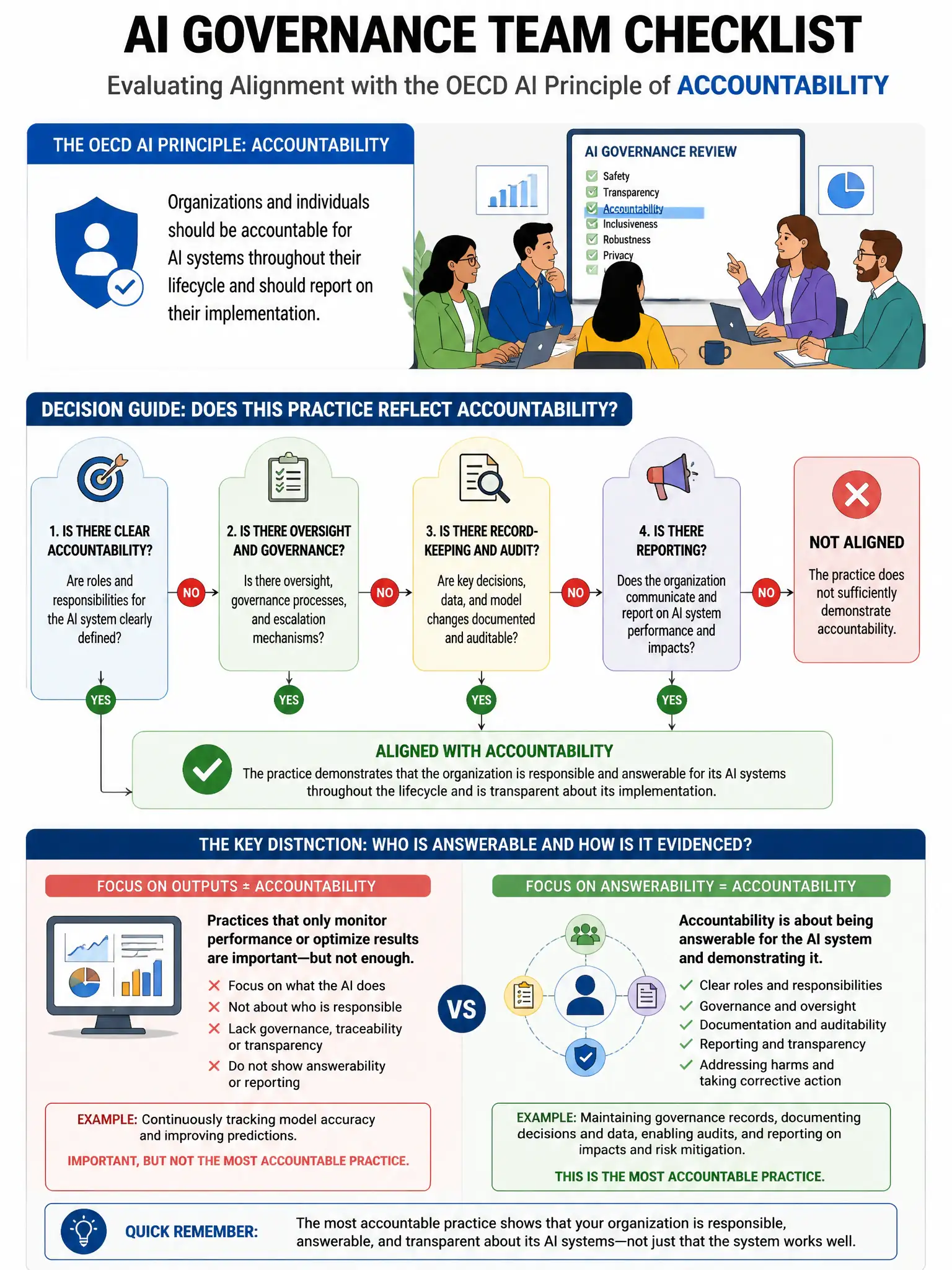
You need to show who owns AI decisions and outcomes. The traceable-record practice does that by documenting design decisions, approvals, and ongoing responsibility, which matches the OECD accountability principle. Open-sourcing code, relying on vendor safety records, and annual ethics training don't create that ownership trail.
Full Explanation
The correct practice is maintaining a traceable record of who made key AI system design decisions, who approved deployment, and who is responsible for ongoing performance and compliance. This aligns with the OECD accountability principle because AI actors must be responsible for the functioning of AI systems throughout their lifecycle. Traceable records operationalize accountability by ensuring specific individuals can be held responsible for AI outcomes at every stage. Publishing the source code of all internal AI models as open source is primarily a transparency measure, not an accountability structure. Using only AI models from established vendors with published safety track records may reduce risk, but it transfers some responsibility to vendors and does not fulfill the organization's own accountability obligations. Conducting AI ethics training for all employees annually builds capability and awareness, but it does not establish clear ownership, approval records, or ongoing responsibility for AI system performance and compliance.