
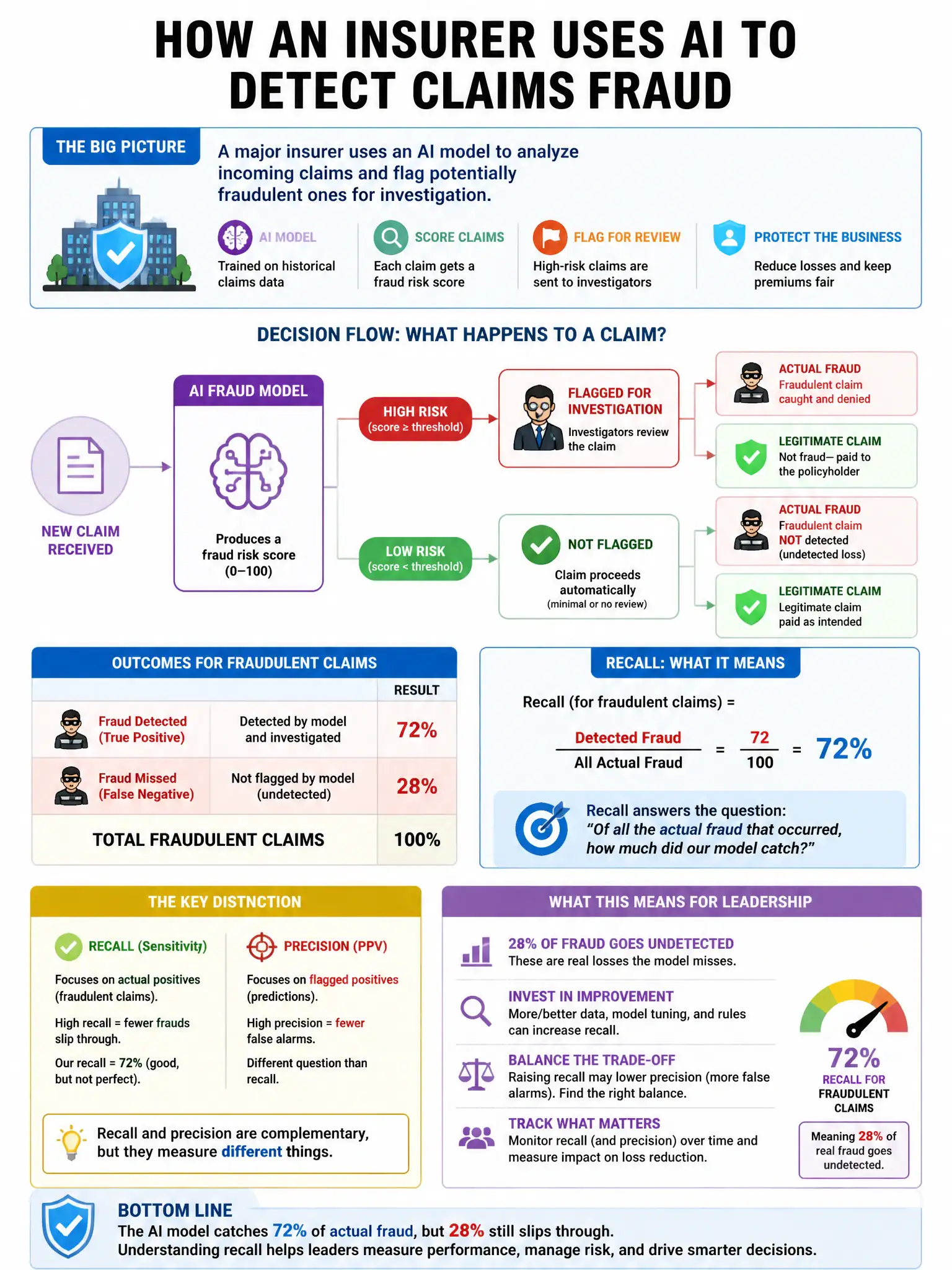
A major insurer uses an AI model to detect claims fraud. The model's recall for actual fraudulent claims is 72%, meaning 28% of real fraud goes undetected. The insurer's leadership argues this is acceptable because 'no model is perfect.' What should the AI risk manager consider when evaluating this performance level?
Select an answer to reveal the explanation.
Short Explanation
Here's the deal — you can't just call 72% recall good enough. You need to check the money at risk from the 28% miss rate, see if you can improve recall without blowing up false positives, and make sure the misses aren't hitting one claimant group harder.
Full Explanation
The correct approach is to assess whether the 28% miss rate creates material financial exposure, whether alternative approaches could improve recall without unacceptable increases in false positives, and whether the performance is consistent across all claimant demographics. Risk management of a fraud detection model requires evaluating those three dimensions: the materiality of missed fraud, feasibility of model improvements, and fairness, because some groups being missed at higher rates would be a fairness issue. Accepting the 72% recall as a standard industry benchmark without this analysis is insufficient. Recommending lowering the detection threshold to achieve 100% recall regardless of the impact on false positives would cause operationally unacceptable false positives. Reporting the model performance to the regulator as a known model limitation and awaiting guidance may be appropriate for material known issues but is not the first step.