
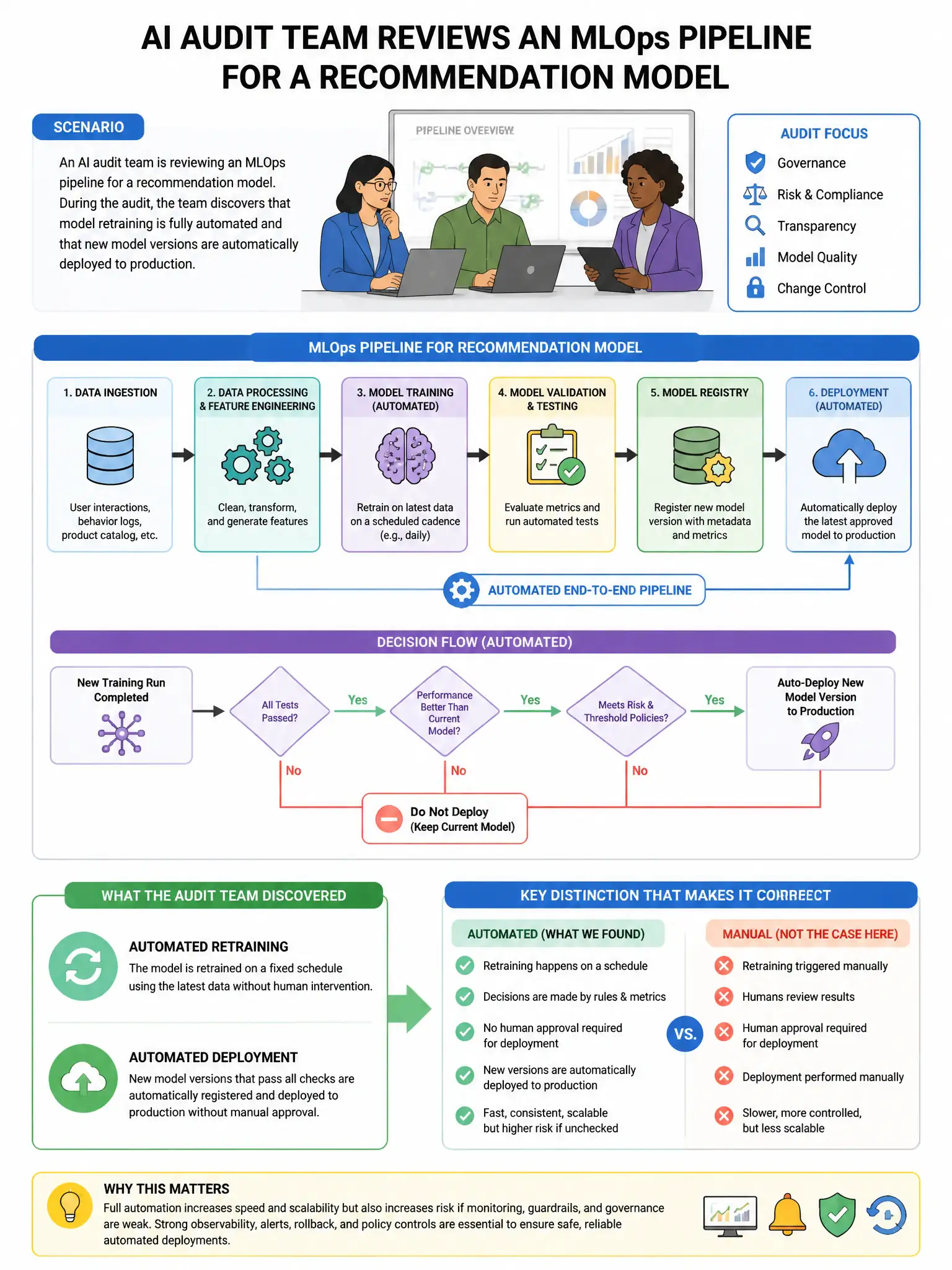
An AI audit team is reviewing an MLOps pipeline for a recommendation model. The team discovers that model retraining is fully automated and that new model versions are automatically promoted to production if they exceed a certain accuracy threshold. Which control deficiency does this represent?
Select an answer to reveal the explanation.
Short Explanation
Here's the deal — you can't let a model promote itself to production without a human sign-off. That bypasses change management and can deploy untested behavior, even if it clears an accuracy threshold.
Full Explanation
The correct deficiency is the absence of human approval in the model promotion process, because fully automated promotion bypasses change management controls required for model governance. New versions may clear an accuracy threshold while degrading fairness, explainability, robustness, or other characteristics the threshold does not capture. Human approval supports responsible promotion. The monitoring option about accuracy being the wrong recommendation metric is a possible improvement, not the primary governance gap. The manual code review option adds testing depth but is not the identified control failure. The business-aligned metric option also concerns metric choice, not the missing approval control.