
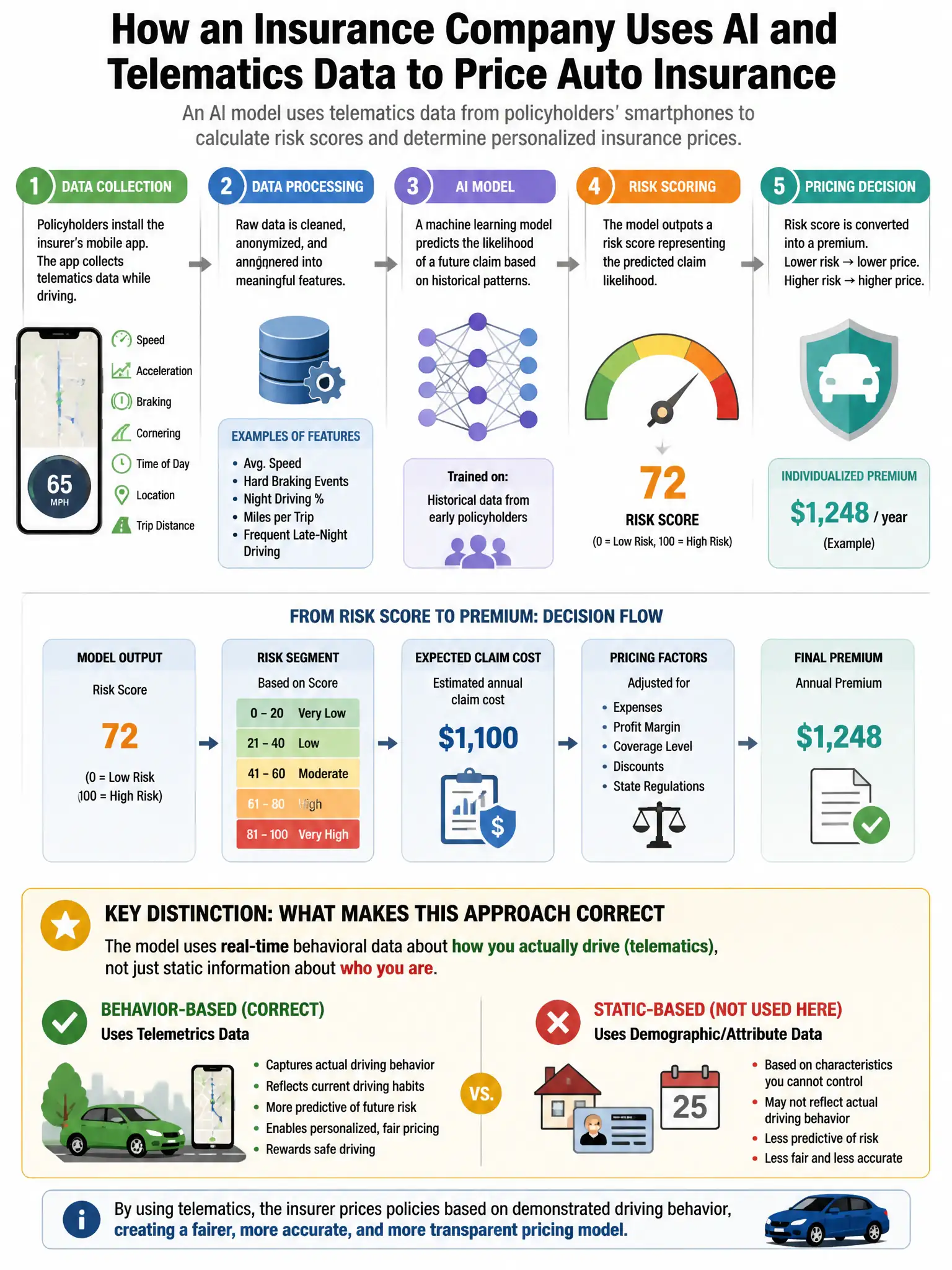
An insurance company's AI model for auto insurance pricing uses telematics data from policyholders' smartphones to calculate risk scores. The model was trained on data from early adopters of the telematics program, who skewed younger, more tech-savvy, and more safety-conscious than the general population. Now the model is applied to all new policyholders. What AI-specific risk does this deployment scenario create?
Select an answer to reveal the explanation.
Short Explanation
Here's the deal — you're looking at a training-deployment population mismatch because the model learned from self-selected early adopters, not the general insured population. Early adopters tend to be safer drivers willing to be monitored, so the model is calibrated to different risk characteristics. When you apply it broadly, it can systematically misprice risk for underrepresented demographics.
Full Explanation
The correct answer is the training-deployment population mismatch: the model was trained on a self-selected, non-representative population of early adopters, and applying it to the general population may produce systematically biased risk scores for demographics not well represented in training data. Early adopters of telematics programs tend to be safer drivers willing to be monitored, so training on this group creates a model calibrated to different risk characteristics than the general insured population. Applying it broadly may systematically misprice risk for underrepresented demographics, such as older drivers and less tech-comfortable demographics. The privacy risk option about explicit GDPR consent is a separate compliance concern. The model drift option about telematics technology changing since training and affecting data quality would require retraining but is not the primary risk identified. The regulatory risk option about telematics pricing being prohibited in several jurisdictions is jurisdiction-specific and not the primary AI risk type described.