
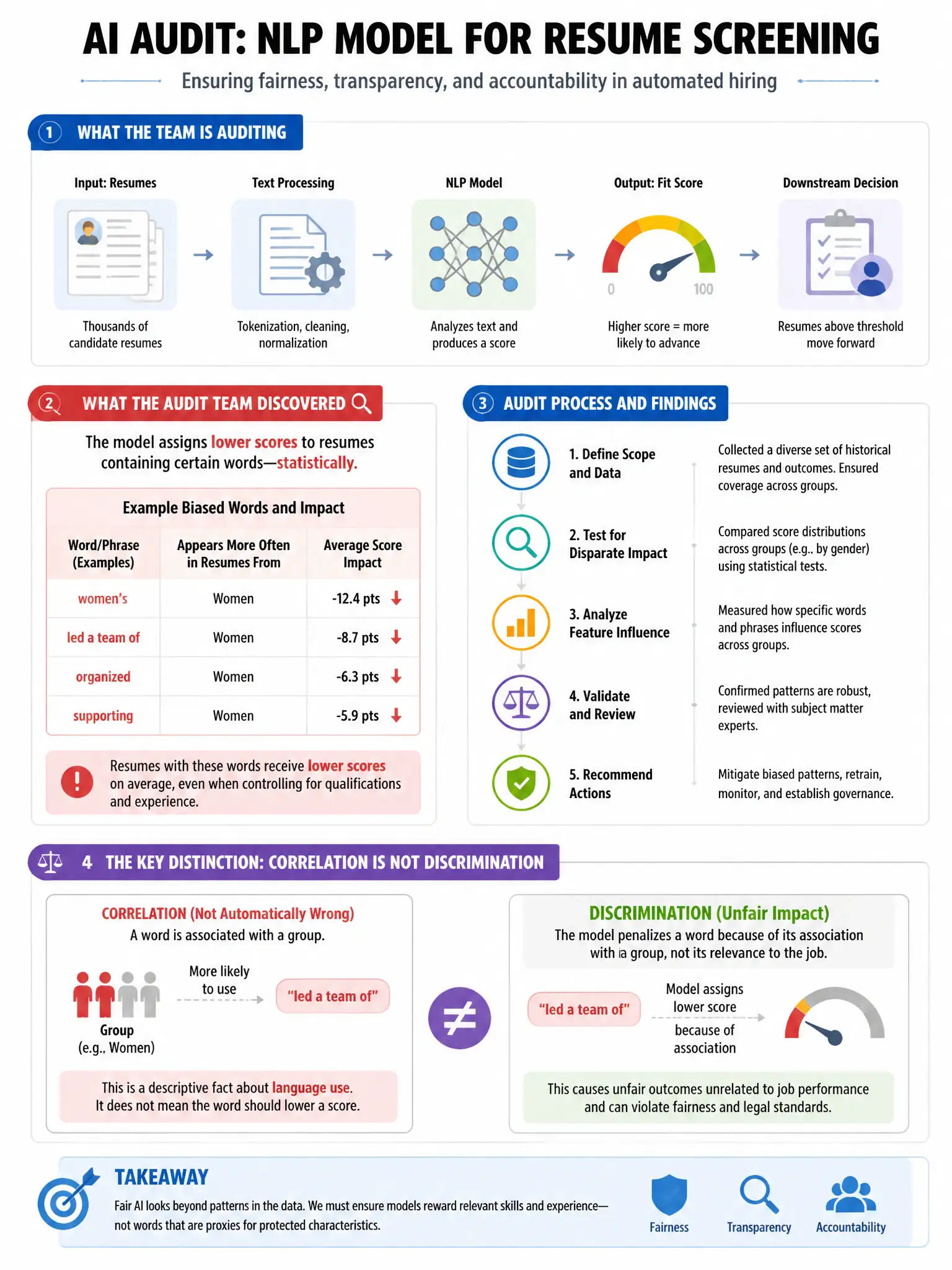
An AI audit team is reviewing a natural language processing model used to screen resumes. The team discovers the model assigns lower scores to resumes containing words statistically associated with women's colleges and female-dominated extracurricular activities. This is an example of which risk?
Select an answer to reveal the explanation.
Short Explanation
Here's the deal — you're seeing algorithmic discrimination because the model learned and amplified historical hiring biases from the training data. It penalizes language tied to women's colleges and female-dominated activities, which mirrors past gender bias in hiring.
Full Explanation
The correct risk is algorithmic discrimination through the model learning and amplifying historical hiring biases present in training data. The model has learned correlations between linguistic markers associated with women and lower selection scores, directly reflecting and amplifying historical discriminatory hiring patterns in the training data. This is a documented form of gender bias in artificial intelligence hiring systems. Temporal bias from training on outdated labor market data relates to data staleness, not encoded gender discrimination. Adversarial manipulation by candidates gaming the resume screening system involves intentional attack, not model learning. Distributional shift between the resume language used during training and current applicant language describes performance degradation due to changed inputs, not the learned discrimination pattern.