
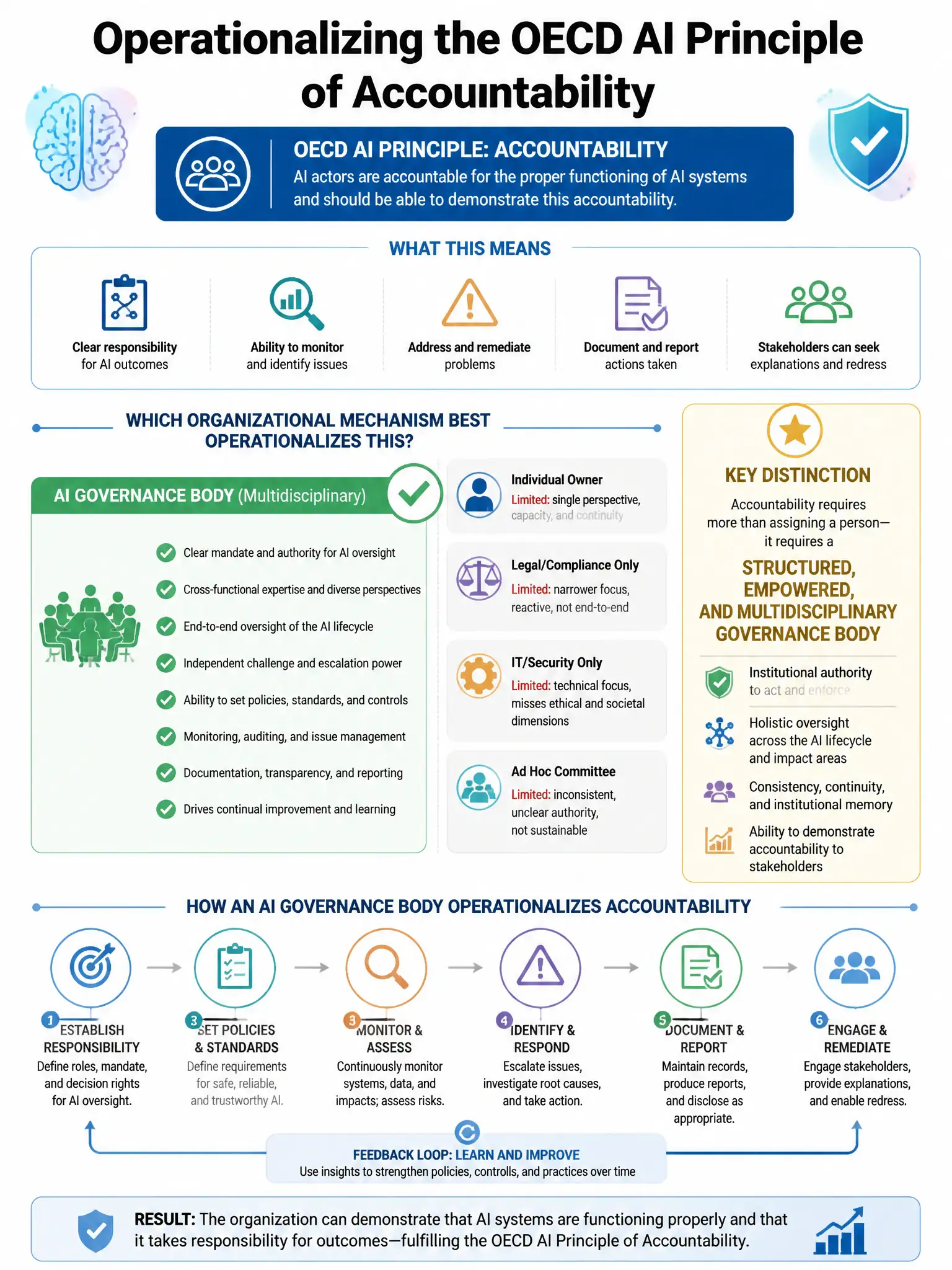
The OECD AI Principles include a principle requiring AI actors to be accountable for the proper functioning of AI systems. Which organizational mechanism BEST operationalizes this accountability principle?
Select an answer to reveal the explanation.
Short Explanation
Here's the deal — accountability means someone has to own the AI system's performance, risk, and compliance from start to finish. You need named owners with clear responsibilities so there's a real person to answer for outcomes.
Full Explanation
The OECD accountability principle is best operationalized by assigning named AI system owners with defined responsibilities for performance, risk, and compliance throughout the AI lifecycle. This creates a clear chain of responsibility, so specific individuals can be held answerable for how the system behaves and for issues that arise. Publishing AI model accuracy metrics in annual corporate sustainability reports is transparency, not accountability. Requiring all AI projects to receive executive approval before initiating development is a governance checkpoint, not ongoing accountability. Establishing an AI ethics advisory board that reviews proposed AI use cases provides oversight, but it does not replace operational accountability for the system's proper functioning.