
An AI model for predictive policing is challenged by civil liberties advocates because it uses historical arrest data to predict future crime. The primary AI ethics concern with this application is:
Select an answer to reveal the explanation.
Short Explanation and Infographic
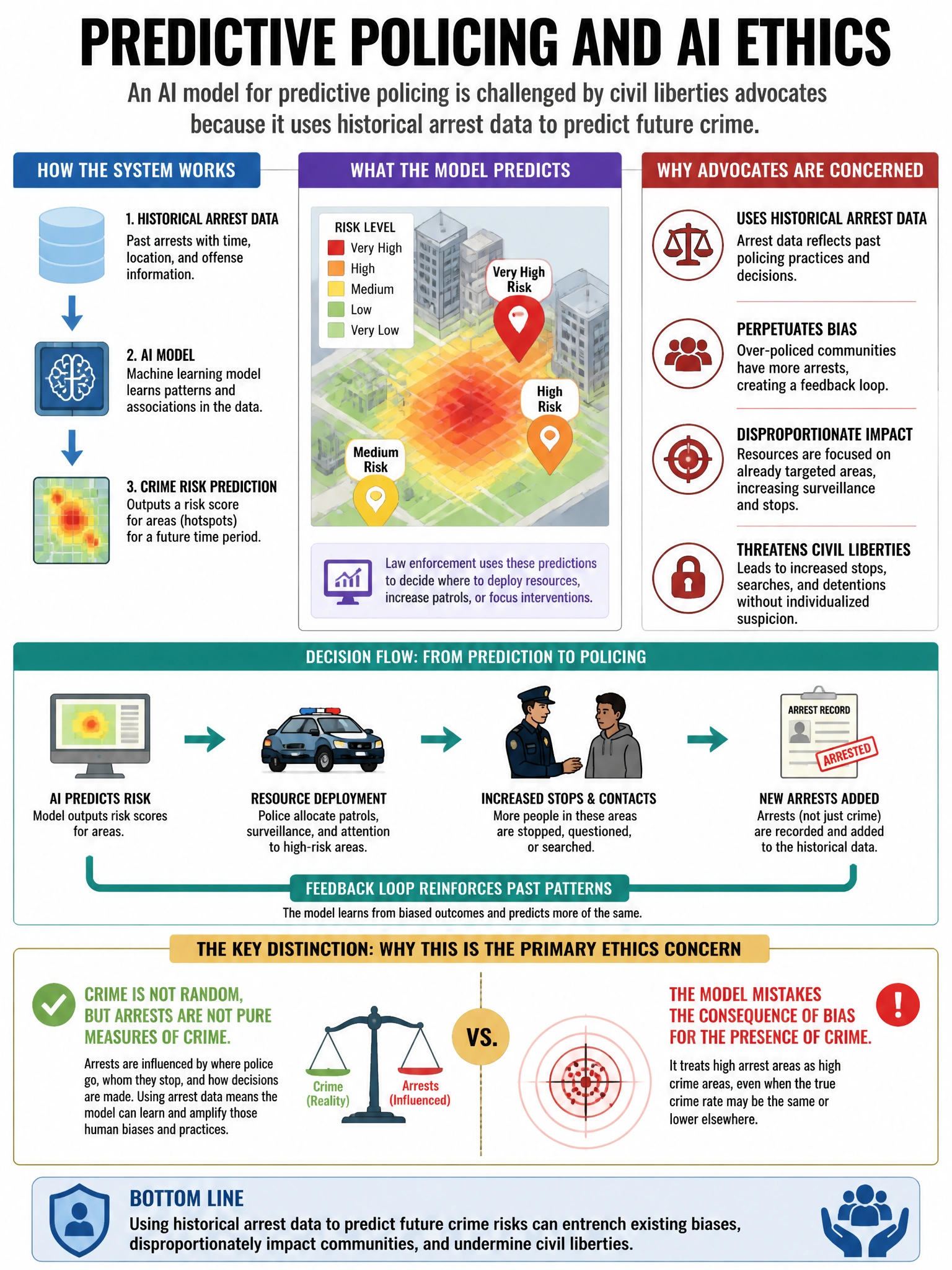
Here's the deal — b is correct because the core ethical problem with predictive policing using arrest data is the feedback loop: communities that were historically over-policed have higher recorded crime (not necessarily higher actual crime). Using this data to predict future crime sends more police to those communities, producing more arrests, which feeds back as 'confirmation' into the training data.
Full explanation below image
Full Explanation
B is correct because the core ethical problem with predictive policing using arrest data is the feedback loop: communities that were historically over-policed have higher recorded crime (not necessarily higher actual crime). Using this data to predict future crime sends more police to those communities, producing more arrests, which feeds back as 'confirmation' into the training data. This amplifies racial and socioeconomic disparities rather than reflecting objective crime prediction. Data minimization (A) is a secondary concern. Explainability (C) is important but is not the primary ethics concern. There is no universal 85% accuracy threshold for public safety AI (D).