
An AI governance team is designing the oversight structure for the organization's AI systems. They want to apply proportionate oversight based on risk. Which framework characteristic of the EU AI Act's risk-tiered approach BEST guides this design?
Select an answer to reveal the explanation.
Short Explanation and Infographic
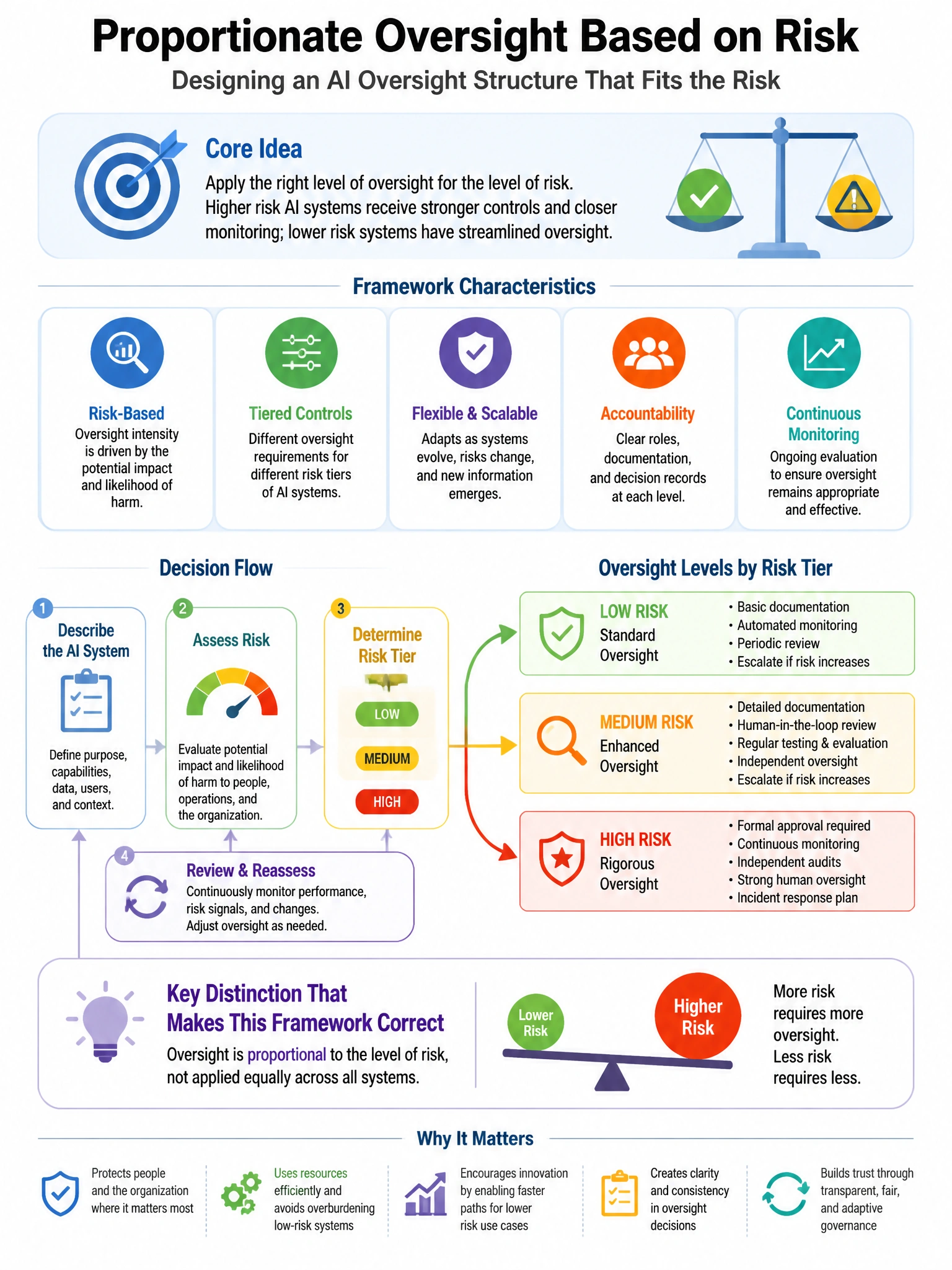
Here's the deal — b is correct because the EU AI Act's foundational design principle is risk-proportionate regulation: prohibited systems are banned outright, high-risk systems face substantial requirements (conformity assessment, technical documentation, human oversight), limited-risk systems face transparency obligations, and minimal-risk systems face no binding obligations. This proportionate approach is the model for AI governance design.
Full explanation below image
Full Explanation
B is correct because the EU AI Act's foundational design principle is risk-proportionate regulation: prohibited systems are banned outright, high-risk systems face substantial requirements (conformity assessment, technical documentation, human oversight), limited-risk systems face transparency obligations, and minimal-risk systems face no binding obligations. This proportionate approach is the model for AI governance design. All systems do not face the same requirements (A). Organizations cannot self-select their tier based on risk appetite (C); classification is based on objective criteria. Internal systems may still be high-risk (D) if they meet the Annex III criteria.