
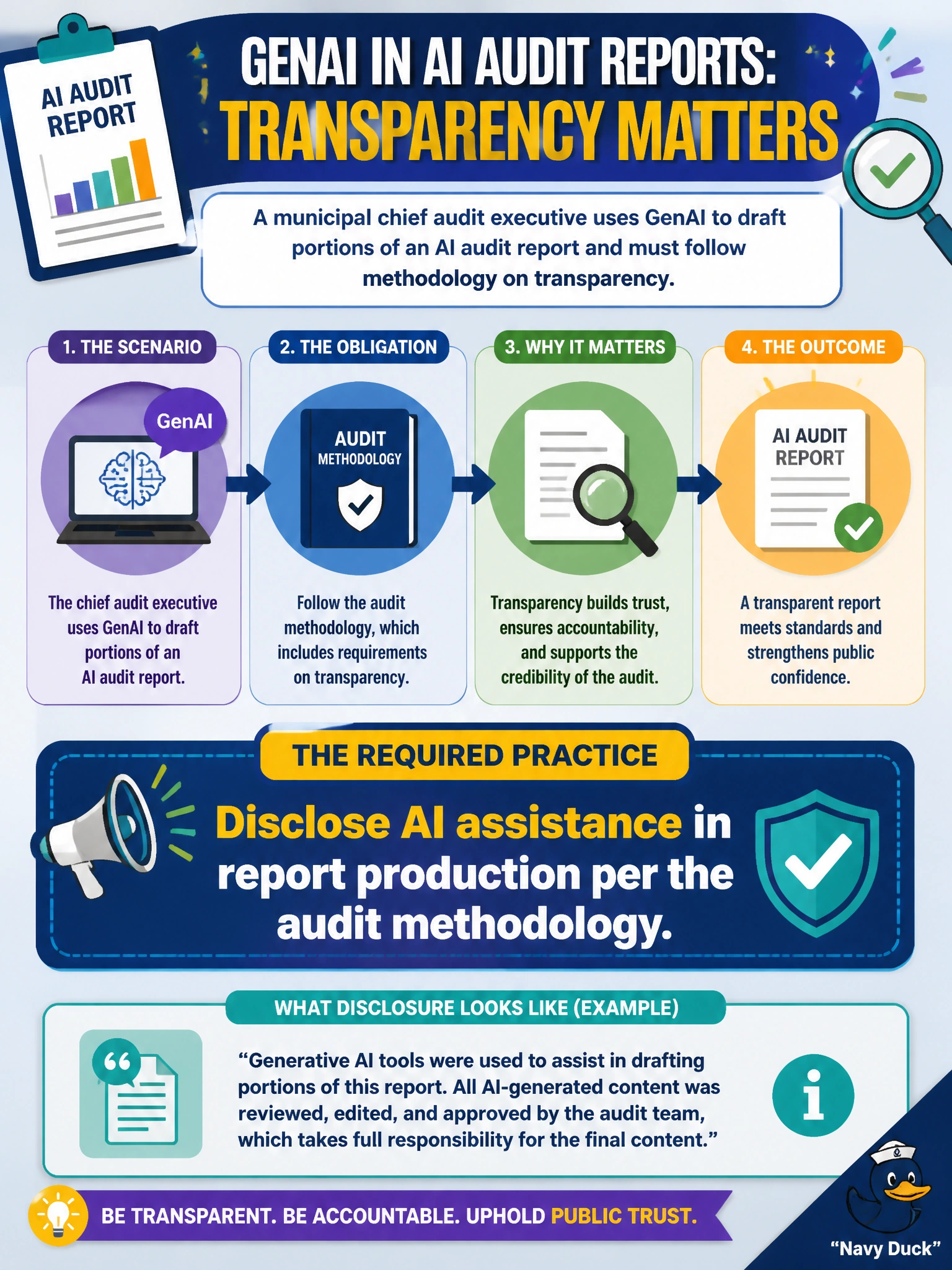
A municipal chief audit executive uses GenAI to draft portions of an AI audit report and must follow methodology on transparency. What practice is required?
Select an answer to reveal the explanation.
Short Explanation
If GenAI helped write the AI audit report, say so the way the methodology asks. Just logging prompts for supervisors isn't the same as disclosing AI use in the report. The CAE still reviews and owns the opinion.
Full Explanation
Disclosing AI assistance in report production per the audit methodology is required when a municipal chief audit executive uses GenAI to draft portions of an AI audit report. Transparency about drafting aids, paired with human review and ownership of conclusions, aligns with professional expectations and local methodology. Relying on workpaper documentation of GenAI prompts would leave stakeholders misinformed about how the civic AI audit report was produced. Documenting GenAI prompts in workpapers for supervisory review fails by concept: it satisfies internal oversight but does not disclose AI drafting assistance to report stakeholders as transparency rules require. Citing the GenAI model version in the audit scope limitation section fails because transparency about drafting assistance belongs in the report disclosure, not buried in a scope limitation, and it does not replace acknowledging AI involvement in report production. Summarizing GenAI validation testing within the management response appendix fails because it places validation details where report readers may not see them instead of disclosing AI assistance in report production per the methodology.
Exam caveat: disclosure wording should be accurate about the extent of assistance; overclaiming or underclaiming both undermine trust. Operational check: follow the methodology's disclosure template, retain prompt and review evidence in workpapers, and ensure the CAE or engagement lead explicitly reviews and owns every conclusion before the municipal AI audit report is issued.