
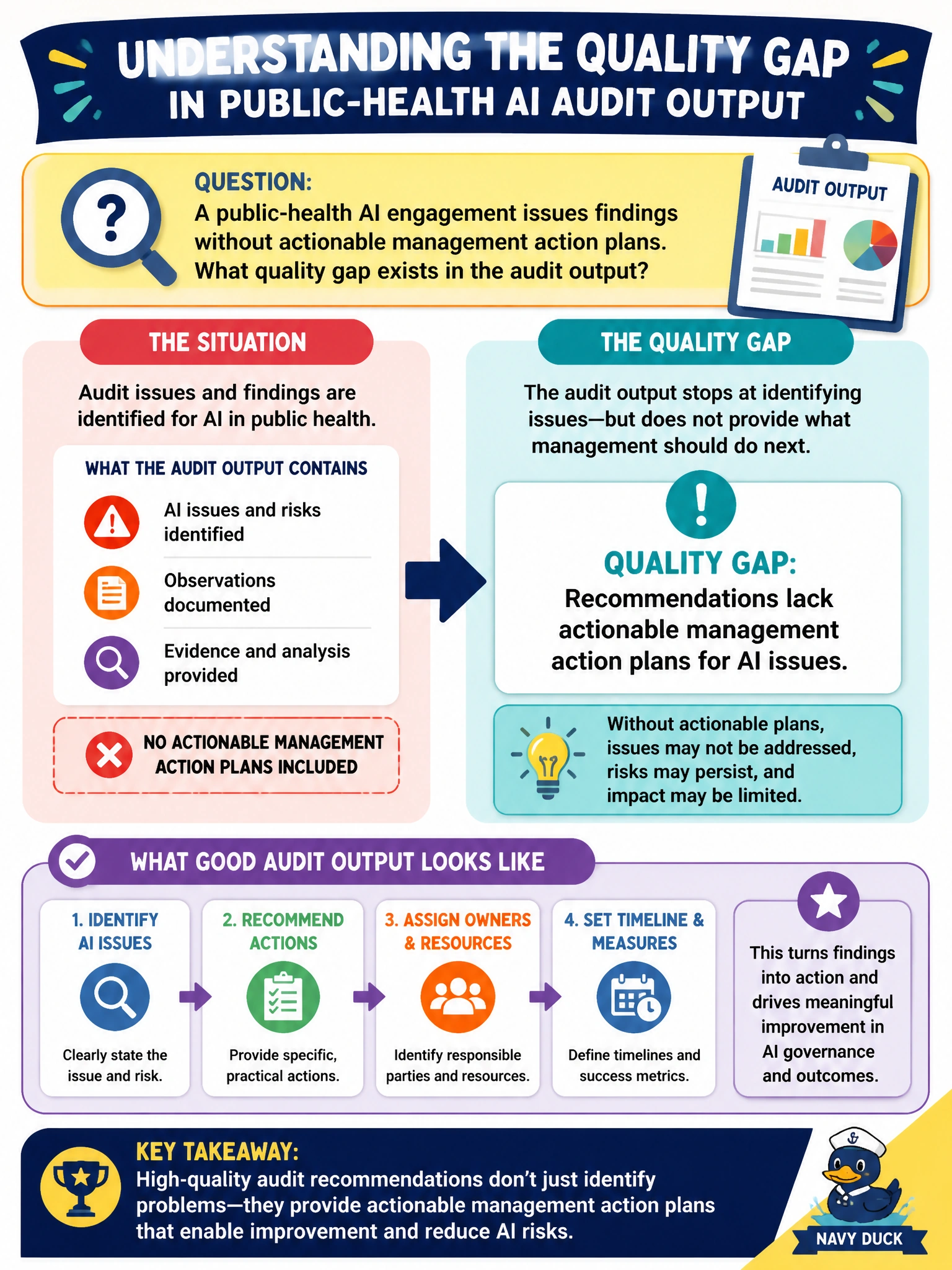
A public-health AI engagement issues findings without actionable management action plans. What quality gap exists in the audit output?
Select an answer to reveal the explanation.
Short Explanation
You’re looking at a shrug, not a fix, when the report cites missing risk ratings but no action plan. Public-health AI reports need real action plans. You’re off target if you treat missing workpaper evidence behind AI testing outcomes as the gap.
Full Explanation
The quality gap is that recommendations lack actionable management action plans for AI issues when public-health findings omit owners, dates, and concrete remediation steps. High-quality audit output translates risks into accountable actions that management can execute and auditors can follow up. Without action plans, civic health AI findings are less likely to reduce residual risk.
Asserting that audit scope statements omit AI boundaries for review coverage misses the issue: the described gap concerns missing remediation steps, not undefined review boundaries. Saying findings list AI control gaps without documented risk ratings and priorities misses the mark: the real gap is the absence of accountable actions with owners and deadlines. Noting that reports detail AI testing outcomes without linked evidence in workpapers is off target: the deficiency is that recommendations lack actionable management action plans, not missing workpaper references.
Exam caveat: action plans must be realistic given clinical and regulatory constraints; empty dates without resource commitment still fail the actionability test. Operational check: for each public-health AI finding, capture agreed actions, owners, milestones, and success criteria in the report or management response, and schedule follow-up testing against those commitments.