
After a library chatbot compromise, IR disables the bot but leaves poisoned retrieval documents online. What remediation gap should the auditor cite?
Select an answer to reveal the explanation.
Short Explanation
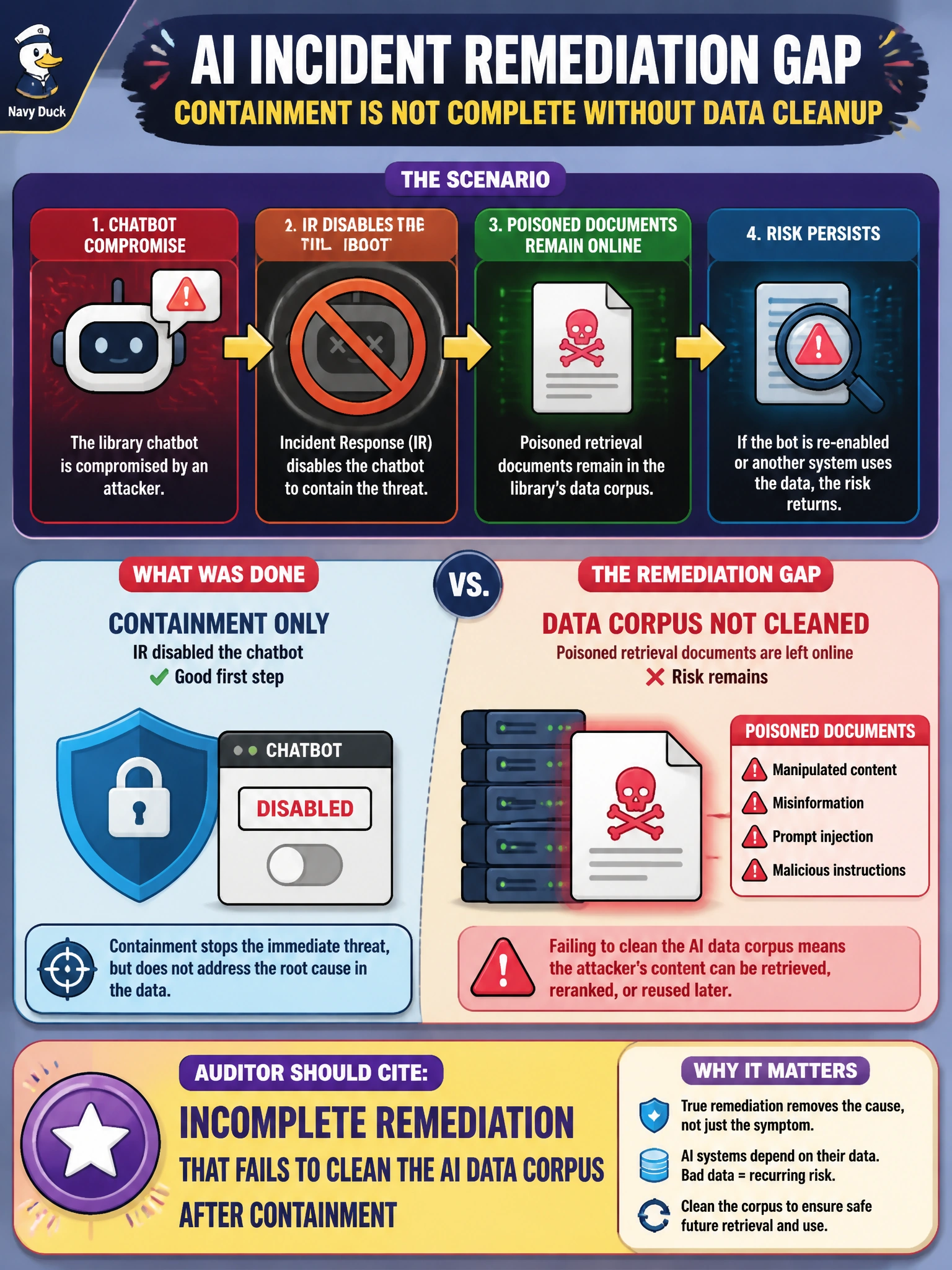
Turning the bot off but leaving the poisoned docs in the knowledge pile is half a cleanup. Containment without corpus cleanup invites the next bad answer. Delayed credential rotation, missing input filters, and weak log retention miss the point: they don't remove poisoned docs from the corpus.
Full Explanation
Citing incomplete remediation that fails to clean the AI data corpus after containment works because library chatbots grounded on retrieval corpora will re-ingest or re-serve poisoned documents if those documents remain indexed. Disabling the interface stops active conversations but does not restore corpus integrity; reinfection or continued bad answers are likely when the bot returns. Municipal IR for RAG-style systems must include corpus quarantine, integrity verification, re-indexing controls, and evidence that tainted content was removed or marked untrusted.
Delayed rotation of service credentials used by the chatbot integration layer fails as the cited gap because credential rotation does not remove poisoned retrieval documents from the corpus after containment. Missing input filtering controls on the public chatbot query interface fails conceptually by substituting input prevention for data-store cleanup; the auditor should cite the failure to remove tainted documents already in the retrieval store. Inadequate retention of chatbot conversation logs to support timeline analysis fails because log retention does not clean the retrieval corpus or verify that containment reached the knowledge layer.
Exam caveat: “poisoned” must be evidenced—hash mismatches, unauthorized uploads, or confirmed malicious content—before mass deletion, or libraries may destroy legitimate collections and weaken chain of custody. Operational check: extend the library IR checklist past bot disablement to include corpus freeze, malware/integrity scan of retrieval stores, removal or quarantine of tainted docs, controlled re-index, and a post-remediation answer regression test before public restore.