
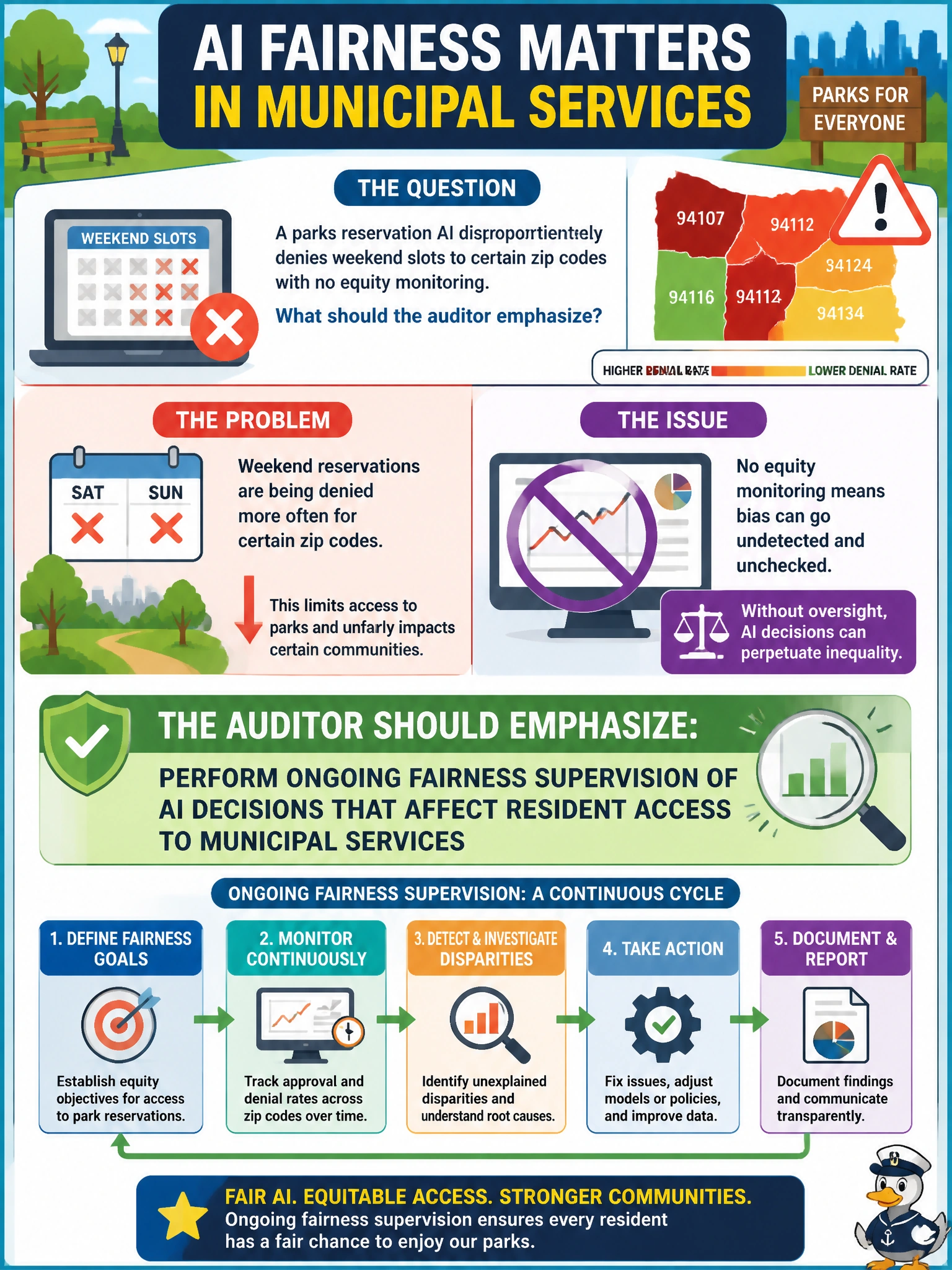
A parks reservation AI disproportionately denies weekend slots to certain zip codes with no equity monitoring. What should the auditor emphasize?
Select an answer to reveal the explanation.
Short Explanation
If certain zip codes keep losing weekend park slots, that is not just a scheduling quirk — watch equity continuously. High utilization can still hide unfair denials. Focusing on encryption and access controls for privacy misses the fairness gap.
Full Explanation
A parks reservation AI that disproportionately denies weekend slots to certain zip codes affects resident access to municipal services. Fairness supervision must be ongoing for AI decisions that allocate scarce public benefits—not deferred until formal complaints. The auditor should emphasize continuous fairness monitoring of denial and approval patterns by relevant segments (including geography as a proxy for equity concerns), with investigation and remediation when disparities appear.
Reviewing aggregate approval rates for weekend reservations to validate overall system accuracy trends can mask zip-code disparities, because overall accuracy doesn't show whether certain neighborhoods are being disproportionately denied. Examining encryption and access controls for reservation data to strengthen privacy protection measures addresses data security, not fairness, so it won't correct disproportionate weekend denials for certain zip codes. Assessing weekend allocation throughput against historical demand to improve operational scheduling efficiency measures volume, not equity, so it can miss disparate denial patterns by zip code.
Exam caveat: AAIA fairness supervision is proactive and decision-focused; assessing weekend allocation throughput against historical demand to improve operational scheduling efficiency does not prove equitable access. Operational check: produce segment-level denial rates for weekend parks reservations, investigate zip-code disparities with policy owners, and document corrective actions—examining encryption and access controls for reservation data to strengthen privacy protection measures misses the fairness issue entirely.