
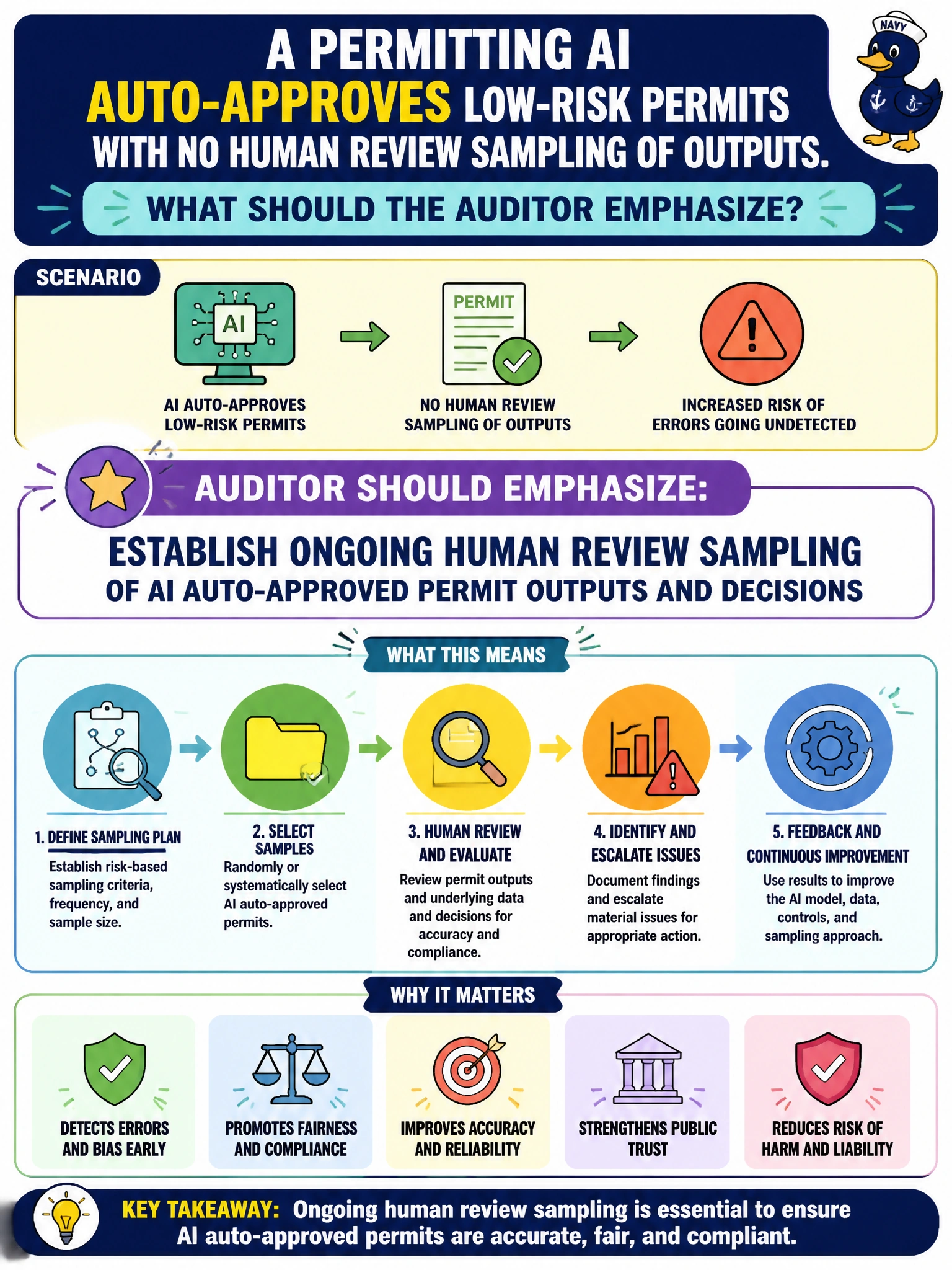
A permitting AI auto-approves low-risk permits with no human review sampling of outputs. What should the auditor emphasize?
Select an answer to reveal the explanation.
Short Explanation
Auto-approve without ever peeking at the wins is how bad decisions become city policy. Sample the AI's approvals with human eyes. Logging the decisions isn't the same as reviewing them.
Full Explanation
A permitting AI that auto-approves low-risk permits still produces municipal decisions with legal and safety consequences. Supervision of AI solutions must cover outputs and decisions, not only failures or complaints. The auditor should emphasize ongoing human review sampling of auto-approved permit outputs so incorrect grants, misclassified risk, and policy drift are detected before they become entrenched practice.
Expanding automated logging of auto-approved permits fails because logging supports retrospective audits but does not provide ongoing human review sampling to catch incorrect grants and policy drift before they become entrenched practice. Auditing rejected decisions monthly while reviewing auto-approved decisions only quarterly still leaves auto-approved permits under-sampled for long stretches between checks, letting incorrect grants and policy drift accumulate before anyone looks. Requiring monthly joint trend review of risk scores fails because reviewing aggregate trends is not independent human sampling of individual auto-approved permits; incorrect grants and misclassified risk can hide in the averages.
Exam caveat: AAIA supervision includes sampling successes of automation, not just investigating denials or outages. Operational check: confirm a documented sampling plan for auto-approved permits (rate, reviewer role, findings escalation, and trend analysis) operating continuously—not a one-time go-live check.