
A water anomaly model promotion lacks gated approvals between stages. What should the auditor recommend?
Select an answer to reveal the explanation.
Short Explanation
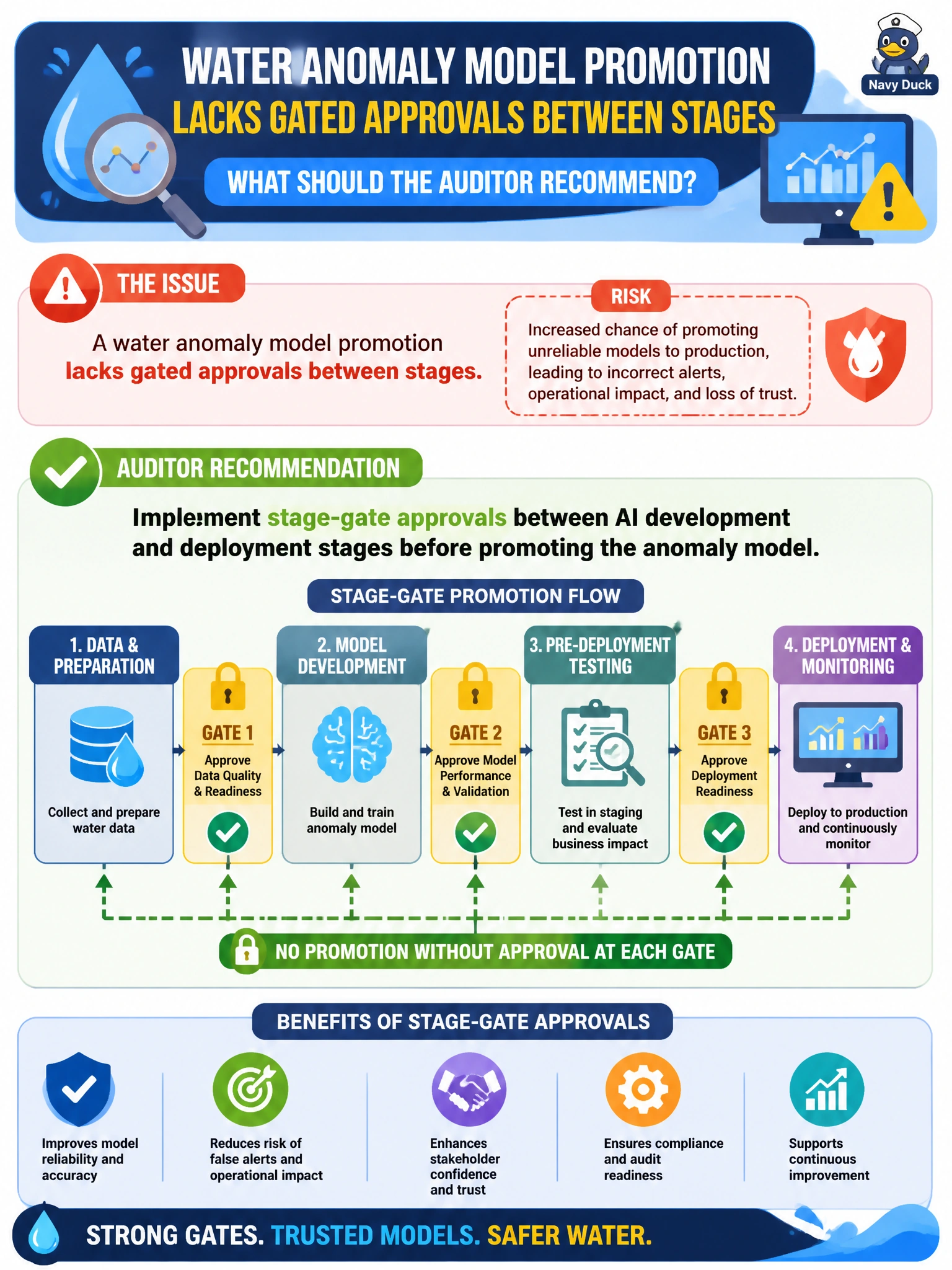
Promoting a plant anomaly model without stage gates is unlocking every door with the same sticky note. Require approvals between stages so someone owns the jump to production. Continuous plant ops is a reason for more gates, not fewer.
Full Explanation
Implementing stage-gate approvals between AI development and deployment stages before promoting a water anomaly model works because promotions that affect plant monitoring and alarm logic need predefined exit criteria and authorized approval. Stage gates encode required tests, peer review, safety sign-off, and rollback readiness so a promising notebook metric cannot unilaterally become the live detector. Continuous plant operations heighten, rather than reduce, the need for controlled promotion because false negatives and false positives both carry operational cost. The correct recommendation is gated lifecycle promotion, not informal engineer discretion.
Requiring automated test reports and lead-data-scientist sign-off to promote models to production fails because automated testing and a single sign-off verify artifacts and implementation quality, but they do not establish the predefined exit criteria, safety sign-off, rollback readiness, and authorized stage-gate approvals that a water anomaly model needs before it goes live. Documenting model lineage and promotion decisions in the registry for audit traceability after deployment fails because it creates a record of what was promoted after the fact, but it does not enforce predefined stage-gate approvals, exit criteria, or authorized sign-off before a water anomaly model moves into production. Configuring continuous performance monitoring with drift alerts for the deployed water anomaly model in production fails because monitoring and drift alerts detect problems after the model is already live; they do not provide the predefined, pre-promotion stage-gate approvals and exit criteria required between AI development and deployment stages.
Exam caveat: overly bureaucratic gates that cannot act during true emergencies need documented emergency-change paths with after-the-fact review, not a permanent bypass culture. Operational check: define gate checklists per stage, require dual approval for anomaly-model promotion, record evidence in the change ticket, and periodically sample promotions to confirm no notebook-only path into production exists.