
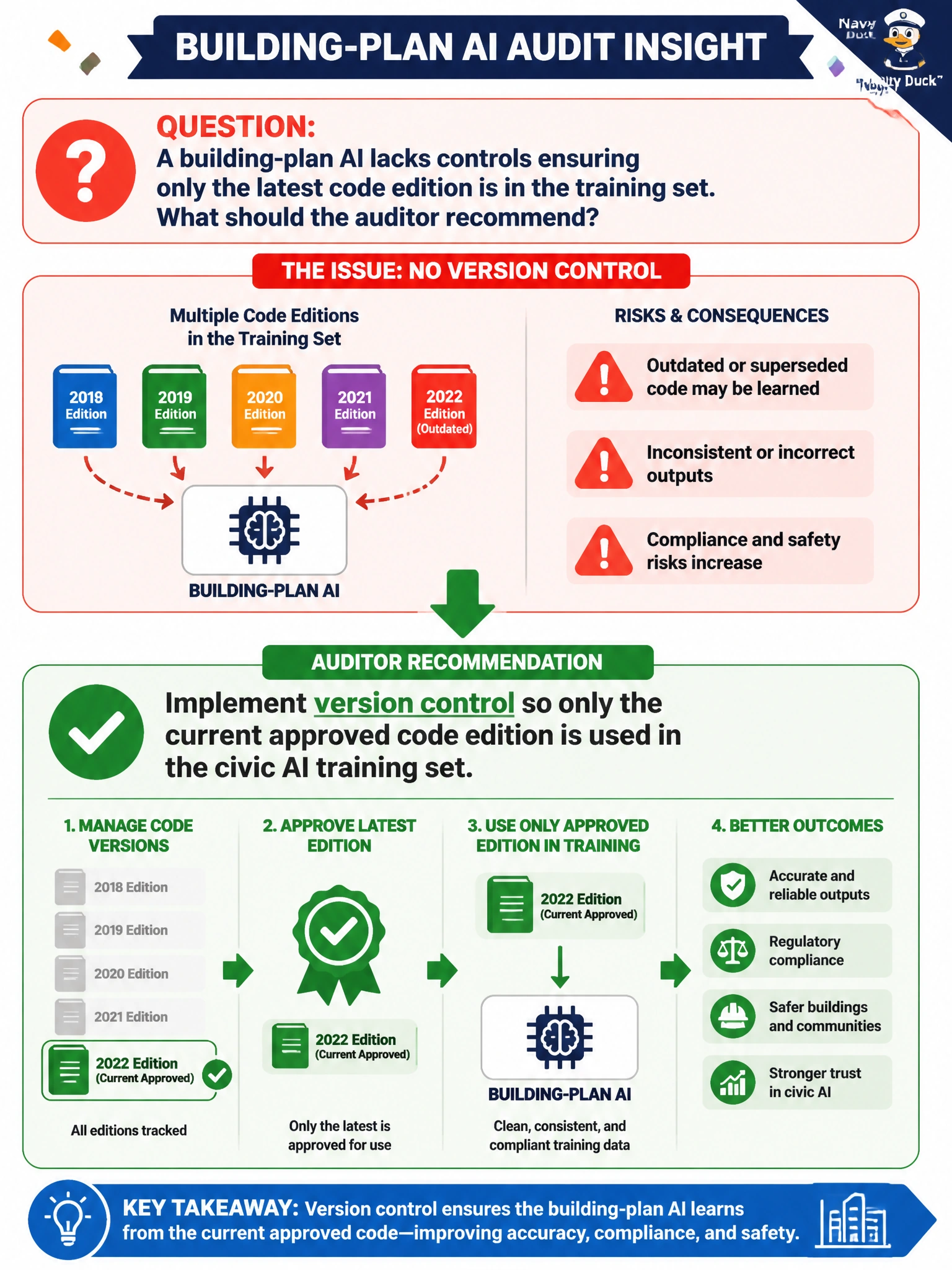
A building-plan AI lacks controls ensuring only the latest code edition is in the training set. What should the auditor recommend?
Select an answer to reveal the explanation.
Short Explanation
Building codes are not mixtapes — you want the current track, not superseded editions kept around with labels. Version-control the regulatory source so you're training on the latest approved edition. Training on superseded editions, even with labels, is how wrong plan advice gets baked in.
Full Explanation
Implementing version control so only the current approved building-code edition enters the civic AI training set works because regulatory source currency is a fitness requirement for advice that affects permits and inspections. Retaining superseded editions with clear edition labels for historical context still puts obsolete text into the training set; residents and staff may then receive guidance that cites obsolete setbacks, occupancy loads, or fire-protection requirements. Enforceable version gates—edition identifiers, effective dates, and exclusion of superseded text—keep the training set aligned with the legally operative code. The correct control is deliberate currency management, not retaining superseded editions with edition labels for historical context or trusting vendor marketing claims.
Retaining superseded code editions in the training set with clear edition labels for historical context fails because the model is no longer limited to the single legally operative edition; even labeled, outdated text can still be retrieved and conflict with current requirements. Skipping municipal code version control because the vendor's pre-built modules carry their own internal versioning fails conceptually: a vendor's internal module version tracks the vendor's software release, not which building-code edition text the module was actually trained or configured on. Refreshing the training set from draft code amendments during public consultation prior to formal approval fails because draft amendments are not yet the legally operative code; training on them risks baking in proposals that may change or never be adopted.
Exam caveat: transitional periods when a new edition is adopted with delayed effective dates require dual-version handling with clear date logic, not a blunt single-edition assumption. Operational check: tag every regulatory document with edition and effective date, block training jobs that include superseded editions unless explicitly marked historical-context-only, and revalidate sample plan-check answers after each code update.