
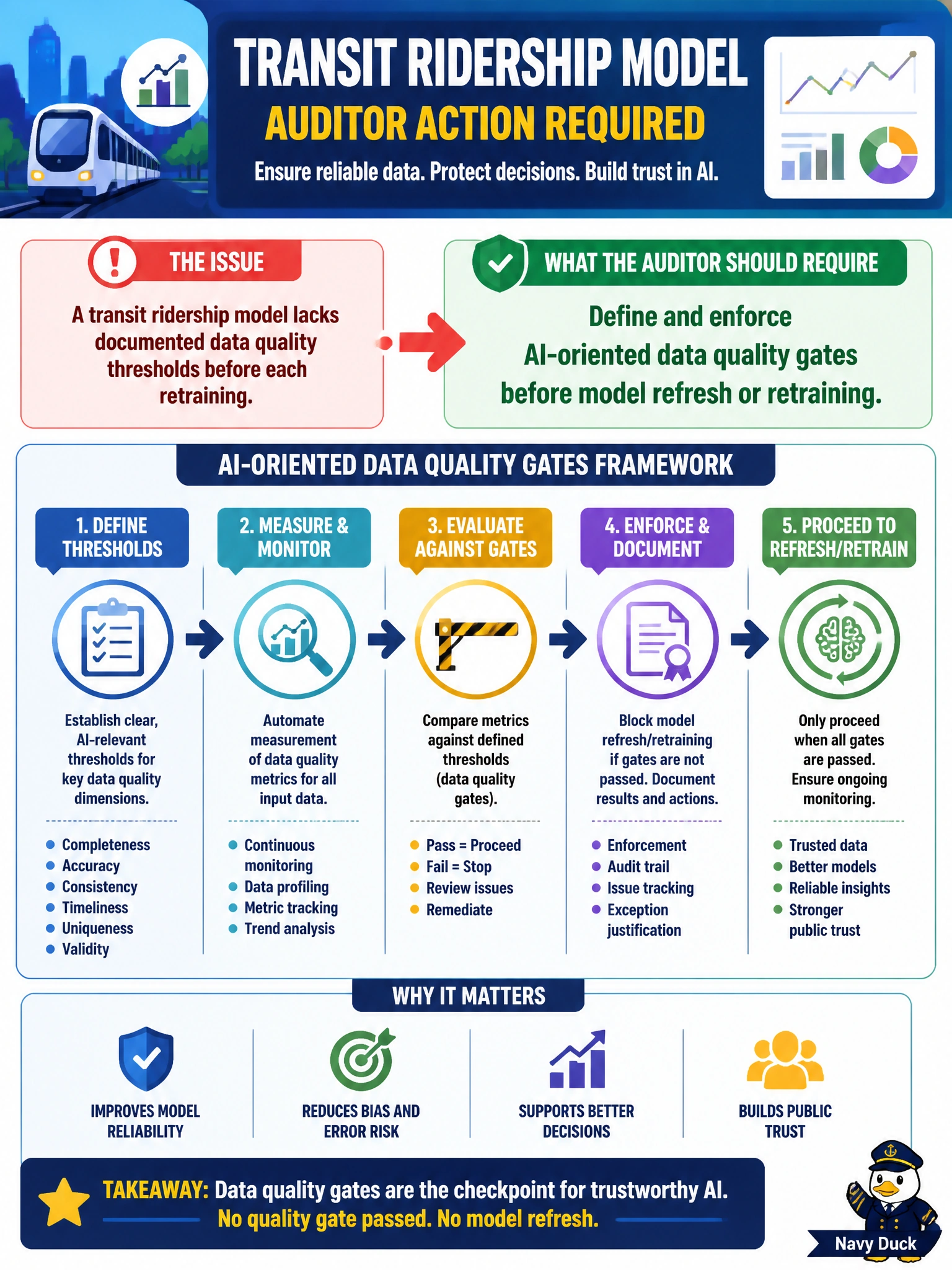
A transit ridership model lacks documented data quality thresholds before each retraining. What should the auditor require?
Select an answer to reveal the explanation.
Short Explanation
If you retrain without a quality bar, you are teaching the model from a messy notebook. Set thresholds first, then refresh. Pipeline logs and basic schema checks aren't a data-quality award.
Full Explanation
A transit ridership model that lacks documented data quality thresholds before each retraining allows incomplete, biased, or corrupted ridership feeds to degrade forecasts that planners and the public rely on. The auditor should require defining and enforcing AI-oriented data quality gates before model refresh or retraining so completeness, validity, timeliness, and related criteria are checked and failed batches are blocked or remediated. Requiring pipeline success logs with basic schema checks before approving model retraining cycles fails by concept: pipeline logs and schema checks are infrastructure signals, not evidence that training data is fit for AI-driven ridership forecasting. Documenting data quality thresholds in post-deployment monitoring reports for drift review fails by concept: recording thresholds after deployment for drift review is reactive and does not prevent bad data from entering retraining in the first place. Monitoring infrastructure availability metrics with operational sign-off for retraining schedules fails by concept: server availability and schedule sign-off do not measure feature completeness, schema validity, or distributional fitness of ridership inputs. Exam caveat: AAIA AI operations items expect defined, enforced quality criteria tied to retraining events—not pipeline logs plus basic schema checks as a substitute, post-deployment drift reporting as the only documentation, or infrastructure availability with schedule sign-off standing in for data quality. Operational check: publish ridership data-quality thresholds, wire automated gates into the retrain pipeline, quarantine failing extracts, require sign-off on exceptions, and retain gate results with each model version.